
Partial Dentures
A removable frame of replacement teeth, designed around the teeth you still have. It restores chewing and clear speech, and keeps your natural teeth from drifting into the gaps.
- Made of
- Metal and acrylic, or all acrylic
- Held by
- Clasps around neighboring teeth
- Lifespan
- 5 to 8 years
- Removable
- Yes, out at night
Every service is quoted up front, before we start. All PPO insurances accepted.
The service
Designed around the teeth you keep.
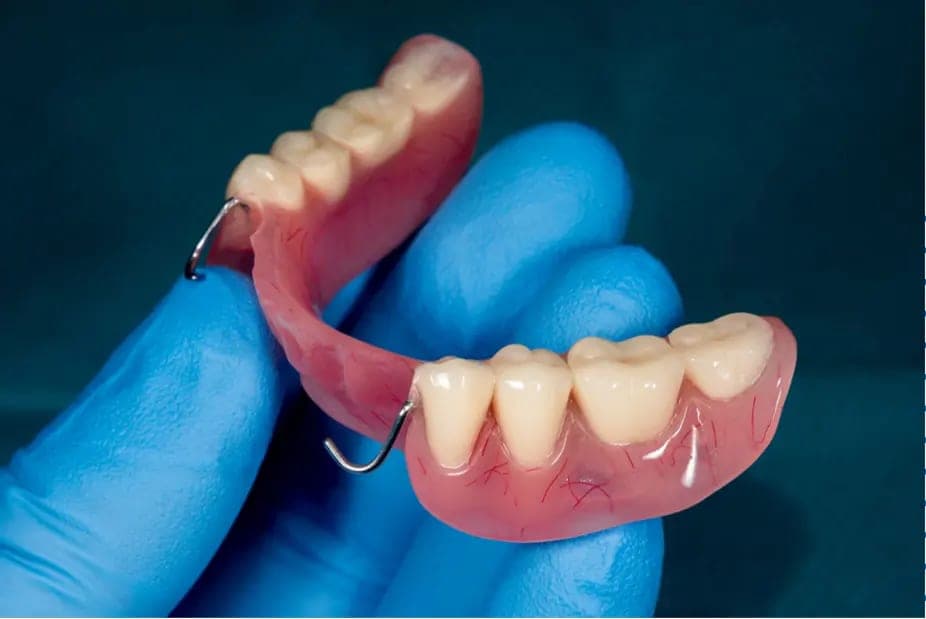
A partial denture replaces one or more missing teeth with replacement teeth on a gum-colored base, held by clasps that grip the neighboring natural teeth. It brings back a natural appearance and clearer speech, makes chewing efficient again (which your digestion notices), and stops the remaining teeth tilting into the empty spaces.
Materials matter. Metal-framed partials are generally preferred: thinner, structurally stronger and more hygienic. All-acrylic partials usually serve as transitional or temporary appliances. Dr. Danoukh designs each partial so chewing forces spread evenly across the remaining teeth and soft tissue, and may recommend small changes to your natural teeth to balance the load.
What happens
How your partial is made.
Consultation and design
We assess your remaining teeth and design the partial around them, choosing metal or acrylic for your case.
Impressions
Molds of your teeth and gums give the lab an exact model to build on.
Fabrication
The framework and replacement teeth are made to the model, matched to your natural teeth.
Fitting
We seat the partial, check the clasps and the bite, and adjust until it sits comfortably.
Is it for you
Worth asking about if.
You do not need to match every line. Any one of them is reason enough to ask.
- One or more gaps with healthy teeth either side
- Natural teeth starting to tilt or drift into a gap
- Chewing has shifted to one side of your mouth
- You want teeth replaced without surgery
Afterwards
Daily care.
Clean the partial after meals like a full denture: soft brush, denture cleanser, lukewarm water, over a basin in case of a drop. Take it out at night. Expect a short adjustment period for speech and chewing; it passes with practice. Keep regular check-ups so we can watch the supporting teeth and renew the fit; over the years the partial may need relining, rebasing or replacing as your mouth changes.
Call the office if:
- A clasp bends or snaps
- The partial rubs or feels tight on a natural tooth
- A supporting tooth starts to ache or loosen
Common questions
Answering your questions.
How is a partial different from a complete denture?
A partial fills gaps when you still have some natural teeth; a complete denture replaces every tooth in the upper or lower arch.
What holds it in place?
Clasps or precision attachments grip the neighboring natural teeth, and the base rests on the gum for extra support.
Will it change how I speak or eat?
Perhaps briefly. Minor pronunciation or chewing quirks are normal at first and resolve as you get used to it.
How long do partial dentures last?
With proper care, 5 to 8 years and sometimes longer. Regular check-ups keep the fit adjusted and the remaining teeth healthy.
Your first visit
One ticket covers it.
360 Dental · Admit one