
Implant Retained Dentures
Implants anchor the denture instead of letting it rest on the gums: a firmer bite, far less movement, and no slipping mid-sentence.
- Implants
- Usually 2 or more lower, 4 or more upper
- Lifespan
- Prosthesis 5 to 7 years; implants can last a lifetime
- Removable
- Ball and bar types snap off; screw type is fixed
- Upper bonus
- Palate-free designs keep taste and temperature
Every service is quoted up front, before we start. All PPO insurances accepted.
The service
Ball, bar or screw: three ways to anchor.
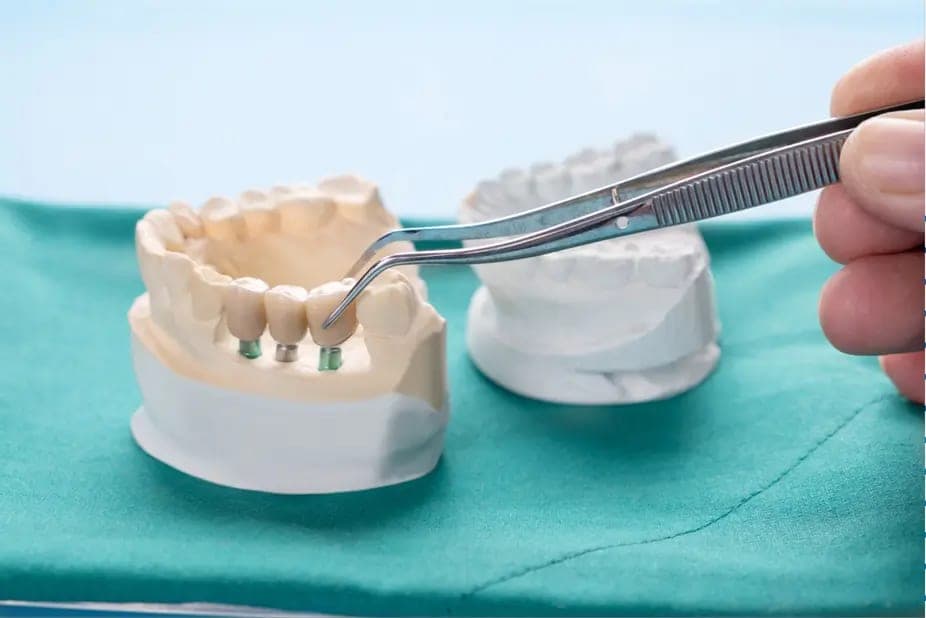
Upper dentures usually behave; lower ones are the troublemakers. Without anchorage they lift, drift and trap food, and the missing teeth themselves burden the bite, strain jaw muscles and can bring on headaches. Anchoring the denture to implants solves the movement at its source.
There are three designs. A ball attachment denture snaps onto two lower implants: markedly more stable while chewing, though it still moves a little and needs periodic adjustment. A bar attachment denture clips onto a custom bar joining four to six implants: much more stable, minimal movement, still removable for cleaning. A screw retained denture is fixed to five or more implants and comes off only at maintenance visits; it sits clear of the gum, so you clean under it in place.
For the upper jaw the same options apply, with more implants because the bone is softer. With enough of them, the denture no longer needs to cover the roof of your mouth: you taste food fully, sense its temperature, and the whole thing feels more natural.
What happens
From implants to attached denture.
Planning
An exam and imaging decide how many implants your jaw needs and which attachment design fits your case.
Implant placement
The implants are placed in the jaw under local anesthetic.
Healing
Over the following months the implants fuse with the bone, becoming the fixed anchors the denture will hold onto.
Attachment fitting
Balls, a custom support bar or screw posts are fitted to the implants, and the denture is built to match them.
Denture attached
The denture snaps or screws into place, and we fine-tune the fit and bite.
Is it for you
Worth asking about if.
You do not need to match every line. Any one of them is reason enough to ask.
- A lower denture that lifts or drifts when you chew
- Sore spots from food caught under a conventional denture
- You want a firmer bite without a fixed bridge
- You would rather keep the roof of your mouth uncovered
- You want to slow the bone loss a denture alone allows
Afterwards
Keeping it secure.
Ball and bar dentures snap off for daily cleaning of both denture and attachments. A screw retained denture stays in and is cleaned underneath in place, which takes a little more time and dexterity. Whichever design you have, periodic maintenance visits keep the attachments tight and the fit true, and good hygiene is what lets the implants themselves last a lifetime.
Call the office if:
- The denture no longer snaps in cleanly
- An attachment feels loose or bent
- Gums under the denture stay sore
Common questions
Answering your questions.
How many implants will I need?
Typically at least two in the lower jaw and four in the upper, though the number depends on your bone density, jaw shape and the attachment design chosen.
Are implant retained dentures removable?
Ball and bar attachment dentures snap on and off for cleaning. A screw retained denture is fixed and removed only at maintenance visits.
How long do they last?
The denture itself lasts around 5 to 7 years or longer before wear calls for replacement. The implants, kept clean and checked regularly, can last a lifetime.
How is this different from a regular denture?
A regular denture rests on the gums and can slip; this one is anchored to implants in the jawbone. The result is a firmer fit, less gum irritation and a stronger bite.
Your first visit
One ticket covers it.
360 Dental · Admit one