
Tooth Extraction
Some teeth are too decayed, broken or poorly positioned to save. When that is the case, we remove them gently under local anesthetic, and talk through the replacement before anything comes out.
- Visits
- Usually one appointment
- Anesthetic
- Local, fully numbed
- First 72 hours
- Protect the blood clot
- Back to normal
- A few days to a week
Every service is quoted up front, before we start. All PPO insurances accepted.
The service
Extraction is the last resort, not the first.

Teeth come out for a handful of reasons: decay too deep to restore, advanced gum disease, a break that cannot be repaired, an impacted or badly positioned tooth, or to make room before orthodontic treatment. You and Dr. Danoukh decide together, and alternatives are always on the table first.
A single missing tooth is not a small thing. It can change how you chew, strain the jaw joint, and let neighboring teeth drift. So the conversation covers what replaces the tooth, not just how it comes out.
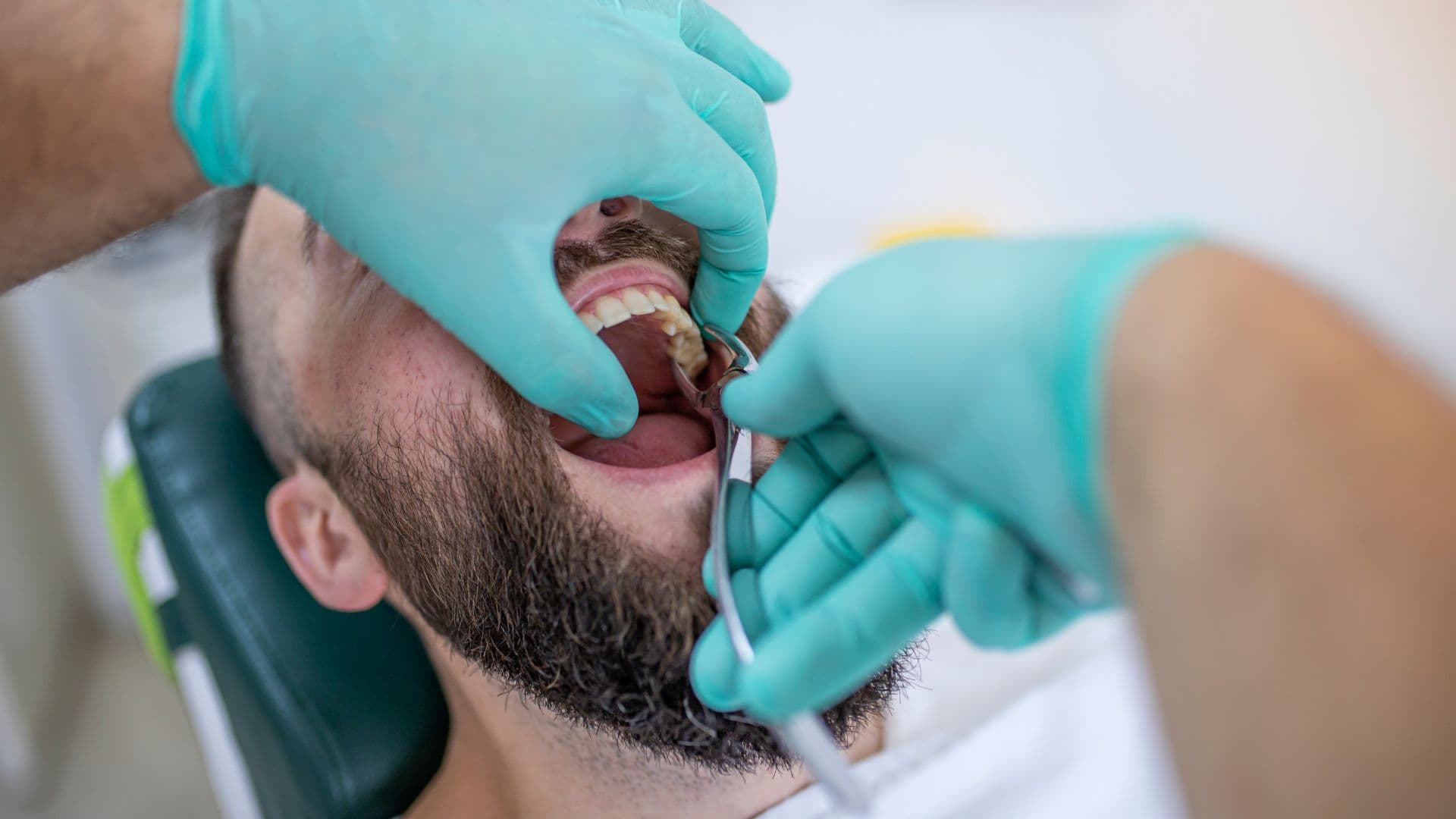
The extraction itself is done fully numbed. You feel pressure, the firm rocking that widens the socket, but not pain. A stubborn or curved-rooted tooth is simply sectioned and removed piece by piece.
What happens
How an extraction goes.
The decision
An exam confirms the tooth cannot be saved, and we cover alternatives and what will replace it.
Numbing
A local anesthetic numbs the tooth, the jawbone and the gum around it.
The extraction
The tooth is rocked firmly to widen the socket and lifted out. Pressure, not pain; tell us right away if you feel anything more.
Sectioning, if needed
A firmly anchored or curved-rooted tooth is cut into sections and removed one piece at a time.
Gauze and instructions
You bite on gauze for 30 to 45 minutes so a clot can form, and leave with clear aftercare instructions.
Is it for you
Worth asking about if.
You do not need to match every line. Any one of them is reason enough to ask.
- A tooth is decayed or broken beyond repair
- Advanced gum disease has loosened a tooth
- An impacted or poorly positioned tooth is causing trouble
- Teeth need room before orthodontic treatment
- A loose tooth is tempting you to pull it yourself
Afterwards
The first days matter most.
Healing starts with the blood clot. Bite on the gauze pad for 30 to 45 minutes after the appointment, and repeat with fresh gauze if oozing continues. For the next 72 hours do not rinse vigorously, drink through straws, smoke, drink alcohol, or brush the teeth next to the site: all of it can dislodge the clot.
Some pain and swelling is normal. An ice pack keeps swelling down, and it usually settles within 48 hours. Take pain medication as directed, finish any antibiotics even once you feel fine, and stick to fluids and soft food on the first day.
Skip vigorous exercise for 24 hours, then get back to normal brushing and flossing. Within a few days you should feel fine and can resume your usual routine.
Call the office if:
- Bleeding is heavy or will not stop
- Pain is severe despite medication
- Swelling continues past 2 to 3 days
- You react badly to a prescribed medication
Common questions
Answering your questions.
Is a tooth extraction painful?
The extraction is done under local anesthetic, so the procedure itself is usually painless. You feel pressure while the tooth is worked free, and some soreness afterwards as it heals.
How long does recovery take?
It depends on the tooth, but most people are back to normal activities within a few days to a week.
Can I just pull a loose tooth myself?
Better not to. Pulling a tooth before it is ready carries a high risk of infection. Let us take it out cleanly and check what caused the looseness.
What happens to the gap afterwards?
Left alone, neighboring teeth can shift and chewing can suffer. We discuss replacement options, such as an implant or bridge, before the extraction.
Your first visit
One ticket covers it.
360 Dental · Admit one