
TMJ and TMD Treatment
Jaw pain, clicking, morning headaches: often they trace back to one joint, the temporomandibular joint. We start by finding out what is driving it, because the cause decides the treatment.
- First visit
- A thorough TMJ exam
- Treatment
- Conservative options first
- Relief
- Most symptoms ease within weeks
- Surgery
- Rare, for the most severe cases
Every service is quoted up front, before we start. All PPO insurances accepted.
The service
Treat the joint, not just the ache.
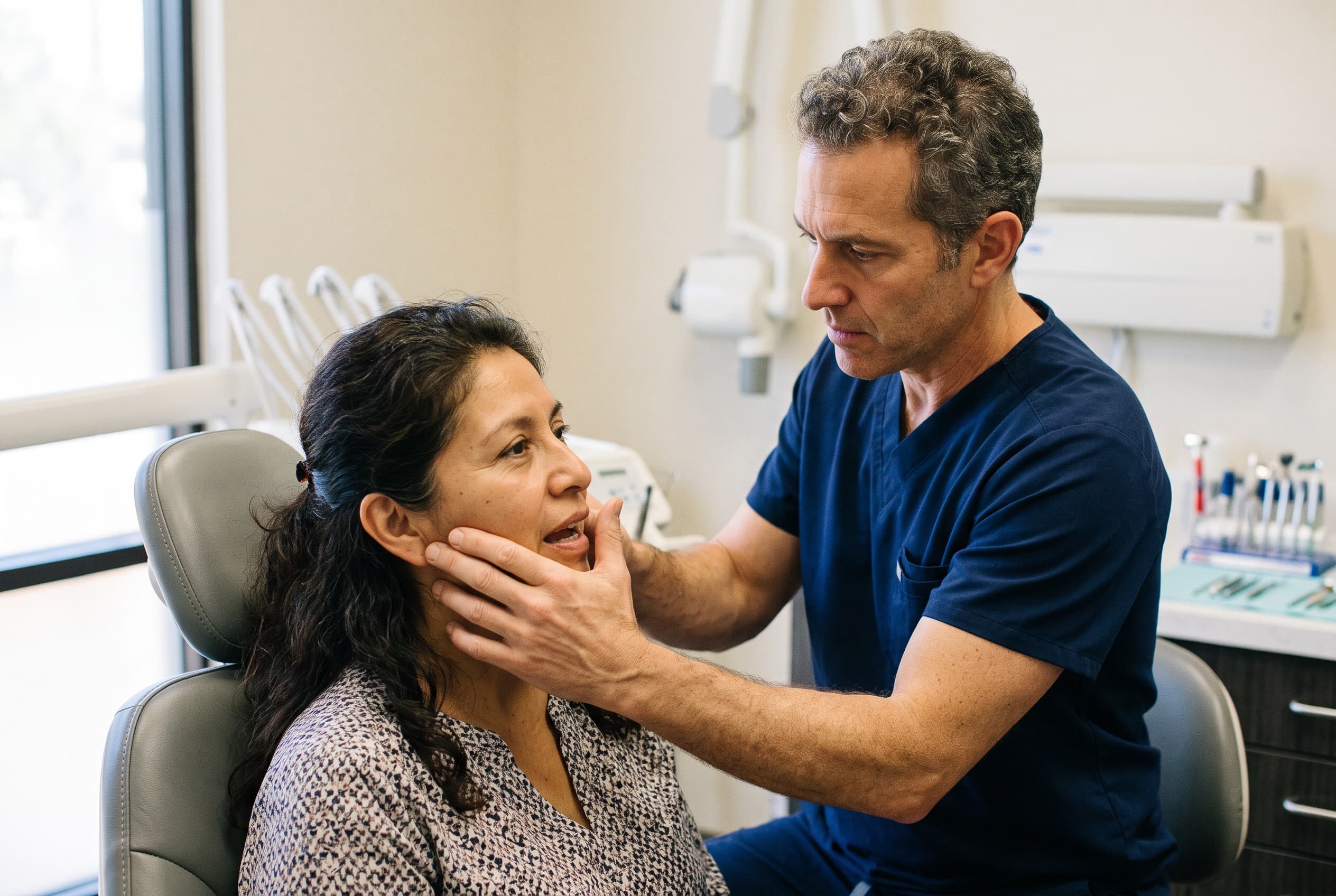
The temporomandibular joint is the hinge that moves your jaw and sets the alignment of your bite. When it sits wrong, often because of a misaligned bite (malocclusion), the muscles, nerves and joints of the head and neck take strain they were never meant to carry.
The result is facial pain, muscle tension, clicking or grating, and symptoms that seem unrelated: headaches, ear-area pain, disturbed sleep, even back and shoulder pain. Left untreated, TMJ dysfunction tends to get more entrenched, not less.
Diagnosis is where treatment succeeds or fails. Our exam uses current imaging technology to assess structural injuries, inflammatory conditions and breathing obstructions, so therapy targets the underlying problem rather than chasing symptoms.
What happens
The treatment pathway.
Treatment escalates only as far as your case requires. Most never go past the conservative stages.
The exam
We assess the joint tissue at the jaw's hinge to confirm whether you have TMD and how far it has progressed.
Conservative therapy
Minor cases often settle with over-the-counter pain relief, cold compresses and habit changes.
A guard or orthotic
More severe cases are treated with a mouth guard, orthodontic device or retainer that takes the strain off the joint.
Escalation only if needed
Oral surgery is reserved for the most severe cases. Even then, most people are back to normal activities within 2 to 3 days.
Is it for you
Worth asking about if.
You do not need to match every line. Any one of them is reason enough to ask.
- Your jaw clicks, pops or grates, and it hurts
- Jaw movement feels limited, stiff or locked
- Headaches or ear-area pain keep coming back
- Facial muscles feel tight or tender
- Your teeth are wearing down, chipping or loosening
- Your sleep is disturbed without an obvious cause
Afterwards
What recovery looks like.
Most TMJ symptoms ease within a few weeks of starting treatment. Cases driven by arthritis or long-standing grinding (bruxism) can take months of management, so we monitor your progress and adjust the plan as you go.
If surgery is the route, expect a few days of swelling and a soft diet with a jaw exercise program afterwards. Most people return to normal activities within 2 to 3 days, with no lasting restrictions on how you use your jaw.
Call the office if:
- Your jaw locks open or closed
- Pain sharpens or spreads despite treatment
- Clicking becomes painful or movement keeps narrowing
Common questions
Answering your questions.
What does a TMJ exam involve?
We assess the joint tissue in the jaw's hinge to determine whether you have TMD and, if so, how severe it is. The exam also screens for structural injuries, inflammation and breathing obstructions.
What services are available?
Minor cases respond to over-the-counter pain relief and cold compresses. More severe ones call for a mouth guard, orthodontic device or retainer. Oral surgery is a last resort for the most severe cases.
My jaw clicks but does not hurt. Should I worry?
Clicking, popping or grating on its own is not always cause for concern. If the sounds come with facial pain or restricted jaw movement, come in promptly.
Will treatment damage my teeth?
The conservative treatments we start with are designed not to harm your teeth. A guard or orthotic is fitted to your bite, and we check it as your symptoms change.
Your first visit
One ticket covers it.
360 Dental · Admit one