
Scaling and Root Planing
The workhorse of gum disease treatment: tartar cleared above and below the gumline, then the roots smoothed so your gums can reattach.
- Visits
- Often split by area over a few visits
- Anesthetic
- Local
- Back to normal
- A few days of sensitivity
- Repeated
- Every six months to a year, mild cases
Every service is quoted up front, before we start. All PPO insurances accepted.
The service
Clean the roots, close the pockets.
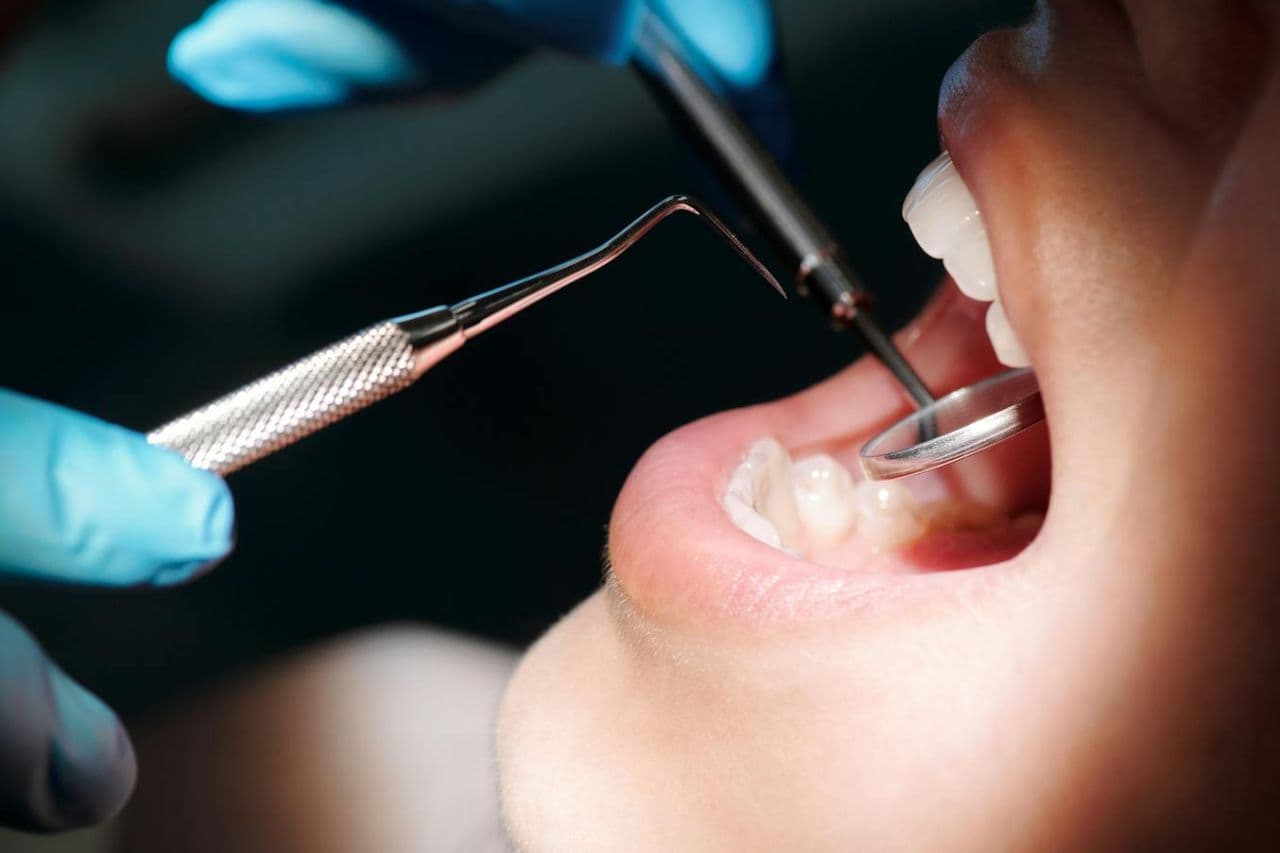
Plaque is an invisible film of bacteria that grows on teeth continuously. Left in place it hardens into calculus (tartar), and tartar below the gumline is what turns gum trouble into periodontal disease, the condition that attacks the tissue and bone holding your teeth.
Scaling removes plaque and tartar above and below the gumline with a mix of hand instruments and ultrasonic scalers, whose high-frequency vibration breaks the deposits up. Root planing then smooths the root surfaces, clearing embedded germs and giving the gum a clean surface to reattach to, which shallows the pockets and stops further recession.
It is non-surgical, done under local anesthetic, and for most gum disease it is the treatment that makes surgery unnecessary.
What happens
How it goes.
We usually work area by area, one section of the mouth per visit.
Numbing
A local anesthetic numbs the area being treated. You feel vibration and pressure, not pain.
Scaling
Hand instruments and an ultrasonic scaler clear plaque and calculus from the teeth, above and below the gumline.
Root planing
Specialized instruments smooth the root surfaces, removing diseased tissue and the rough spots bacteria cling to.
Review
Follow-up appointments track how the pockets are healing and confirm the disease is under control.
Is it for you
Worth asking about if.
You do not need to match every line. Any one of them is reason enough to ask.
- Bleeding when you brush or floss
- Gums pulling away from the teeth
- Persistent bad breath or a bad taste
- Tartar you can see or feel at the gumline
- A diagnosis of gingivitis or periodontitis
Afterwards
Looking after it.
Some sensitivity or soreness for a few days is normal. Stick to soft foods and avoid anything very hot or very cold while it settles, and skip alcohol and caffeine for a few days.
Brush twice a day with a soft-bristled brush and use an antibacterial mouthwash. Do not smoke: tobacco slows healing and raises the risk of infection. Keep your follow-up appointments so we can confirm the gums are closing up.
Call the office if:
- Bleeding that does not stop
- Pain that gets worse instead of better
- Swelling or other signs of infection
- Sensitivity still sharp after a week or two
Common questions
Answering your questions.
Does scaling and root planing hurt?
The area is numbed, so little during the procedure. Some sensitivity afterwards is normal and settles with over-the-counter pain relief.
What is the difference between scaling and root planing?
Scaling removes plaque and tartar from the tooth, above and below the gumline. Root planing smooths the root surface so bacteria cannot lodge there and the gum can reattach.
How often is it needed?
It depends on the severity. Mild to moderate gum disease may need it every six months to once a year.
Why is it spread over several visits?
Working one area of the mouth at a time keeps each appointment comfortable and lets us be thorough.
Your first visit
One ticket covers it.
360 Dental · Admit one