
Gum Surgery
When gum disease gets past what cleaning can reach, surgery removes the infected tissue and rebuilds what was lost: gum, and where needed, bone.
- Visits
- Consultation, surgery, then follow-ups
- Anesthetic
- Local for most, general for larger cases
- Sutures
- Often dissolvable
- Back to normal
- A few days to several weeks
Every service is quoted up front, before we start. All PPO insurances accepted.
The service
For the cases cleaning cannot fix.
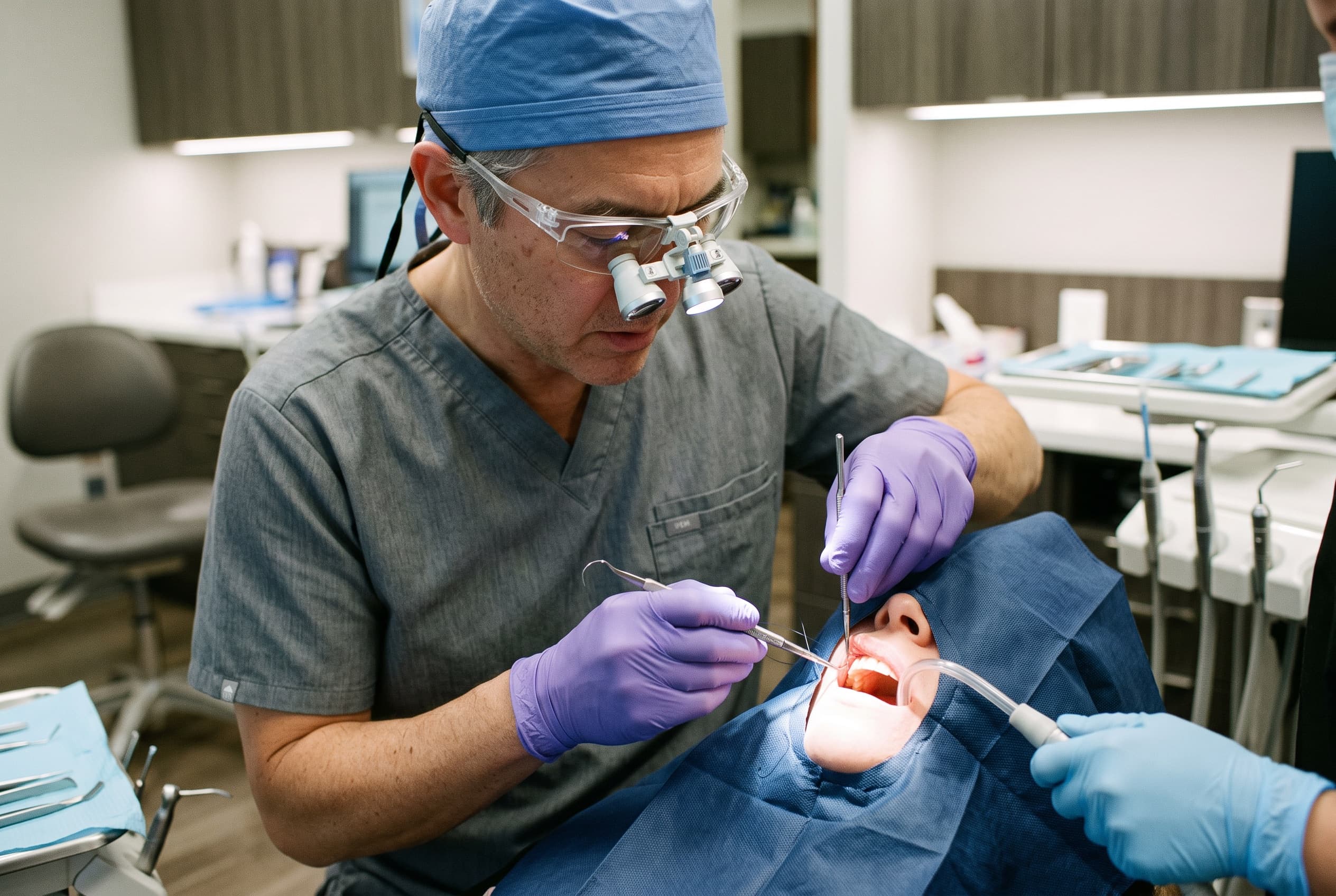
Gum disease is one of the primary causes of tooth loss in adults, and when deep pockets persist after scaling and root planing, surgery is how the remaining infection gets cleared. Dr. Danoukh evaluates each case first: plenty of gum problems still resolve without a scalpel.
The surgery removes infected and damaged tissue, then repairs what the disease destroyed: bone grafts rebuild lost bone, membranes and protein-based materials stimulate new gum growth, and gum grafts cover exposed roots.
Healthy gums mean a lower chance of losing teeth, and controlling gum disease is linked to fewer complications with diabetes and heart disease.
What happens
How the procedure goes.
Consultation
An exam of your gums and teeth establishes how far the disease has gone and which procedure fits.
Anesthetic
Local anesthetic for most cases; general anesthesia for more extensive surgery.
Clearing the disease
Through small incisions, infected and damaged gum tissue is removed, from small pockets to larger sections.
Rebuilding
Where bone has been lost, a graft of your own bone or synthetic material replaces it, and a membrane or protein-based material can be placed to stimulate new gum tissue.
Closing
The gum is repositioned and sutured. The stitches usually dissolve on their own.
Recovery
You leave with instructions on hygiene, diet, and follow-ups, and pain relief prescribed if needed.
Is it for you
Worth asking about if.
You do not need to match every line. Any one of them is reason enough to ask.
- Deep pockets that scaling and root planing did not close
- Gums receding far enough to expose the roots
- Teeth loosening as their support is lost
- Excess or uneven gum tissue you want reshaped
- You have been told extraction is the alternative
Afterwards
Afterwards.
Some soreness during recovery is normal and manageable with the pain relief we prescribe or recommend. Follow the post-operative instructions on cleaning and diet closely: recovery runs from a few days for minor procedures to several weeks for larger ones.
Call the office if:
- Bleeding that does not settle
- Pain that worsens after the first few days
- Swelling, fever, or other signs of infection
- A suture comes loose early
Common questions
Answering your questions.
Which procedures count as gum surgery?
The common ones are gingivectomy (removing excess gum tissue), gingivoplasty (reshaping the gumline), and gum grafting (covering exposed roots where gums have receded). Flap surgery and bone grafting treat the deeper damage of periodontitis.
Is gum surgery painful?
It is done under local or general anesthetic, so little or nothing during the procedure. Expect some soreness while it heals.
How long is recovery?
It depends on the procedure: a few days for minor work, several weeks for larger reconstructions.
Your first visit
One ticket covers it.
360 Dental · Admit one