
Restorative Dentistry
Jaw Pain and Clicking: What Your Symptoms Really Mean
Published 7 min read

Jaw pain and clicking almost always trace back to one of three things: muscles, the joint itself, or how your bite lines up. According to the National Institute of Dental and Craniofacial Research, TMJ disorders affect an estimated 5% to 12% of U.S. adults, and are roughly twice as common in women as men. Sorting out which cause applies to you matters. It's the difference between symptoms that fade in a week and ones that get worse every month you ignore them.
This guide walks through what's actually happening when your jaw hurts or clicks. It covers why symptoms often show up suddenly or on just one side, and how to tell TMJ apart from jaw tendonitis. If your symptoms have lasted more than a couple of weeks, our TMJ/TMD treatment team can help. A short exam can pinpoint the cause before it gets harder to manage.
What Does Jaw Pain and Clicking Mean?
Jaw pain and clicking usually mean one of three things. Your jaw muscles might be overworked from clenching or grinding. The joint disc might have shifted out of position. Or your bite might be putting uneven pressure on one side. Each has a different fix, so the exact combination of symptoms matters.
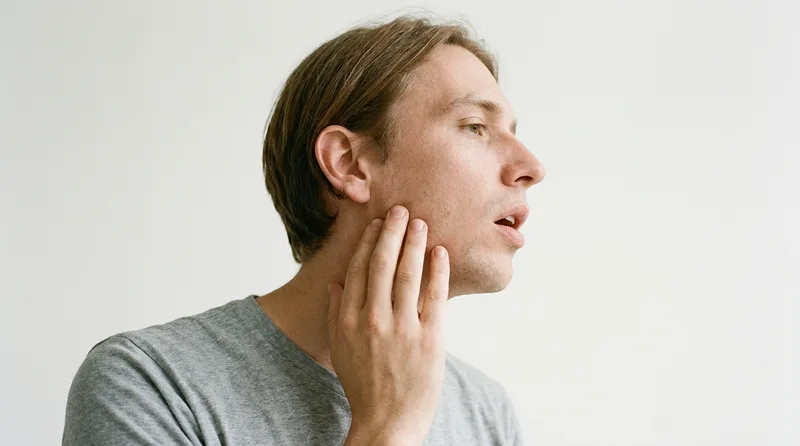
The joint connecting your jaw to your skull, sometimes called the TMJ, has a small disc that lets your jaw open and close smoothly. When that disc slips slightly out of place, you get a clicking or popping sound. Pain, on the other hand, more often comes from the muscles working overtime to compensate. This happens especially if you clench during the day or grind at night without realizing it. Clicking without pain is common and often not urgent. Clicking that comes with pain, stiffness, or a jaw that catches or locks is a different situation entirely.
Age and lifestyle both play a role in how these symptoms show up. Someone under constant work stress may clench for hours without noticing, while an athlete might strain the joint through repeated impact. The underlying mechanics are the same. The trigger just looks different for everyone.
What Causes Sudden Jaw Pain and Misalignment?
Sudden jaw pain and misalignment have a few common triggers: grinding, added stress that increases clenching, an awkward sleep position, or minor trauma. It rarely appears without a cause, even when it feels that way.
Stress is one of the most common triggers, since clenching often ramps up without you noticing during busy or anxious periods. A single night of unusually heavy grinding can leave muscles sore and joints inflamed by morning. Sleeping on your stomach with your jaw pressed into a pillow can set it off too. So can chewing gum for hours or biting into something unexpectedly hard. Even a minor bump to the jaw during exercise or sports can shift things just enough to feel like sudden misalignment.
- Increased stress or anxiety leading to more clenching
- A single night of heavy grinding
- Sleeping position that puts pressure on one side of the jaw
- Minor trauma from sports, an accident, or a hard bite
Why Does Jaw Pain Often Show Up on Just One Side?
Jaw pain often shows up on one side because most people clench, grind, or chew unevenly without realizing it. That puts more strain on one joint than the other. A one-sided sore jaw after waking up is usually the muscle or joint on that side working harder overnight.

Sleeping position plays a big role here too. If you consistently sleep on one side with your jaw resting against the pillow, that side absorbs more pressure through the night. A dominant chewing side has a similar effect over time, favoring one set of back teeth without thinking about it. TMJ problems themselves are also often uneven, affecting one side more than the other. The joint disc can shift on one side while the other stays normal. That's why you might feel clicking or soreness on only the right or only the left, not both.
If the same side is sore morning after morning, it's worth noticing which side you tend to sleep on and which side you chew with. That pattern alone often points a dentist toward the cause faster than the pain itself does.
Is It TMJ, Jaw Tendonitis, or Something Else?
TMJ disorder centers on the joint itself, causing clicking, popping, or a jaw that locks. Jaw tendonitis centers on inflamed tendons and shows up as a dull, persistent ache that worsens with chewing. The right diagnosis depends on where the discomfort is centered and what triggers it.
A large review of research covering over 20,000 patients was published via the National Library of Medicine. It found joint clicking present in nearly 30% of cases studied, one of the most commonly reported symptoms. That's useful context: clicking alone is common and often not a red flag by itself.
| Condition | Main Symptoms | Common Trigger |
|---|---|---|
| TMJ Disorder | Clicking, popping, jaw locking or catching | Joint disc shifting out of position |
| Jaw Tendonitis | Dull, persistent ache, worse with chewing | Overuse or repetitive strain on tendons |
| Muscle Tension | Soreness, tightness, morning headaches | Clenching or grinding |
These conditions can also overlap. Someone with a shifted joint disc may develop muscle tension too, since the surrounding muscles compensate for the joint not moving smoothly. A dentist can usually tell them apart with a short exam. That exam checks range of motion, listens for joint sounds, and feels for tender spots along the jaw and temples.
Which Symptoms Signal a Problem That Needs Attention?
Clicking without pain is usually harmless. Clicking combined with pain, stiffness, a locking jaw, or discomfort when yawning and chewing signals something that needs a closer look. The combination of symptoms matters more than any single one on its own.
Pain specifically when you yawn or take a big bite often points to the joint itself rather than general muscle tension. That motion stretches the joint to its full range. A jaw that briefly locks open or closed, even if it releases on its own, is worth mentioning to a dentist. Grinding-related soreness that fades by midday is less concerning than pain that builds throughout the day or wakes you up at night. Tracking when symptoms happen, not just how often, gives a dentist a clearer picture than a vague description of "jaw pain."
- Jaw locks open or closed, even briefly
- Pain specifically when yawning or taking a large bite
- Clicking accompanied by pain, not just sound
- Symptoms lasting more than two to three weeks
Jaw catching or locking, even occasionally?
That's one of the clearer signs worth having a dentist check sooner rather than later.
When Should You See a Dentist About Jaw Pain and Clicking?
See a dentist if jaw pain or clicking lasts more than two to three weeks. See one too if your jaw locks or catches, or if the discomfort is getting worse instead of better. Waiting it out rarely helps once symptoms reach that point.

The Mayo Clinic notes that most jaw discomfort gets better with simple, non-surgical treatment. Seeing a dentist first makes sure you're treating the actual cause rather than guessing. Depending on what's driving your symptoms, a dentist might recommend a night guard, physical therapy stretches, or in some cases Botox to relax overactive jaw muscles.
- Note which symptoms show up together: clicking alone, pain alone, or both
- Track whether one side is affected more than the other
- Book an exam if symptoms pass the two to three week mark
Related: Already know it's TMJ and want to know about treatment options. See how Botox for TMJ works →
Jaw pain and clicking rarely have just one cause. That's why matching your specific symptom pattern to the right explanation matters more than searching for a single answer. A joint that clicks without pain is a different situation than a jaw that locks or aches every time you chew.
If your symptoms have stuck around for more than a couple of weeks, or if they're getting worse, a short exam is the fastest way to find out. It's also the fastest way to know what to do about it.
Results may vary. Please consult with your dentist at 360 Dental for personalized treatment recommendations.
Find Out What's Behind Your Jaw Pain
360 Dental identifies whether your symptoms point to TMJ, tendonitis, or muscle tension, and builds a plan around the actual cause.
Prefer to talk it through first?
Call (818) 787-6400 →
Common questions
Why is my jaw misaligned all of a sudden?
Sudden jaw misalignment is usually caused by increased clenching during a stressful period, a night of heavy grinding, an unusual sleep position, or minor trauma. It rarely happens without a trigger, even when the cause isn't obvious right away.
Why did I wake up with one side of my jaw sore?
A one-sided sore jaw after waking up usually points to sleeping position or a dominant chewing side putting more strain on that joint overnight. TMJ problems are also often uneven, affecting one side more than the other.
What are the signs of TMJ pain?
Signs of TMJ pain include clicking or popping when opening your mouth, a jaw that catches or locks, and discomfort that's centered around the joint near your ear rather than spread through the jaw muscles.
What's the difference between TMJ and jaw tendonitis?
TMJ disorder centers on the joint itself, causing clicking, popping, or locking. Jaw tendonitis centers on inflamed tendons and shows up as a dull, persistent ache that worsens with chewing rather than joint sounds.
Why does my jaw hurt when I yawn?
Jaw pain when yawning often points to the joint itself, since yawning stretches the joint to its full range of motion. This is a common early sign of TMJ-related discomfort worth mentioning to a dentist.
When should I see a dentist for jaw pain and clicking?
See a dentist if jaw pain or clicking lasts more than two to three weeks, if your jaw locks or catches, or if symptoms are getting worse instead of better over time.
Did this answer your question?
Written for general reading, not as advice about your own teeth. Nothing here replaces an examination: if something hurts, or has changed, book a visit and let a dentist look at it.
Read next
 7 min readSenior Dental Care in Van Nuys: What Changes With AgeSenior dental care in Van Nuys: learn about dentures, cleanings, gum health, and easy financing options for older adults at 360 Dental.Read the article
 8 min readFailed Root Canal: Symptoms, Causes & What Happens Next Wondering what a failed root canal looks like? Learn the symptoms, common causes, and what happens next at 360 Dental in Van Nuys.Read the article
 13 min readWisdom Teeth Removal Recovery in Van Nuys: What to ExpectWisdom teeth removal recovery day by day: what to expect in the first 48 hours, what to eat, which symptoms need a call, and when you get back to normal.Read the article
Your first visit
One ticket covers it.
360 Dental · Admit one