
Emergency Dentistry
Tooth Abscess Symptoms in Wylie TX: Warning Signs
Published 9 min read
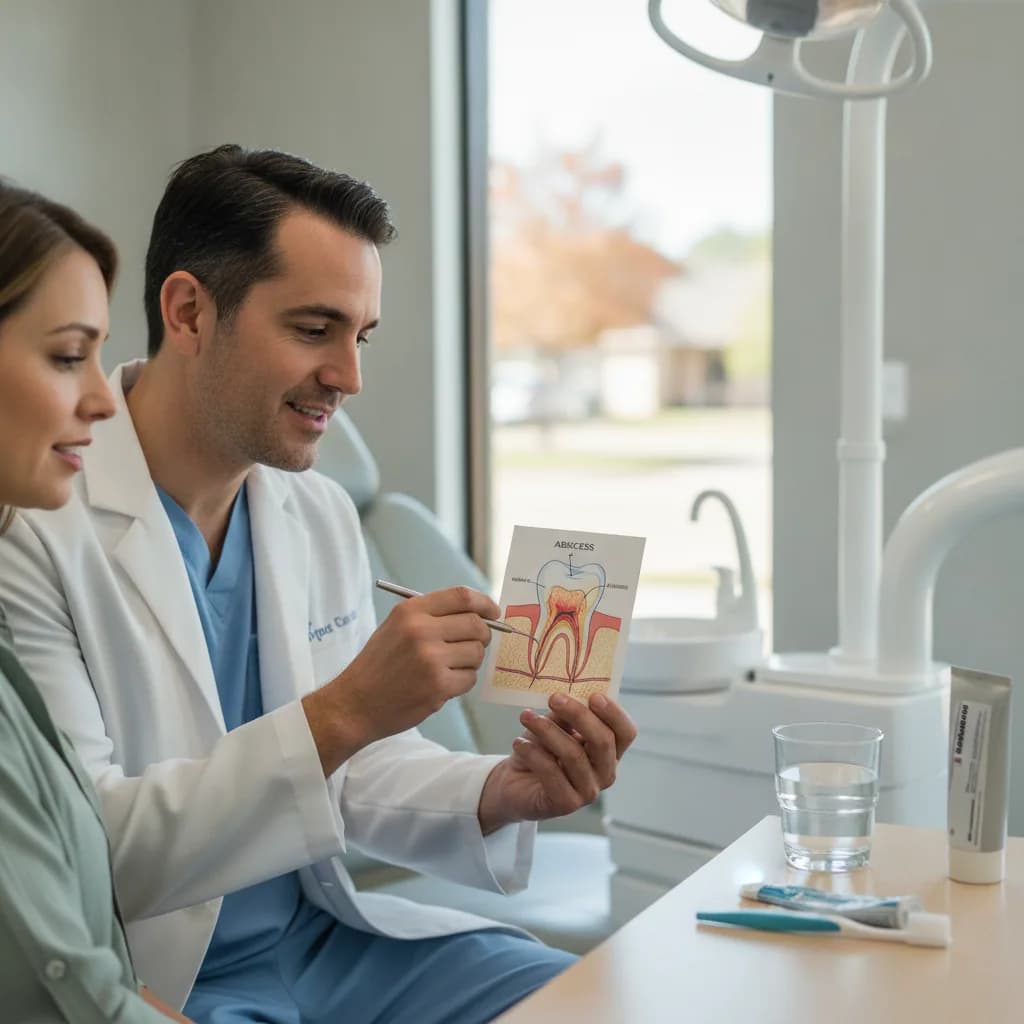
A tooth abscess is a pocket of infection that can go from a nagging ache to a serious, even dangerous problem if ignored. Recognizing tooth abscess symptoms early, and knowing which warning signs mean you need urgent care, can protect both your tooth and your overall health. This guide explains what to watch for and what treatment involves in Wylie.
What Is a Tooth Abscess?
A tooth abscess is a pocket of pus caused by a bacterial infection, usually forming at the tip of the root or in the gum beside a tooth. It typically results from untreated decay, a cracked tooth, or gum disease that lets bacteria reach the inner pulp or surrounding tissue.
When bacteria penetrate deep into a tooth, often through a cavity that has reached the nerve, and according to the CDC, about 1 in 4 adults has untreated tooth decay that can lead to this, or invade the gum and bone, the body responds with infection, and pus collects in a confined space. That trapped infection is what causes the intense pressure and pain an abscess is known for. There are different types depending on where the infection settles, at the root tip, in the gum, or in the supporting bone, but all share the same underlying problem: a bacterial infection that the body cannot clear on its own; according to clinical research, dental infections account for a notable share of emergency room visits each year. Left alone, an abscess does not simply go away; it tends to worsen and can spread, which is why it is always treated as a problem that needs professional care.
According to the American Dental Association, a dental abscess is a serious infection that requires prompt treatment, because the infection can spread to surrounding tissues and beyond if left untreated.
What Are the Symptoms of a Tooth Abscess?
Common tooth abscess symptoms include severe, throbbing toothache, sensitivity to hot and cold, pain when biting, swelling in the face or gums, a foul taste, fever, and tender or swollen lymph nodes. Sometimes a pimple-like bump appears on the gum.
The hallmark is a persistent, severe toothache that may throb and radiate to the jaw, ear, or neck. Sensitivity, pain on biting, and a bad taste are common, and visible swelling signals the infection is extending into the tissues. One deceptive moment is when the pain suddenly eases, which can mean the abscess has burst and begun draining, not that the infection is gone. It still needs treatment. Any combination of these symptoms warrants prompt dental attention.
Which Warning Signs Mean You Need Emergency Care?
Seek emergency care immediately for facial swelling that is spreading, difficulty breathing or swallowing, a high fever, swelling that closes the eye or reaches the neck, or feeling very unwell. These signal the infection may be spreading dangerously and need urgent treatment.
While any abscess needs prompt care, certain signs turn it into a medical emergency. Swelling that is rapidly increasing, spreading down the neck, or reaching toward the eye is a red flag, as is any difficulty breathing or swallowing, which can indicate the airway is threatened. A high fever, chills, a racing heart, or simply feeling profoundly unwell suggests the infection may be entering the bloodstream. In these situations, do not wait for a dental appointment, go to an emergency room. Clinical references on dental infections note that untreated dental abscesses can lead to serious, occasionally life-threatening complications when infection spreads, which is why these warning signs must be taken seriously. For less severe but still urgent cases, same-day dental care is the right call.
What Happens If a Tooth Abscess Goes Untreated?
An untreated abscess does not heal on its own. The infection can spread to the jaw, sinuses, neck, and bloodstream, lead to tooth and bone loss, and in rare cases become life-threatening. Early treatment prevents these escalating complications.
It is a dangerous myth that an abscess will resolve if you wait it out, because the body cannot clear a walled-off pocket of infection without intervention. Over time the infection erodes the surrounding bone, can spread into the sinuses or down the tissue planes of the neck, and may enter the bloodstream, causing a body-wide infection. Along the way the affected tooth is often lost, and the longer the delay, the more complex and costly the treatment becomes. While serious systemic complications are uncommon when people seek care, studies note they account for thousands of hospitalizations annually and are well documented and entirely avoidable with timely treatment. This is why even an abscess that seems to be improving, or whose pain has faded, still needs to be evaluated and properly treated rather than ignored.
How Is a Tooth Abscess Treated?
Treatment drains the infection and addresses its source. Options include draining the abscess, a root canal to save the tooth, or extraction if the tooth cannot be saved. Antibiotics may be used alongside drainage but do not replace treating the underlying cause.
The first priority is to drain the pus and relieve the pressure, which also brings rapid relief from the pain. From there, the goal is to eliminate the source of infection. If the tooth can be saved, a root canal removes the infected pulp, disinfects the inside of the tooth, and seals it. If the tooth is too damaged, an extraction removes it along with the infection. Antibiotics are sometimes prescribed to help control a spreading infection, but they are a supplement, not a cure, the abscess itself must be physically drained and its cause treated, since antibiotics alone cannot clear the trapped infection. Your dentist will recommend the approach based on the tooth and the extent of the infection. For deciding between saving and removing a tooth, our guide on root canal vs extraction is a helpful resource.
How Can You Prevent Tooth Abscess Symptoms?
Prevention comes down to stopping decay and gum disease before they reach the point of infection: brush and floss daily, keep up regular dental cleanings and exams, treat cavities promptly, and address cracked teeth or gum problems early.
Because abscesses almost always start from untreated decay, cracks, or gum disease, the same habits that prevent those problems prevent abscesses. Daily brushing and flossing remove the bacteria and plaque that cause decay and gum infection, and routine professional cleanings clear what home care misses. Just as important, treating a cavity while it is small, before it reaches the nerve, stops the most common path to an abscess in its tracks. Public health guidance consistently links regular preventive care with fewer serious dental problems. Routine exams also catch cracked teeth and early gum disease before they can become infected, which is why not skipping checkups is one of the most effective ways to avoid ever experiencing an abscess.
What Causes a Tooth Abscess to Form?
Most abscesses trace back to three causes: deep, untreated tooth decay that reaches the nerve; a cracked or broken tooth that lets bacteria in; and advanced gum disease. In each case, bacteria gain access to areas the body cannot defend, and infection takes hold.
Understanding the cause helps both treatment and prevention. By far the most common path is a cavity that goes untreated long enough to penetrate the protective enamel and dentin and reach the pulp, the living core of the tooth where nerves and blood vessels live. Once bacteria infect the pulp, the infection can travel down to the root tip and form an abscess. A cracked tooth, whether from injury or grinding, creates a similar doorway for bacteria. Gum disease offers a third route, as deepening pockets between teeth and gums let infection reach the bone and form an abscess beside the tooth rather than at its tip. Recognizing which cause is at work guides the dentist toward the right treatment, and it explains why prevention focuses on stopping decay, protecting against cracks, and treating gum disease early.
Risk is higher for anyone with frequent cavities, a history of gum disease, dry mouth, or who delays dental care, which is why those individuals especially benefit from staying current with checkups.
Can You Manage the Pain Before You See the Dentist?
You can ease abscess pain temporarily with over-the-counter pain relievers, a cold compress on the cheek, and a warm saltwater rinse, but these only buy time. They do not treat the infection, so prompt professional care is still essential.
While you arrange to be seen, a few measures can make the wait more bearable. Over-the-counter pain relief taken as directed can take the edge off, a cold compress against the outside of the cheek can reduce swelling and numb the area, and gently rinsing with warm salt water may soothe the gum and help if the abscess is draining. Keeping your head slightly elevated, even while sleeping, can lessen the throbbing. What you should not do is apply aspirin directly to the gum, attempt to pop or drain the abscess yourself, or assume that fading pain means the problem has resolved. These steps are strictly stopgaps: the infection will persist and worsen until a dentist drains it and treats the source, so they should never replace getting an actual appointment, ideally same-day.
If any emergency warning signs appear while you wait, spreading swelling, trouble breathing or swallowing, or a high fever, stop waiting and seek emergency medical care immediately.
How Quickly Should You See a Dentist for an Abscess?
As soon as possible, ideally the same day. A tooth abscess is an active infection that worsens over time, so prompt treatment relieves pain faster, improves the odds of saving the tooth, and prevents the infection from spreading into more serious territory.
Timing genuinely matters with an abscess. The sooner it is drained and its cause treated, the sooner the pain stops and the lower the risk of complications, and an early-treated tooth is more likely to be saved with a root canal rather than lost to extraction. Waiting, on the other hand, gives the infection time to erode bone and spread, turning a manageable problem into a more complex and costly one. This is why dental practices treat abscesses as urgent and often reserve same-day slots for them. If you suspect an abscess, the right move is to call promptly and describe your symptoms so the team can prioritize your care, rather than hoping it settles down on its own, which it will not.
Results may vary. Please consult with Dr. Jeong for personalized treatment recommendations.
Think you have a tooth abscess? Call (972) 881-0715 right away or contact our team.
Common questions
What does a tooth abscess feel like?
The hallmark is a severe, persistent, throbbing toothache that can radiate to the jaw, ear, or neck. Other tooth abscess symptoms include sensitivity to hot and cold, pain when biting, facial or gum swelling, a foul taste, fever, and sometimes a pimple-like bump on the gum. Any of these warrants prompt dental care.
Will a tooth abscess go away on its own?
No. An abscess is a walled-off pocket of infection the body cannot clear without treatment. Even if the pain suddenly eases, which can mean it has started draining, the infection remains and tends to worsen and spread. It always needs professional treatment to drain the infection and address its underlying cause.
When is a tooth abscess a medical emergency?
Seek emergency care immediately for facial swelling that is spreading, swelling reaching the eye or neck, difficulty breathing or swallowing, a high fever, or feeling very unwell. These signal the infection may be spreading dangerously, possibly into the bloodstream or airway, and need urgent treatment at an emergency room.
Can antibiotics cure a tooth abscess?
Antibiotics alone cannot cure an abscess. They may help control a spreading infection, but the trapped pocket of pus must be physically drained and its source treated with a root canal or extraction. Antibiotics are a supplement to definitive dental treatment, not a replacement for it.
Did this answer your question?
Written for general reading, not as advice about your own teeth. Nothing here replaces an examination: if something hurts, or has changed, book a visit and let a dentist look at it.
The treatment itselfEmergency Dentistry at 360 DentalRead next
 11 min readNew Patient Emergency Dentist Wylie TX: How It WorksNew patient emergency dentist Wylie TX: what to bring, how insurance gets verified, what happens to your records, and why paperwork comes after care.Read the article
 12 min readEmergency Dentist Near Me: When to Call vs When to WaitSearching emergency dentist near me?Read the article
 9 min readSinus Tooth Pain vs Toothache: How to Tell the DifferenceSinus tooth pain vs dental toothache: key differences, why upper molars hurt with sinus infections, and when to see a dentist.Read the article
Your first visit
One ticket covers it.
360 Dental · Admit one