
Sedation Dentistry
Sedation Dentistry Wylie TX: Getting Past Dental Anxiety
Published 15 min read
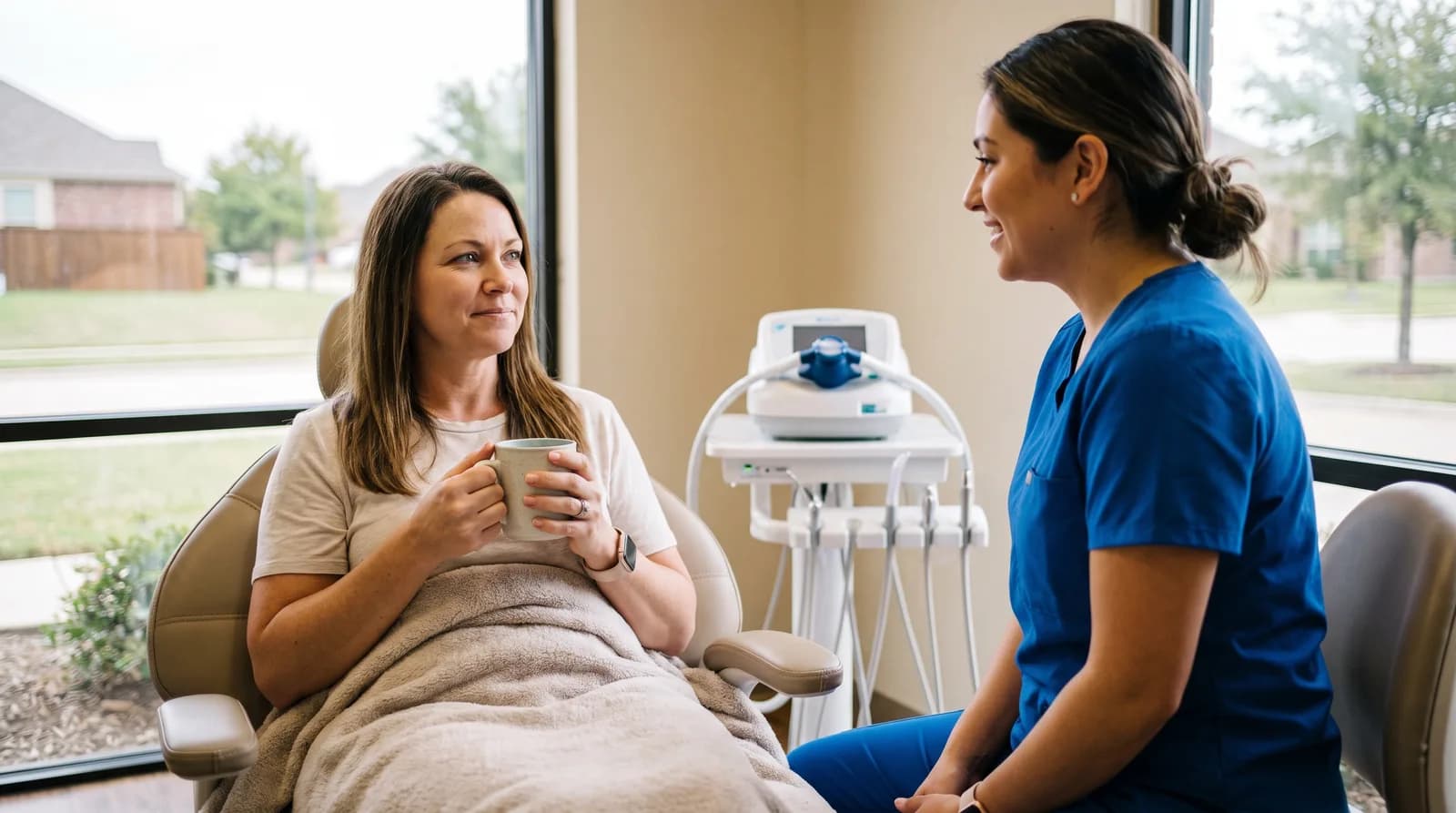
If the thought of a dental appointment makes your stomach drop, sedation dentistry Wylie TX patients trust exists for exactly that reason. That avoidance is not rare, and it rarely stays small. A skipped cleaning becomes a filling, a delayed filling becomes a root canal, and the longer the gap runs the harder the next phone call feels. At Willow Family Dentistry, Dr. Esther Jeong built her practice around judgment-free care. Sedation options are a core part of that promise, for kids, adults, and anyone who has had a rough experience in a dental chair before.
This guide is about the fear itself, not just the medication. It covers how to tell where your anxiety actually sits, what to do about it before sedation is even on the table, what to say when it has been years since your last visit, and how sedation dentistry fits in when the gentler options are not enough. If you already know you want sedation and just need to pick between nitrous oxide and IV, our companion guide comparing sedation options covers that side by side.
Anxious About Your Next Visit?
Willow Family Dentistry offers nitrous oxide and IV sedation so you can get the care you need without the dread. Dr. Jeong's judgment-free approach starts with a conversation, not a lecture.
What Is Sedation Dentistry in Wylie, TX and How Does It Help With Dental Anxiety?
Sedation dentistry uses medication to help patients relax during dental treatment, ranging from light calm to a deeper, sleep-like state depending on the method. It exists because fear keeps people away from care they actually need, and that gap only grows the longer it goes unaddressed.
According to a 2024 study published in BMC Oral Health, roughly 36% of Americans report some degree of dental anxiety, and about 12% describe it as severe fear. That is not a small subset of patients. It is more than a third of the people walking through a dental office door, whether they say so out loud or not. This approach was developed specifically to close that gap between needing treatment and being able to sit through it.
Willow Family Dentistry offers both nitrous oxide and IV sedation, and Dr. Jeong matches the option to the person rather than the procedure. Which one you end up with matters less than you might expect, though. For most anxious patients the harder part is everything that happens before the appointment, and that is what the rest of this guide is about.
What Are the Signs That Dental Anxiety Is Worth Addressing?
Dental anxiety is worth addressing when it causes you to delay, cancel, or avoid appointments altogether, since that avoidance tends to turn minor issues into bigger ones. Recognizing the pattern early makes treatment easier down the road.
Some patients feel it as a racing heartbeat in the waiting room. Others cancel appointments the morning of, then feel guilty about it, then avoid rescheduling for months. Both reactions are common, and neither one means something is wrong with you. It usually means a past experience, whether a rough procedure or a dismissive provider, left a mark that never got resolved. This avoidance has consequences: CDC data shows nearly 1 in 4 adults in the US currently has untreated tooth decay, and dental fear is a major driver of that number.
- Trouble sleeping the night before a scheduled cleaning or procedure
- Repeatedly rescheduling or skipping appointments altogether
- Physical symptoms in the chair, such as a tight chest or sweating palms
- Avoiding the dentist for years, even with a known cavity or broken tooth
- A specific memory tied to the IV line, certain sounds, or a past provider's bedside manner
If any of this sounds familiar, mention it to the front desk before your visit. Willow Family Dentistry builds sedation into the plan from the first phone call, not as an afterthought.
Bring Your Concerns to the Conversation
Tell Dr. Jeong's team what worries you most before your appointment. That single step shapes how your sedation plan gets built.
How Do You Know How Severe Your Dental Anxiety Actually Is?
Dental anxiety runs on a spectrum, and where you sit on it changes what helps. Mild nerves that fade once treatment starts respond to very different tools than a fear that has kept you out of a dental office for a decade. Naming the level is the first practical step.
Researchers use short questionnaires for this, like the Modified Dental Anxiety Scale, which asks how you would feel in five specific situations: waiting for treatment tomorrow, sitting in the waiting room, waiting for the drill, waiting for a cleaning, and waiting for an injection. What makes it useful is not the score. It is that the answers usually differ from each other. Plenty of people are fine with the drill and undone by the needle, and that pattern points straight at the fix.
A rough way to place yourself:
- Nervous. You would rather not be there, but you go, and you settle once things start.
- Anxious. You sleep badly the night before and think about the appointment for days, though you still turn up.
- Fearful. You reschedule more than once, and you need a real reason to keep the booking.
- Phobic. You have avoided care for years, and even making the call feels out of reach.
Tell the front desk which of these sounds like you. It is a faster and more useful thing to say than "I'm a bit nervous," and it is the difference between being handed a mask on the day and having a plan built around you.
What If You Have Not Seen a Dentist in Years?
Then you are the patient this practice was built for, and you are far more common than you think. The thing keeping most long-gap patients away is not fear of pain. It is the expectation of a lecture about the gap itself, or embarrassment about what a dentist will find.
Here is what actually happens at a first visit after a long absence. Dr. Jeong looks, takes images, and tells you what is there. There is no commentary on how it got that way, because it is not useful and it is not the point. Based on our experience, the reaction most long-gap patients have on the way out is that it was smaller than the version they had built up.
A few things that make that first visit easier:
- Say on the phone how long it has been. It stops being a confession you are bracing for in the chair.
- Ask for a consultation with no treatment attached, so the first appointment is only a conversation.
- Ask for the plan in stages rather than all at once. A long list delivered in one go is its own kind of overwhelming.
- Bring someone with you if that helps. Nobody will find it strange.
What Helps Before You Even Consider Sedation?
Quite a lot, and it is worth trying first. Sedation is a good tool, but it is not the only lever, and many patients find that a handful of small adjustments bring the appointment back within reach on their own. These cost nothing and require no medication.
- Agree on a stop signal. Raise a hand and everything pauses. Much of dental fear is about loss of control, and a signal that is actually honored gives it back.
- Book the first slot of the day. No time in the waiting room letting it build, and nothing running late ahead of you.
- Bring headphones. Blocking the sound removes the trigger for a lot of people, because it was never the sensation that bothered them.
- Ask for a walkthrough first. Being shown an instrument before it is used takes most of the threat out of it. It works on adults as reliably as it does on children.
- Ask to come in and do nothing. Sit in the chair, meet the team, leave. Then book the real appointment.
If these get you through a cleaning, you may not need sedation at all. If they get you through the door but not through the treatment, that is useful information too, and it tells Dr. Jeong exactly where sedation needs to start.
What Sedation Options Are Available at Willow Family Dentistry?
Willow Family Dentistry offers nitrous oxide and IV sedation, covering the range from mild jitters to significant dental fear. Each option has a distinct onset, depth, and recovery window, so the right fit depends on your specific history and the procedure planned.
Nitrous oxide, sometimes called laughing gas, is inhaled through a small nasal mask and wears off within minutes of removing it. IV sedation goes further, delivering medication directly into the bloodstream for a deeper, often amnesic effect that many patients describe as barely remembering the appointment at all. Neither option puts you fully under general anesthesia; you remain able to breathe on your own and respond to instructions throughout.
The table below breaks down how the two options compare across the details that matter most to a first-time patient.
How Does Nitrous Oxide Sedation Work?
Nitrous oxide sedation works by delivering a mix of nitrous oxide and oxygen through a small nasal mask, producing light relaxation within a few minutes. It is the mildest option offered at Willow Family Dentistry and one of the most requested by both kids and adults.
Once the mask is in place, most patients describe a warm, floaty feeling rather than losing awareness. You can still talk, answer questions, and follow instructions the entire time. Dr. Jeong adjusts the concentration throughout the procedure based on how you are responding. Nitrous oxide clears from your system within minutes of removing the mask, so there is no lingering grogginess afterward.
No driver is needed and most patients go straight back to work or school, which is why it suits routine fillings, cleanings for sensitive patients, and first visits. For a fuller breakdown of how it compares to IV sedation on onset, depth, and recovery, see our companion guide comparing sedation options.
Can Children Have Sedation Dentistry in Wylie, TX?
Yes, and nitrous oxide is the option most children do best with, since it wears off before they leave the building and asks nothing of them beyond breathing through a small mask. Parents looking for a sedation dentist for children in Wylie usually arrive with one of two situations: a child who had a rough first appointment somewhere else, or a child who needs more work done than a nervous five year old can sit still for in one go.
Dr. Jeong approaches both the same way, starting with a short visit where nothing happens except meeting the team and looking around the room. Based on our experience, that step alone settles more cases than parents expect, well before sedation is on the table. When sedation is the right call, the plan gets built with the parent in the room rather than presented to them afterward. You can read more about our approach to pediatric dentistry.
Who Is a Good Candidate for IV Sedation?
IV sedation suits patients with significant dental fear, a strong gag reflex, or several procedures that need to be combined into one longer visit. It delivers a deeper, more consistent level of calm than nitrous oxide alone can provide.
A 2023 review in the Journal of Dental Anesthesia found that IV sedation has helped roughly 75% of fearful patients return to regular dental visits they had previously avoided. That statistic matters because avoidance compounds. A patient who skips cleanings for three years because of fear often needs more extensive restorative dentistry work than someone who came in on schedule the whole time. Breaking that cycle is often the real value of sedation, not just comfort during a single visit.
IV sedation does require a friend or family member to drive you home afterward, since the effects last several hours. Willow Family Dentistry will walk through pre-appointment instructions, including fasting guidelines, during your consultation.
Related: IV sedation is often paired with same-day extractions for patients who need several teeth removed at once. Learn how immediate dentures work →
What If Your Fear Is the Needle, Not the Dentist?
Then IV sedation is the wrong starting point, because the IV line is the part you are afraid of. This is common enough to be worth its own conversation, and it is the one case where the deeper sedation option makes the appointment harder rather than easier.
Nitrous oxide is usually the answer here. It goes on over your nose with nothing sharp involved, and because it takes effect in a couple of minutes it can be used to get you calm enough for an injection you could not otherwise face. Numbing gel before any injection helps too, as does not watching, and as does asking the team not to narrate that part.
Tell the office that needles are the specific problem when you book. It changes the order of operations for your appointment, and it is the kind of detail that gets missed if you only say you are anxious in general.
Is Sedation Safe If You Are Already Anxious?
Yes. Anxiety itself is not a reason to avoid sedation, and in most cases it is the reason to use it. Sedation dentistry in Wylie, TX is safe when administered and monitored by a trained provider, with IV sedation carrying a safety record exceeding 99.9% in dental settings according to the American Dental Association. Monitoring equipment tracks your vital signs throughout any sedated procedure.
Before recommending sedation, Dr. Jeong reviews your full medical history, current medications, and any prior reactions to anesthesia. Certain conditions call for extra precautions, and an honest conversation about your health history is part of every consultation. This is not a one-size-fits-all decision. Nitrous oxide in particular has one of the longest safety track records in dentistry, with the American Academy of Pediatric Dentistry noting decades of use in both children and adults without significant complications when properly administered.
Every sedation appointment at Willow Family Dentistry includes continuous monitoring of oxygen levels, heart rate, and blood pressure. If anything looks off, the team pauses and adjusts before continuing, rather than pushing through the appointment as planned.
What Should You Expect During Your Appointment?
A sedation appointment starts with a check-in and health review, moves into the sedation method itself, then continues into the planned treatment while your vitals are monitored. The whole visit is structured to minimize surprises.
- Arrive for check-in and a brief review of your health history and current medications.
- Receive your chosen sedation method, either the nitrous oxide mask or the IV line.
- Relax as the sedation takes effect, typically within a few minutes.
- Undergo the planned treatment while the team monitors your comfort and vital signs.
- Recover in the chair for a short period before being cleared to leave, with a driver if IV sedation was used.
Most patients are surprised by how little they remember, especially with IV sedation. That is the point. The goal is a completed treatment plan and a patient who is willing to come back next time. Front desk staff will also confirm your next cleaning or follow-up before you leave, so nothing falls through the cracks after a sedated visit.
How Do You Prepare for a Sedation Visit?
Preparing for a sedation visit mainly means arranging a driver if IV sedation is planned, following any fasting instructions, and telling the team about every medication you take. Small oversights here can delay a procedure on the day of your visit.
The office will give you specific guidance based on which sedation method fits your case. For IV sedation, that usually includes not eating or drinking for a set number of hours beforehand. For nitrous oxide, preparation is much lighter since you can eat normally and drive yourself both ways.
- Arrange transportation in advance if IV sedation is scheduled
- Share your complete medication list, including supplements
- Wear comfortable, loose clothing to your appointment
- Ask questions ahead of time rather than during check-in
The practical preparation is the easy half. The part worth more attention is deciding what to say. Before your appointment, write down the single thing you are most worried about and give it to the team, whether that is the injection, the sound, gagging, or not being able to stop once treatment starts. One specific sentence is more useful than a general note that you are nervous, because it is the only version anyone can actually plan around.
Related: Stress and dental anxiety can also show up as nighttime teeth clenching or grinding. See our full guide to bruxism →
Meet the Dentist Behind the Judgment-Free Approach
Dr. Esther Jeong has spent over 15 years helping nervous patients feel comfortable in the chair, using sedation as one part of a broader, patient-first philosophy.
Sedation dentistry in Wylie, TX is not about erasing every ounce of nervousness before you sit down. It is about making sure fear never becomes the reason a cavity turns into a root canal, or a cleaning gets skipped for another two years. Willow Family Dentistry built its sedation dentistry program around that reality, offering both nitrous oxide and IV sedation so the plan can match the patient instead of the other way around.
Results may vary. Please consult with Dr. Jeong for personalized treatment recommendations.
If dental anxiety has kept you or your family away from care, the next step is simple: tell us what worries you, and let Dr. Jeong's team build a visit around it.
Ready for a More Comfortable Visit?
Request an appointment with Willow Family Dentistry and let us know your concerns ahead of time so we can plan the right sedation approach for you.
Prefer to talk it through first?
Common questions
Is sedation dentistry safe for children?
Yes, nitrous oxide sedation is commonly used for children and wears off within minutes. Willow Family Dentistry reviews each child's health history before recommending any sedation option, and a parent is welcome to stay close by during the appointment.
How much does sedation dentistry cost?
Cost depends on which sedation method you choose and how long the procedure takes. Nitrous oxide is generally the more affordable option, while IV sedation costs more due to the added monitoring and time involved. Ask the front desk for a personalized estimate.
Can I eat before a sedation dentistry appointment?
It depends on the method. Nitrous oxide does not require fasting, so you can eat normally beforehand. IV sedation typically requires several hours without food or drink, and the office will confirm exact timing before your visit.
Will I be unconscious during IV sedation?
No, IV sedation keeps you in a deep, relaxed state rather than full unconsciousness. You can still breathe on your own and respond to instructions, though many patients remember very little of the appointment afterward.
Do I need a ride home after sedation dentistry?
Yes, if you receive IV sedation, you need a driver since the effects last several hours. Nitrous oxide wears off within minutes, so you can typically drive yourself home after that option instead.
What if I have severe dental anxiety?
IV sedation is often recommended for severe dental anxiety since it provides a deeper, more consistent calm than nitrous oxide alone. Dr. Jeong will discuss your history and the specific procedure to determine the right fit.
Did this answer your question?
Written for general reading, not as advice about your own teeth. Nothing here replaces an examination: if something hurts, or has changed, book a visit and let a dentist look at it.

Your first visit
One ticket covers it.
360 Dental · Admit one