
Dental Bridges
A bridge fills the gap a missing tooth leaves behind: a false tooth held in place by the teeth on either side, or by implants. No surgery at the gap itself.
- Visits
- Two or three
- Anesthetic
- Local
- Made in
- A dental lab, from precise impressions
- Results last
- Up to 10 years, often longer with care
Every service is quoted up front, before we start. All PPO insurances accepted.
The service
Close the gap before it causes trouble.
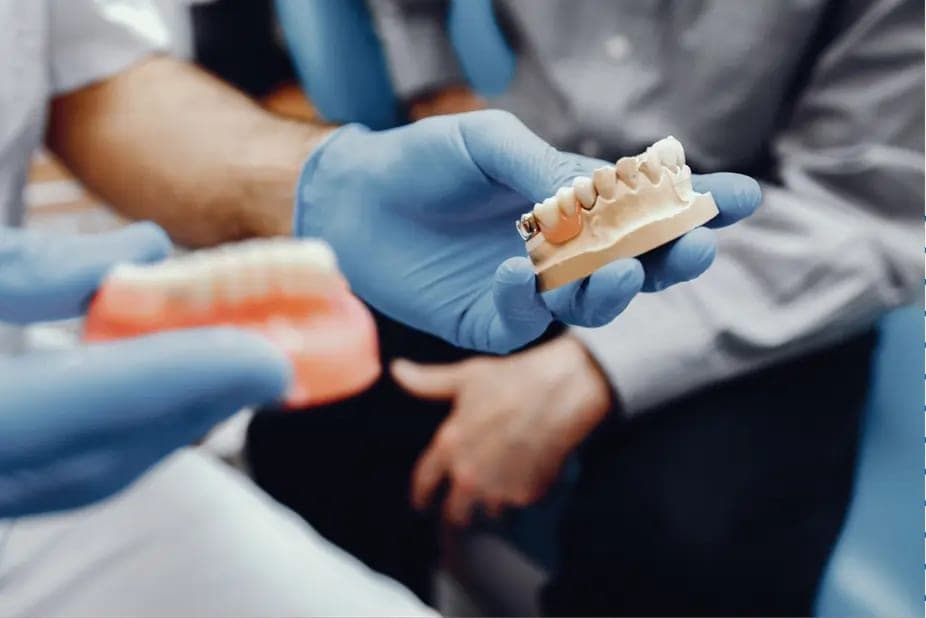
A bridge is a fixed prosthesis that spans the space left by one or more missing teeth. The false tooth (the pontic) is carried by crowns cemented onto the neighboring teeth, called abutments, or onto dental implants. Removable versions exist, held by clasps or precision attachments, but fixed bridges are the more stable of the two.
The case for closing the gap is more than looks. Teeth were designed to work together: leave a space and the neighbors drift into it, unusual stress lands on the gums, the risk of gum disease rises, and speech can change. A missing back tooth even lets the cheek sink, which reads as age.
Each bridge is built in a dental lab from impressions of your prepared teeth, so it matches your bite precisely before it is ever cemented.
Before / after
What a bridge closes.
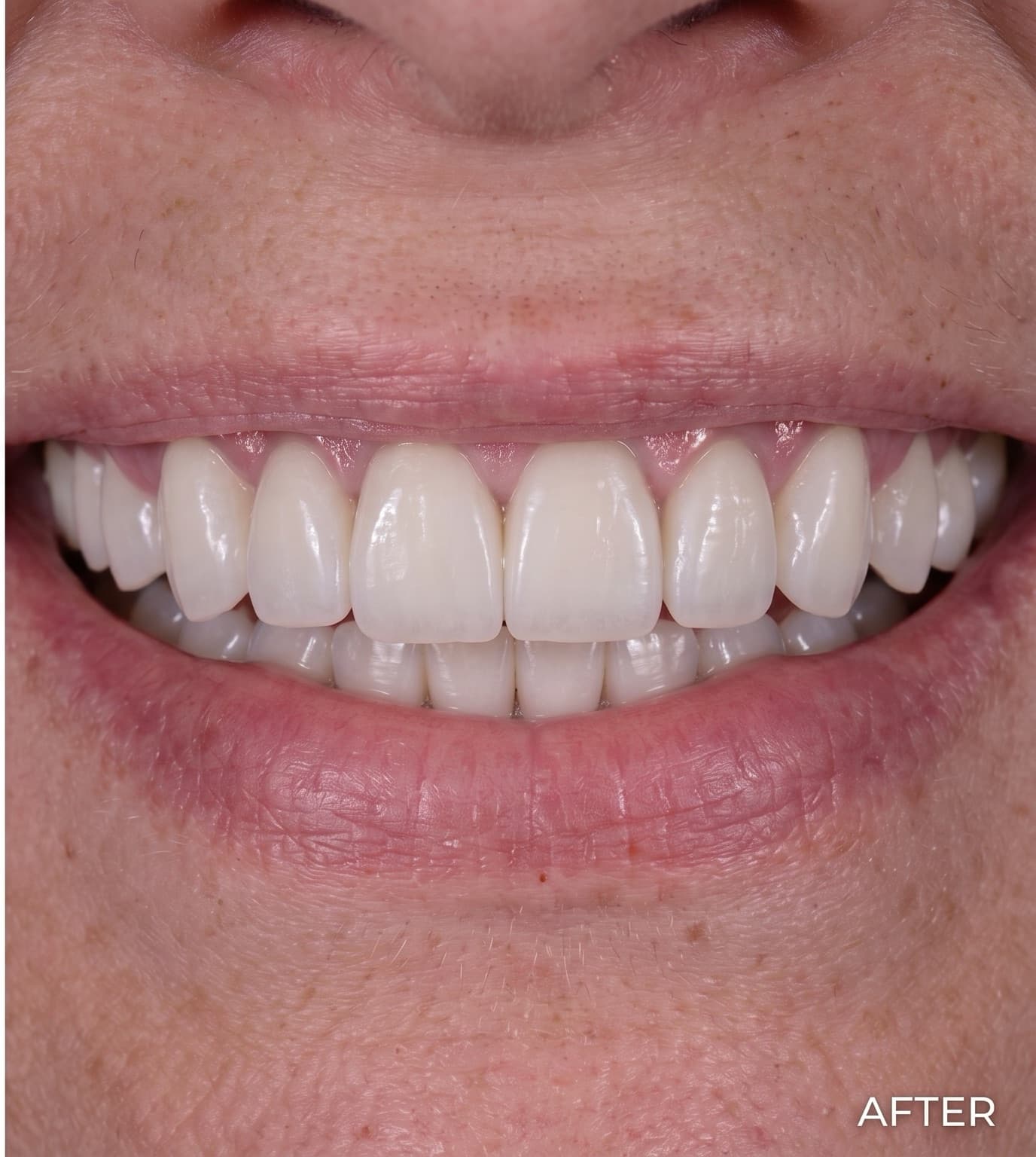
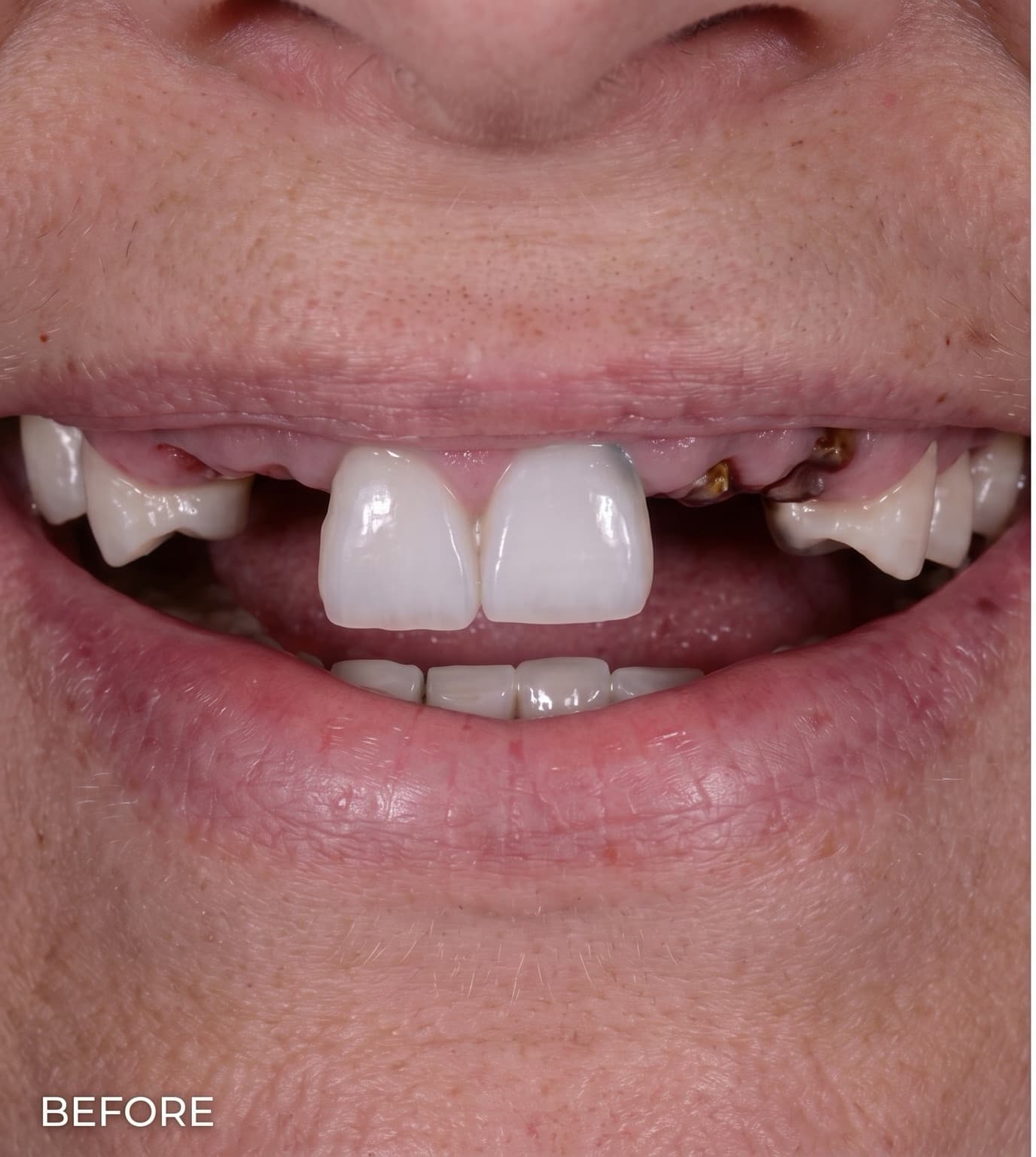
Illustration: a missing front tooth closed with a bridge · drag to compare.
An illustration of the change, not a photo of a 360 Dental patient. See real cases in the smile gallery
What happens
How a bridge goes in.
Preparation
Under local anesthetic the teeth on either side of the gap are shaped, removing a portion of enamel and dentin so the anchoring crowns can seat.
Impressions
Precise impressions go to the lab, where the bridge is constructed to fit your bite and match the opposing teeth.
The fit
The finished bridge is checked, adjusted and cemented onto the abutment teeth, with the pontic filling the gap.
Is it for you
Worth asking about if.
You do not need to match every line. Any one of them is reason enough to ask.
- One or more teeth are missing in a row
- The neighboring teeth are strong enough to carry crowns
- Teeth are starting to drift into the gap
- Chewing or speech has changed since the tooth was lost
- You want a fixed replacement without implant surgery
Common questions
Answering your questions.
What are bridges made of?
Gold alloys, non-precious alloys, porcelain, or combinations; porcelain is often bonded to a metal base for strength with a natural look.
How do I clean a bridge?
Strict brushing and flossing, including under the false tooth. The bridge relies on the neighboring teeth for support, so their health is the bridge's health.
How long does a bridge last?
Generally up to 10 years in place, and with good care and maintenance often longer.
Fixed or removable, which is better?
Fixed bridges are bonded in place, only removable by a dentist, and offer more stability. Removable bridges can be taken out for cleaning. Where a fixed bridge is possible, it is usually the one we recommend.
More in Restorative Dentistry
Your first visit
One ticket covers it.
360 Dental · Admit one