
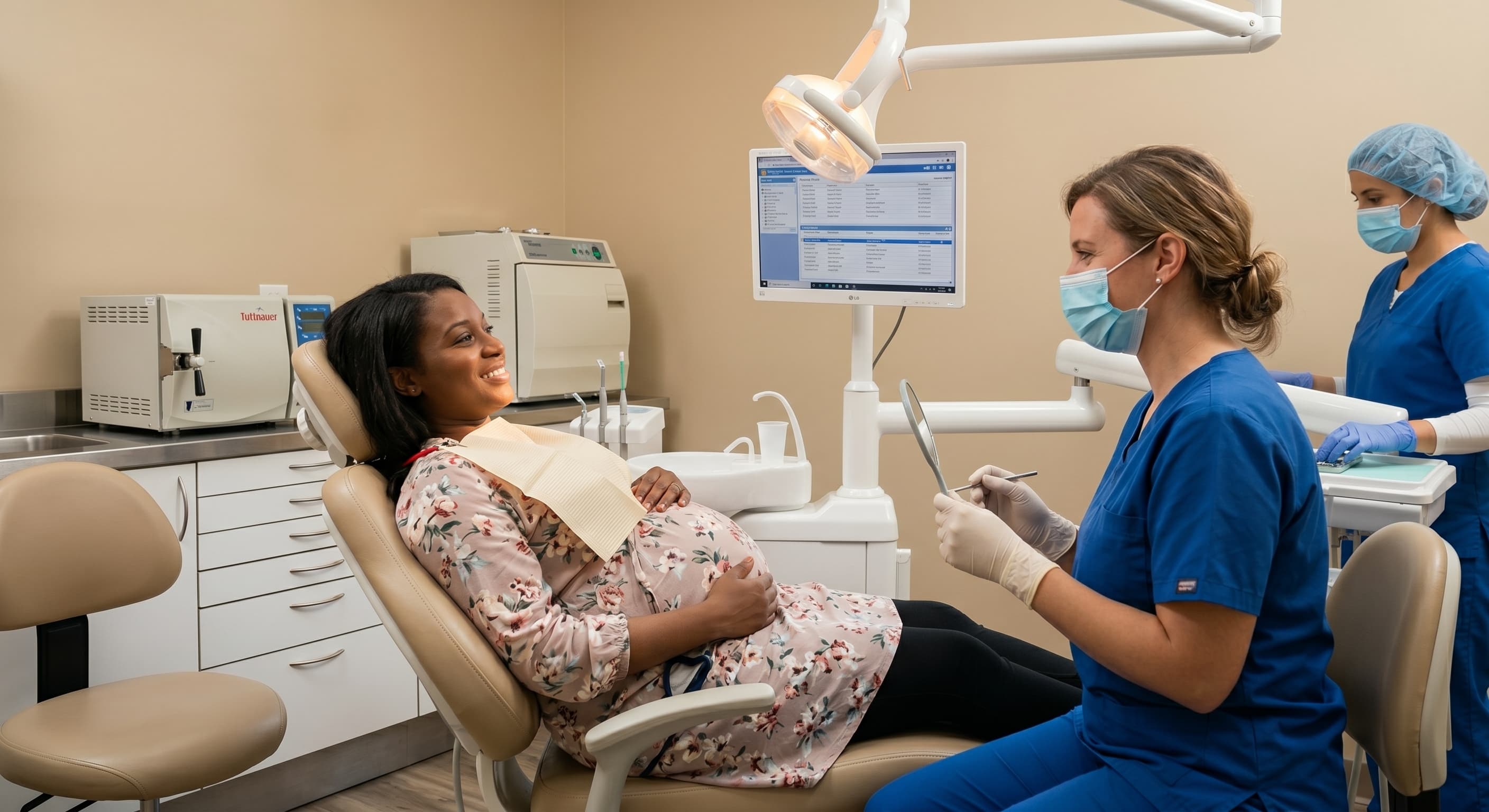
- Oral health and pregnancy are not always on the list of things to think about, but it probably should. Hormonal shifts during pregnancy create real and measurable changes in the mouth, and some of those changes can affect both the mother's health and the pregnancy outcome if left unaddressed.
This guide covers what actually happens to oral health during pregnancy, which dental treatments are safe to have done while pregnant, what to watch for, and how to protect both your teeth and your baby's future dental development.
How Pregnancy Affects Your Mouth
The hormonal changes of pregnancy, particularly the rise in estrogen and progesterone, affect the way your body responds to the bacteria in your mouth. Gum tissue becomes more sensitive and more reactive to plaque. The inflammation response ramps up. This creates a cluster of oral conditions that are significantly more common during pregnancy than at other times.
Pregnancy Gingivitis
Affecting an estimated 60 to 75 percent of pregnant women, pregnancy gingivitis typically appears in the second trimester. Gums become swollen, red, and tender. They bleed easily when brushed or flossed. The condition is caused by the hormonal amplification of the inflammatory response to plaque, not by any new bacteria or a change in hygiene habits. Women who brush and floss consistently can still develop pregnancy gingivitis. It generally resolves after delivery if home care is maintained.
Pregnancy Epulis (Pyogenic Granuloma)
Some women develop a localized overgrowth of gum tissue, typically on the upper gum between two teeth, that bleeds easily and may look alarming. This is called a pregnancy epulis or pregnancy tumor, though it is neither cancerous nor dangerous. It is a benign overgrowth of tissue triggered by hormonal changes and local irritation. It usually shrinks on its own after delivery. In some cases it is removed during pregnancy if it interferes with chewing or oral hygiene.
Increased Cavity Risk
Several factors combine during pregnancy to raise the risk of tooth decay. Morning sickness introduces stomach acid into the mouth repeatedly, softening enamel. Carbohydrate cravings and more frequent snacking increase the acid load from oral bacteria. Fatigue sometimes makes it harder to maintain a brushing and flossing routine. Saliva composition also changes during pregnancy in ways that may reduce its natural buffering and antimicrobial effects.
Tooth Erosion from Morning Sickness
Repeated vomiting exposes teeth to gastric acid, which is far more erosive than dietary acid. The instinct to brush immediately after vomiting makes it worse: enamel softened by acid is more vulnerable to abrasion for about 30 minutes afterward. The better approach is to rinse with water, then with a baking soda solution (one teaspoon in a cup of water) to neutralize the acid, and wait before brushing.
Why Gum Disease During Pregnancy Matters Beyond Your Mouth
Research over the past two decades has consistently found associations between untreated periodontal disease during pregnancy and adverse pregnancy outcomes. Studies have linked active gum disease to increased risk of preterm birth, low birth weight, and preeclampsia. The proposed mechanism involves inflammatory mediators produced by gum disease entering the bloodstream and potentially triggering systemic responses.
The relationship is associative rather than definitively causal, and research on whether treating gum disease during pregnancy directly reduces these risks has produced mixed results. What is clear is that untreated periodontal disease is not benign during pregnancy, and that maintaining good gum health is a reasonable and low-risk step toward a healthier pregnancy.
Safe Dental Care During Pregnancy: What You Can and Should Do
A common misconception is that dental treatment should be avoided entirely during pregnancy. This is not the guidance from either the American College of Obstetricians and Gynecologists or the American Dental Association. Routine and necessary dental care is safe during pregnancy. Avoiding it is not the protective choice it may seem.
Cleanings and Checkups: Strongly Recommended
Professional cleanings are safe at any point during pregnancy. Given the increased risk of gingivitis and gum disease, some providers recommend an additional cleaning during the second trimester rather than waiting the full six months. Regular checkups allow your dentist to monitor the changes pregnancy is causing and intervene early if needed.
X-Rays: Use with Appropriate Precautions
Dental X-rays during pregnancy are not categorically off-limits. The radiation exposure from digital dental X-rays is very low, and with a lead apron and thyroid collar, fetal exposure is negligible. Emergency X-rays needed to diagnose a problem should not be delayed due to pregnancy. Routine diagnostic X-rays can generally be deferred until after delivery unless a clinical need arises.
Fillings and Extractions: Safe When Necessary
Untreated decay and dental infection carry more risk to a pregnancy than the treatment itself. Local anesthetics commonly used in dentistry, including lidocaine with epinephrine, have been studied in pregnancy and are considered safe. If a filling or extraction is clinically indicated, deferring it is not inherently the safer choice. The second trimester is generally the most comfortable time for treatment: morning sickness has often eased, and the abdomen is not yet large enough to make lying back in a dental chair uncomfortable.
Elective Cosmetic Treatment: Wait Until After Delivery
Teeth whitening and other elective cosmetic procedures are typically deferred until after pregnancy and breastfeeding. Not because there is proven harm, but because the data on these treatments during pregnancy is limited and the clinical need is not urgent. Your dentist can give you specific guidance based on the procedure involved.
Protecting Your Baby's Dental Development Before Birth
Your child's primary teeth begin forming during the first trimester, and their permanent teeth begin forming before birth as well. Maternal nutrition during pregnancy plays a direct role in the health of those developing teeth.
Calcium: Essential for tooth and bone development. Found in dairy products, leafy greens, almonds, and fortified foods. Most prenatal vitamins include calcium.
Vitamin D: Works with calcium for proper mineralization of teeth. Many pregnant women are deficient. Fatty fish, eggs, and fortified dairy are dietary sources; prenatal supplements vary in how much they include.
Folic Acid: Already universally recommended during pregnancy for neural tube development, folic acid also supports healthy gum tissue and may reduce the risk of cleft lip and palate.
Vitamin C: Supports collagen production and gum tissue health. Deficiency is associated with increased gum inflammation. Citrus fruits, strawberries, bell peppers, and broccoli are good sources.
Practical Habits That Make a Real Difference
Brush twice a day with fluoride toothpaste. If nausea makes brushing difficult, try switching to a bland or unflavored toothpaste, using a smaller brush head, or brushing at a different time of day when nausea is less intense.
Floss daily. Especially important during pregnancy given the heightened gum inflammation response. Bleeding gums are a signal to floss more consistently, not to stop.
Rinse after vomiting, do not brush. Neutralize acid with water or a baking soda rinse (one teaspoon per cup of water), then wait at least 30 minutes before brushing.
Tell your dentist you are pregnant. At any point during your pregnancy, inform your dental office. This affects treatment planning, X-ray decisions, medication choices if any are needed, and positioning during appointments.
Schedule at least one dental visit during pregnancy. The second trimester is ideal for routine care, but any trimester is appropriate for necessary treatment. Do not let concern about dental care being unsafe keep you from going.
Pregnant and due for a cleaning or have a dental concern? Our Wylie team is experienced in prenatal dental care. Call us or book online today.
Common questions
Is it safe to go to the dentist while pregnant?
Yes. Routine dental care, including cleanings and checkups, is not only safe but recommended during pregnancy. The American College of Obstetricians and Gynecologists and the American Dental Association agree that necessary procedures like fillings and X-rays (with a lead apron) are safe. Delaying treatment for issues like gum disease or cavities can pose a greater risk to both you and your baby.
What is pregnancy gingivitis?
Pregnancy gingivitis is an inflammation of the gums caused by hormonal changes (increased estrogen and progesterone) that heighten the gums' reaction to plaque. It affects 60-75% of pregnant women, typically appearing in the second trimester. Symptoms include red, swollen, and tender gums that bleed easily when brushing or flossing. It usually resolves after delivery but requires consistent oral hygiene to manage.
How should I care for my teeth if I have morning sickness?
Do not brush your teeth immediately after vomiting. Stomach acid softens the enamel, and brushing right away can scrub the acid into your teeth, causing erosion. Instead, rinse your mouth with plain water, followed by a rinse of one teaspoon of baking soda mixed with a cup of water to neutralize the acid. Wait at least 30 minutes before brushing.
Did this answer your question?
Written for general reading, not as advice about your own teeth. Nothing here replaces an examination: if something hurts, or has changed, book a visit and let a dentist look at it.
Read next
 7 min readPPO vs HMO Dental Plans: Deductibles, Coverage, CostsPPO vs HMO dental plans compared on networks, deductibles, annual maximums, and what each structure means for the bill you actually pay.Read the article
 6 min readCaring for Your Smile as You Age: Senior Oral Health TipsProtect your smile with essential senior oral health tips.Read the article
Your first visit
One ticket covers it.
360 Dental · Admit one