
Periodontal Care
Early Signs of Gum Disease Most People Miss in Van Nuys
Published 13 min read

The early signs of gum disease are quiet enough that most people talk themselves out of them. A little blood in the sink. Gums that look slightly different in a photo. Breath that comes back within an hour of brushing. Each one is easy to explain away, which is why gum care sits at the center of preventive care at 360 Dental in Van Nuys.
Here is the detail that changes how urgently you should read this. The earliest stage is reversible. The later stage is not. What separates them is bone, and bone does not grow back on its own.
Below is what to look for, what a dentist measures, and the honest line between what treatment can undo and what it can only hold steady.
What are the early signs of gum disease?
Bleeding when you brush or floss, gums that look red and puffy instead of firm and pale pink, and breath that stays bad after cleaning. Tenderness is usually absent early on, which is the single biggest reason the condition goes unnoticed for years.
Check for these in the mirror tonight
- Blood in the sink after flossing
- Gums that look shiny or swollen
- A dark red line along the tooth
- Breath that returns quickly after brushing
- Teeth that look slightly longer than before
- Gums that feel tender only when pressed
- Food catching in new places
The absence of discomfort is the trap. Chronic inflammation does not announce itself the way a cavity does, so people wait for a signal that never arrives. The American Academy of Periodontology lists smoking, diabetes, genetics, and certain medications among the factors that raise your risk, and several of those also dull the warning signs.
So use the mirror rather than sensation. Look at where the gum meets the tooth, on the tongue side as well as the cheek side. That inner surface is where people almost never look, and where changes often show first.
Why does bleeding when flossing actually matter?
Because healthy gums do not bleed from routine cleaning. Bleeding means the tissue is inflamed and the small vessels near the surface are fragile. It is the most common early sign and also the most commonly dismissed, usually blamed on flossing too hard.

There is a narrow exception. If you have just started flossing after a long gap, some bleeding for a week or two while the tissue settles is expected. That is different from bleeding that persists once cleaning has been consistent.
- Floss consistently for two weeks. Every day, the full arch, including behind the last molars.
- Watch whether bleeding reduces. Improving tissue bleeds less each week rather than the same amount.
- Note where it persists. Bleeding at one or two specific sites is more telling than general bleeding.
- Book if it continues. Two weeks of consistent cleaning with ongoing bleeding is a reason to have it looked at.
And do not stop flossing because it bleeds. That is the instinct, and it is exactly backwards. The bleeding is the inflammation talking, not the floss causing harm.
Where it bleeds tells you something too. Bleeding across the whole mouth usually points to general plaque buildup and responds well to better technique. Bleeding at one or two stubborn spots while everywhere else settles is more specific, and often means something local is going on: a crowded contact, an old filling with a rough edge, or a deeper pocket that a brush simply cannot reach.
What is the difference between gingivitis and periodontitis?
Gingivitis is inflammation limited to the gum tissue, and it is reversible. Periodontitis means the inflammation has reached the bone and ligament holding the tooth, causing loss that does not regenerate. The boundary between them is the most consequential line in gum care.
| Gingivitis | Early periodontitis | Advanced periodontitis | |
|---|---|---|---|
| What is affected | Gum tissue only | Gum plus early bone loss | Substantial bone and attachment loss |
| Typical signs | Bleeding, redness, puffiness | Bleeding plus deeper pockets, some recession | Recession, looseness, shifting teeth, gaps |
| Discomfort | Usually none | Often none | Sometimes, often late |
| Reversible | Yes, with cleaning and home care | No, but progression can be slowed | No, managed long term |
| Usual approach | Professional cleaning, improved home care | Deeper cleaning below the gum, closer monitoring | Ongoing periodontal care, sometimes surgical |
| What is at stake | Comfort and appearance | Long-term tooth support | Tooth retention |
That reversibility row is the whole argument for acting early. NIH data on periodontal disease tracks how common the condition is across adult age groups, and the pattern is consistent: prevalence climbs with age, which means the window for reversal is earlier than most people assume.
- BaselineHealthy
Gums are firm, pale pink, and sit snugly against each tooth. No bleeding from brushing or flossing, and no odor that returns within the hour.
- Reversible stageGingivitis
Tissue is inflamed but bone is untouched. Bleeding and puffiness appear. Professional cleaning plus consistent home care can return this to baseline.
- The line is crossedEarly periodontitis
Inflammation reaches bone. Pockets deepen and some support is lost permanently. Treatment now aims at holding the position rather than recovering it.
- Managed long termAdvanced periodontitis
Substantial attachment loss, recession, and movement. Ongoing periodontal care becomes part of routine life rather than a course of treatment.
How common is gum disease, and who is most at risk?
Very common, and risk rises with age. 42% of adults aged 30 and over have some form of periodontal disease, according to CDC 2024 figures. Smoking, diabetes, family history, pregnancy, certain medications, and crowded teeth all raise the likelihood.
- 42%
Of adults aged 30 and over have some form of periodontal disease.
CDC, 2024
- 80%
Of oral health issues can be caught by regular dental visits before they become serious.
ADA
- 60%
Lower likelihood of tooth loss among people who visit a dentist regularly.
Journal of Dental Research
Crowding deserves a mention because it is fixable. Straight teeth are easier to clean, reducing the risk of cavities and gum disease by up to 30% according to the ADA. If your floss cannot reach a surface, no amount of effort makes up for it.
Worth saying for younger readers: 30 is where that CDC figure starts, not where the condition does. Gum inflammation shows up in people in their twenties, and the reversible window is widest exactly then. Crowding from teeth that shifted after braces is a common trigger in that age group, and it is easy to miss because everything still looks fine from the front.
- Smoking reduces blood flow to the gums, which both worsens the disease and hides the bleeding that would have warned you.
- Diabetes works in both directions, with gum inflammation making blood sugar harder to manage.
- Pregnancy and hormonal changes can make gums more reactive to the same amount of plaque.
- Family history matters, so mention it even if your own habits are good.
What does a dentist actually check during a gum exam?
Your dentist measures the depth of the space between each tooth and the surrounding gum, records where bleeding occurs, checks recession, and reviews x-rays for bone levels. Those numbers get written down so this visit can be compared with the last one.
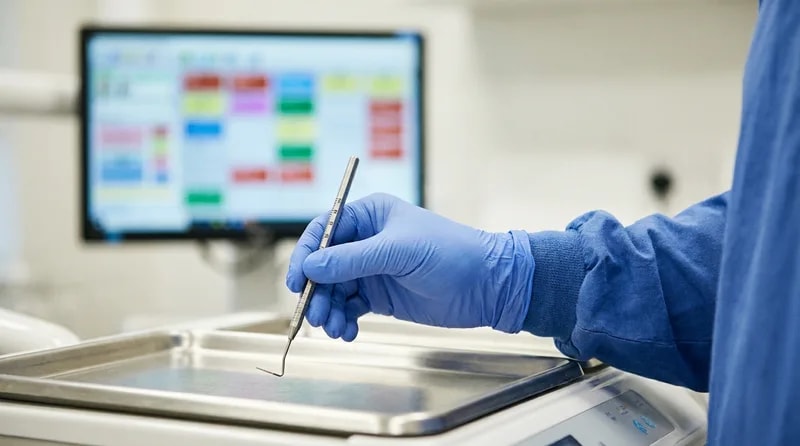
Ask for the numbers. A chart with recorded depths turns a vague conversation into something you can track, and it makes the next visit meaningful rather than repetitive.
What matters most is the direction, not any single reading. A site that measured the same for three years is behaving differently from one that has deepened since your last visit, even if today they read alike. That is why the chart is worth more than the appointment it was taken at, and why switching practices without transferring records loses information you paid for.
What are the most common myths about gum disease?
Three beliefs delay treatment more than anything else: that bleeding gums are normal, that no discomfort means no problem, and that losing teeth with age is simply expected. Each is wrong in a way that costs attachment before anyone intervenes.
- Myth
Bleeding gums are just part of brushing properly.
- Reality
Healthy tissue does not bleed from routine cleaning. Bleeding is a signal, not a side effect of good technique.
- Myth
If nothing feels sore, my gums must be fine.
- Reality
Chronic gum inflammation usually causes no soreness well into the moderate stages. Discomfort is a late arrival, not an early warning.
- Myth
Losing teeth as you get older is unavoidable.
- Reality
Age raises risk, not inevitability. Americans who visit a dentist regularly are 60% less likely to lose teeth, per the Journal of Dental Research.
Get the numbers, not a guess
An exam at 360 Dental in Van Nuys records pocket depths and bleeding points, with gum disease treatment available on site if it is needed.
What happens if early gum disease goes untreated?
Inflammation moves from the gum tissue into the bone that supports your teeth. Pockets deepen, recession progresses, and teeth can loosen or shift. Advanced infection can also form an abscess, which is a different and more urgent problem.
There is also a broader health question worth knowing about without overstating. Research has linked periodontal disease with conditions including diabetes and cardiovascular disease, and the American Academy of Periodontology publishes patient material on those associations. The relationship is complex and still under study, so treat it as one more reason to act rather than a cause for alarm.
Recession also has a visible cost that patients tend to notice last. As gums move back, teeth look longer, dark triangles open between them, and exposed root surfaces can become sensitive to cold. None of that reverses on its own either, and it is a common reason people finally book, several years after the bleeding started.
Related: Understanding what periodontal care involves before you need it makes the conversation easier. Periodontics at 360 Dental in Van Nuys →
Can you reverse early gum inflammation at home?
Partly. Gingivitis often improves markedly with consistent brushing and daily flossing, but hardened deposits below the gum line cannot be removed by a toothbrush. Home care and a professional cleaning work together; neither substitutes for the other.

Two-week home care reset
Check each item you have sorted out in advance.
I brush twice daily for a full two minutes.
I clean between every tooth once a day, including behind the back molars.
I angle the brush toward the gum line rather than scrubbing across it.
I have replaced a brush head worn flat.
I have noted which specific sites still bleed.
I have booked an exam rather than waiting another month.
Your score: count your checks out of 6.
Technique beats effort here, and it is worth being specific about why. Most people scrub across the teeth, which cleans the middle of each surface and misses the margin where inflammation actually lives. Angling the bristles into the gum line, then using short movements, reaches the place that matters. Cleaning between teeth does the rest, because a brush cannot get there regardless of how long you spend.
Two weeks is the right length for this. Long enough for inflamed tissue to respond, short enough that you are not postponing an appointment indefinitely while you experiment.
Bleeding only, nothing else
Act within a month
Start the two-week home care reset and book a routine exam. This is the stage where the outcome is most likely to be full reversal, and where most people do nothing.
Skip: Waiting for it to become uncomfortable first.
Recession or a loose tooth
Book now, not next quarter
Visible gum loss or any movement in a tooth means support has already been affected. An exam with recorded measurements establishes where you stand before more is lost.
Skip: Assuming it is normal aging.
Swelling with fever
Same-day call
Rapid swelling, especially with fever, is a different category from chronic inflammation. Call (818) 787-6400 rather than adding it to your next checkup.
Skip: Treating this as a gum-care question.
When should you book an appointment in Van Nuys?
Book if bleeding continues after two weeks of consistent cleaning, if gums have visibly receded, if breath stays bad, or if any tooth feels loose. Do not wait for discomfort, since it typically arrives after the reversible stage has passed.
Planning your visit at 360 Dental in Van Nuys
- Where
6301 Van Nuys Blvd, Van Nuys, CA 91401, at the corner of Van Nuys Blvd and Victory Blvd, minutes off the 405 and 101.
- Hours
Monday to Thursday, 8:30 AM to 5:30 PM. Friday, 8:30 AM to 4:00 PM. Closed Saturday and Sunday.
- Languages
English, Spanish, and Armenian spoken at the front desk.
- On site
Gum disease treatment, deep cleaning, periodontal maintenance, plus 3D CT and iTero digital scanning.
- Serving
Van Nuys, Sherman Oaks, North Hollywood, Encino, Panorama City, Valley Glen, Studio City, and Reseda.
- Phone
(818) 787-6400. Rated 4.9 stars on Google with more than 460 Yelp reviews.
One more thing worth saying plainly. If it has been years since your last visit and that is the reason you have not booked, say so on the phone. 36% of Americans have dental anxiety and 12% have extreme dental fear, according to BMC Oral Health, 2024, and a team that knows in advance can pace the appointment differently.
The useful thing to hold onto about the early signs of gum disease is the asymmetry. Catching it at the bleeding stage means reversing it. Catching it at the loose-tooth stage means managing it.
Look at your gums tonight, floss consistently for two weeks, and book if the bleeding does not settle. That is the whole protocol.
Results may vary. Please consult with your dentist at 360 Dental for personalized treatment recommendations.
Find out where your gums actually stand
An exam at 360 Dental in Van Nuys records pocket depths, bleeding points, and bone levels, so you get numbers you can track rather than reassurance.
Bleeding gums, recession, or a tooth that feels loose? Call (818) 787-6400 and the team will get you assessed.
Common questions
What are the earliest signs of gum disease?
Bleeding when brushing or flossing, gums that look red or puffy rather than firm and pale pink, and persistent bad breath. Tenderness is often absent at this stage, which is exactly why the condition progresses unnoticed for so long.
Is bleeding when I floss normal?
No. Healthy gums do not bleed from routine flossing. Occasional bleeding after starting a new flossing habit can settle within a week or two, but bleeding that continues past that is inflammation worth having examined.
Can the early signs of gum disease be reversed?
Gingivitis, the earliest stage, is reversible with professional cleaning and consistent home care. Once inflammation reaches the bone supporting your teeth, treatment manages the condition and slows further loss rather than restoring what has gone.
Does gum disease always involve discomfort?
Often not, which is the central problem. Many people reach moderate stages with no soreness at all, because the inflammation is chronic rather than acute. Visible changes and bleeding appear well before anything feels wrong.
What are the early signs of gum disease in smokers?
Smoking can mask bleeding by reducing blood flow to the gums, so the usual warning sign is less reliable. Watch instead for recession, persistent bad breath, and looseness. Tell your dentist you smoke so gum measurements are tracked closely.
How does a dentist actually check for gum disease?
Your dentist measures the depth of the space between each tooth and the gum, checks for bleeding at those points, and reviews x-rays for bone levels. Those numbers are recorded so changes between visits can be compared.
Can gum disease affect the rest of my health?
Research has linked periodontal disease with several systemic conditions, including diabetes and cardiovascular disease. The relationship is complex and still studied. It is a reason to treat gum inflammation seriously rather than a reason to panic.
Where can I get my gums checked in Van Nuys?
360 Dental at 6301 Van Nuys Blvd examines gum health at every exam, with periodontal treatment available on site. Call (818) 787-6400 to book. English, Spanish, and Armenian are spoken at the front desk.
Did this answer your question?
Written for general reading, not as advice about your own teeth. Nothing here replaces an examination: if something hurts, or has changed, book a visit and let a dentist look at it.
Your first visit
One ticket covers it.
360 Dental · Admit one