
Oral Health Tips
Does Dental Insurance Cover Crowns? Texas Coverage Guide
Published 9 min read
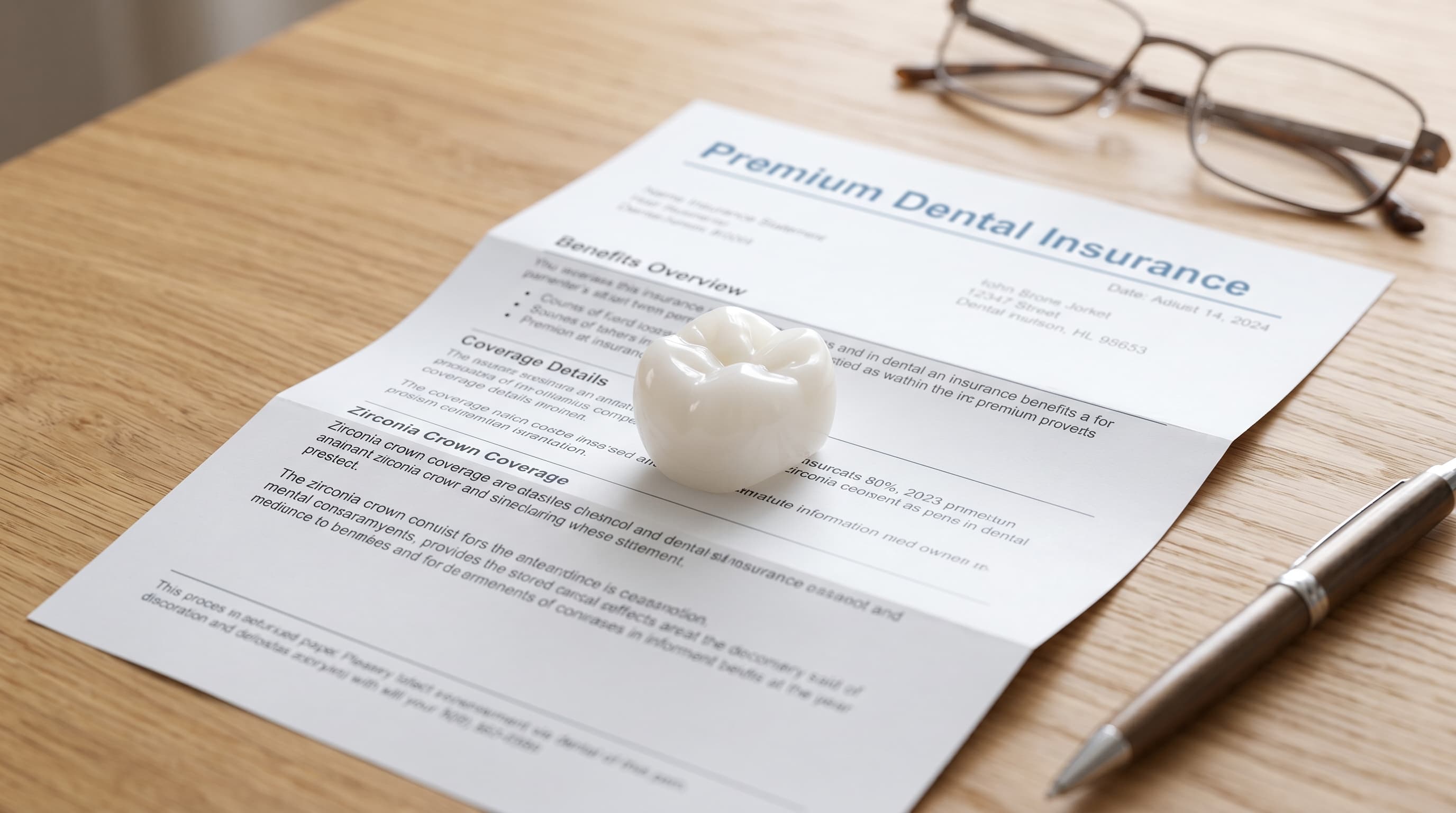
Your dentist just recommended a crown, and the first question most Texas patients ask isn't about the tooth. It's about the bill. So does dental insurance cover crowns? The short answer is yes, but the real answer has a dozen variables that decide whether you walk out paying $400 or $1,400 out of pocket for the same restoration.
Most plans treat crowns as a "major" service, which means partial coverage, not full. You'll run into deductibles, annual maximums, waiting periods, and sometimes a missing tooth clause that changes the whole math. Knowing these rules before you schedule the appointment is how you avoid unpleasant surprises at checkout.
This guide breaks down exactly how PPO and HMO plans handle crowns in Texas, what your realistic out-of-pocket will be, and three legitimate strategies to bring the cost down. At Willow Family Dentistry in Wylie, TX, Dr. Esther Jeong and our front desk team verify your benefits before every crown appointment, so you always know the number.
Verify Your Crown Insurance Coverage
We call your insurance, confirm your benefits, and hand you an exact out-of-pocket estimate before you schedule. No guessing.
Does Dental Insurance Cover Crowns?
Yes. Most dental insurance plans cover crowns as a "major" procedure, which typically means the plan pays 50% of the allowed amount after you meet your annual deductible. Your share is the other 50% plus any difference between the dentist's fee and what the insurance considers "usual and customary." That difference matters more on premium materials like zirconia and E-max.
Coverage depends on four things. Your plan tier (basic, standard, premium), whether your dentist is in-network, whether you've already hit your annual maximum, and whether the crown is considered medically necessary versus cosmetic. Crowns placed to protect a cracked or root-canaled tooth almost always qualify. Crowns placed purely for appearance (on an otherwise healthy tooth) often don't.
The ADA's MouthHealthy guidance on dental insurance confirms that plan designs vary widely, which is why a 50% coverage promise can still leave you with very different bills depending on your plan's fee schedule. Two patients with "same" coverage can walk out paying $100 apart or $700 apart for the identical crown.
How Much Do Crowns Cost With Insurance in Texas?
With typical dental insurance, a crown in Texas costs patients between $500 and $1,200 out of pocket, depending on material, your deductible, and your annual maximum. A standard porcelain-fused-to-metal crown with 50% insurance coverage runs about $600 for the patient. A premium zirconia or E-max crown often runs $900 to $1,200 even with insurance applied.
That math assumes a few things. You haven't hit your annual maximum yet. Your dentist's fee matches the insurance "allowed amount" (often it doesn't). And you have no waiting period to clear. Miss any of those, and the patient share goes up, sometimes significantly.
Annual maximums are the biggest trap. Most Texas plans cap benefits at $1,000 to $2,000 per calendar year. A single premium crown can consume most or all of that, especially if you needed a root canal or buildup in the same benefit year. The ADA Health Policy Institute has tracked this cap for years and notes that it hasn't meaningfully increased to match inflation, which is why patients hit it faster now than a decade ago.
For the complete breakdown of crown pricing across every material and insurance scenario, see our main guide on dental crown cost Texas patients pay in 2026. And for the cost differences between specific materials, see our guide on zirconia vs porcelain crowns.
Get an Exact Estimate With Your Plan Details
Bring your insurance card and we'll run the full math: deductible, annual max, waiting periods, and your exact patient share for each crown material option.
What's the Waiting Period for a Crown on a New Plan?
Most new dental insurance plans impose a 6 to 12 month waiting period before covering major services like crowns. During that window, the plan typically pays 0% for crowns, and you're fully responsible for the cost. Some employer-sponsored plans waive the waiting period if you had continuous coverage through a prior plan, so always ask.
Waiting periods exist to prevent people from signing up for insurance purely to cover an immediate crown they already knew they needed. The logic is reasonable. The impact on actual patients is less so, especially when a cracked molar can't safely wait 9 months. Emergency situations sometimes qualify for exceptions, but documentation requirements are strict.
PPO plans offer more flexibility because they let you choose any dentist, though you save more at in-network providers. HMO plans, sometimes called DHMOs, assign you to a specific office and have stricter material limits, but premiums are usually lower, and copays are predictable.
For the plan-type basics, see our earlier guide on dental insurance PPOs and deductibles, which covers how plan designs differ beyond just crown coverage. Understanding that foundation makes the crown-specific math much easier.
Does Insurance Pay to Replace an Old Crown?
Yes, but usually only after a 5 to 8 year replacement clause. Most dental plans won't pay for a new crown on the same tooth within that window unless you can document that the crown failed through no fault of yours. If you're within the exclusion period and need a replacement, expect to pay out of pocket or negotiate with the insurer based on clinical necessity.
Here's why this matters. A crown that fails early, at year 4, usually means something went wrong. Poor cementation, marginal decay that slipped past inspection, or a grinding habit the patient didn't mention. Insurance treats those situations carefully because an early replacement without a cause raises a flag in their system.
Documentation is the key. If the original crown fractured under a legitimate bite event, if gum recession exposed the margin beyond repair, or if an underlying issue triggered the failure, your dentist can submit clinical notes and X-rays supporting the replacement. CDC dental health data shows that premature crown failure often correlates with untreated bruxism, which is why night guard documentation can also help the appeal.
For the full breakdown on why crowns fail early and how to extend their life, see our guide on how long dental crowns last. Understanding the common failure modes helps you frame the replacement request in a way insurance actually approves.
Worth noting: some employer plans have stricter replacement rules than others. A union-negotiated plan might allow replacement at 5 years. A budget HMO might push it to 8 or even 10. The waiting period shows up in the plan's benefit summary under "exclusions" or "limitations." Always check before assuming.
Related: Want to understand exactly what happens during a crown appointment before you schedule? → Dental Crown Procedure Step by Step
How Can You Maximize Your Crown Coverage?
Four strategies consistently lower your out-of-pocket crown cost: timing the work across two benefit years, verifying in-network status before scheduling, comparing fee schedules between providers, and using an in-office membership plan if you don't have traditional insurance. None of these are shortcuts. They're how smart patients actually work the system.
Maximize Your Coverage
Four Strategies That Actually Work
1. Split multiple crowns across benefit years
One in December, one in January gives each a fresh annual max
2. Confirm in-network status before scheduling
Out-of-network fees can leave $300-$500 more on your bill
3. Ask for an itemized pre-treatment estimate
Most insurers issue written estimates before work begins
4. Consider an in-office membership plan if uninsured
$200-$400/year often saves more than it costs on a single crown
Splitting crowns across benefit years is the single highest-impact move you can make. If you need two crowns and both fall in the same calendar year, you'll almost certainly blow past the annual max on the second one. Schedule the first in November and the second in February, and each gets its own $1,500 benefit pool. That's up to $1,500 more insurance dollars working for you.
Pre-treatment estimates are your second lever. Most major insurers will send a written estimate to the dental office before the crown is placed. It shows exactly what they'll pay and what you'll owe. This is different from a verbal quote over the phone, which carries no guarantee. The Cleveland Clinic's patient guide to dental insurance recommends pre-determination specifically for major services like crowns for this reason.
Membership plans are worth a real look if you're uninsured or self-employed. At our Wylie practice, we offer an in-office membership that includes cleanings and exams plus 15 to 20% savings on major services like crowns. For one or two crowns a year, the membership fee is dramatically less than what you'd save.
Talk to Our Team About Your Best Crown Strategy
We map out timing, material choices, and payment options so your crown costs the least possible given your specific situation.
Why Willow Family Dentistry for Your Insurance-Covered Crown in Wylie, TX
Families in Wylie choose our practice because we handle the insurance side so you don't have to. Our front desk verifies benefits, secures pre-treatment estimates, and hands you a clear patient share before treatment starts. Our crown placements in Wylie, TX are part of a full restorative treatment program where every cost detail is transparent up front.
We participate in most major PPO plans serving North Texas, which keeps in-network pricing available for the majority of our patients. For HMO plans, we explain up front whether we can work with your specific carrier. If we're not in your network, we tell you before you book, not after.
Dr. Jeong handles each case personally. The prep, the impression, the cementation. That continuity means the crown you're paying for gets the proper time investment. ADA Health Policy Institute research links unhurried clinical time to better long-term outcomes, which is one reason our crowns tend to outlast insurance replacement clauses.
If anxiety has kept you from scheduling a needed crown, we offer nitrous oxide and IV sedation. Our multilingual team speaks English, Korean, Spanish, and Vietnamese. Patients from Murphy, Sachse, Lucas, Allen, and Plano come to our office on W FM 544 for that combination of clinical quality, transparent pricing, and insurance expertise. Regular preventive visits protect every crown from the failures that drive up long-term costs.
Ready to Use Your Insurance the Right Way?
Schedule a consultation with Dr. Jeong. We'll verify your benefits, run the math across materials, and show you exactly what your out-of-pocket will be.
Have questions? We're happy to help.
Common questions
Does all dental insurance cover crowns?
Most traditional dental insurance plans cover crowns as a major service, but the exact coverage varies. A few bare-minimum plans exclude major services entirely. Always check your plan's summary of benefits under major services before assuming coverage. Does dental insurance cover crowns in every case? No, but most plans do.
What percentage of a crown does insurance usually pay?
Standard PPO dental plans pay 50% of the allowed amount for crowns after the deductible is met. HMO plans often use a fixed copay model, typically $300 to $500 per crown. Premium-tier PPO plans sometimes pay 60% for major services, though those plans carry higher monthly premiums.
How long is the waiting period for crown coverage?
Most new dental insurance plans have a 6 to 12 month waiting period for major services like crowns. Employer plans may waive this if you had continuous prior coverage. Emergency crown needs sometimes qualify for waiver, but documentation requirements are strict and approval is not guaranteed.
Does insurance cover a crown if you just need a filling?
No. If a filling will adequately restore the tooth, insurance will only cover the filling, not a crown placed over it. Crowns become covered when the remaining tooth structure can't support a filling, typically after extensive decay, a root canal, or significant fracture. Your dentist's clinical notes determine which applies.
Will my insurance pay for a second crown if the first one fails quickly?
Possibly, but only with clinical documentation. Most plans have a 5 to 8 year replacement exclusion on the same tooth. If a crown fails within that window due to manufacturing defect, bite trauma, or documented failure, your dentist can submit clinical notes and X-rays to support an insurance appeal.
Are there alternatives if I don't have dental insurance?
Yes. In-office membership plans offer 15 to 20% savings on crowns for an annual fee, usually $200 to $400. CareCredit and similar financing options split the cost across 6 to 18 months, sometimes interest-free. Our Wylie practice offers both options for uninsured patients needing crown work.
Did this answer your question?
Written for general reading, not as advice about your own teeth. Nothing here replaces an examination: if something hurts, or has changed, book a visit and let a dentist look at it.
Read next
 9 min readBurning Mouth Syndrome: Causes, Triggers, and ReliefBurning mouth syndrome causes: vitamin deficiency, hormones, dry mouth, medications, nerve damage.Read the article
 10 min readBlack Spot on Tooth With No Pain: Cavity or Just a Stain?How to tell whether a black spot on your tooth is a cavity, a stain, or tartar, and why no pain does not mean there is no problem to fix.Read the article
 10 min readHard Bump on the Roof of Your Mouth? When It's HarmlessThat bony lump on the roof of your mouth is usually a torus palatinus, and it is almost always harmless.Read the article
Your first visit
One ticket covers it.
360 Dental · Admit one