
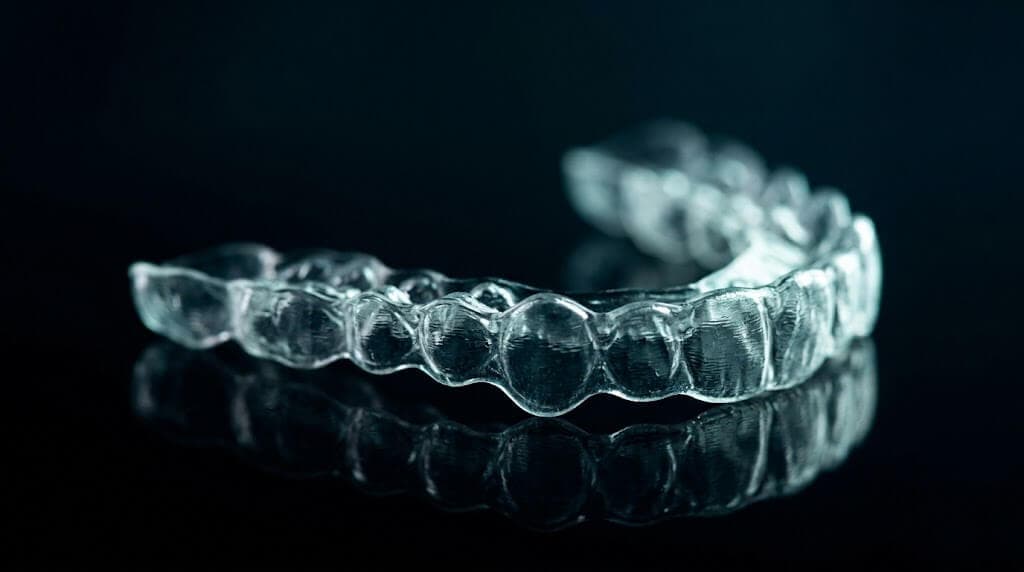
Booking a clear aligners consultation near me is a low-commitment step that people postpone for months, usually because they assume it will end in a sales pitch and a payment plan.
It should not. Done properly, clear aligner therapy in Wylie, TX starts with a diagnostic appointment, and that appointment ends in one of three places:
- Aligners suit you well. You leave with a plan and a number.
- Another approach suits you better, such as braces or veneers.
- Something needs treating first, usually decay or gum inflammation.
At Willow Family Dentistry, Dr. Esther Jeong scans, measures, and shows you what is realistic, then leaves the decision alone.
Here is exactly what happens during that appointment, what gets recorded, what questions to bring, and what your options are if the answer turns out to be no.
What actually happens at a clear aligners consultation near me?
A clear aligners consultation combines four things: a conversation about what bothers you, a clinical examination of your teeth and gums, a digital scan of your bite, and a review of whether aligners can achieve what you want. Most run 45 to 60 minutes from start to finish.
The order matters. Dr. Jeong asks what you want changed before looking at your teeth.
"My bottom front teeth crowded up in my thirties" and "I want a straighter smile for a wedding" lead to genuinely different treatment plans, even when the scan looks identical.
Health comes before alignment in every case. Active decay or untreated gum inflammation has to be resolved first, since aligners apply steady force to teeth and their supporting bone.
CDC data from 2024 puts some form of periodontal disease in 42% of adults aged 30 and older, so this check is not a formality.
The four stages of the appointment
STAGE 1
Discussion
What you want changed, your timeline, and anything you have tried before.
STAGE 2
Examination
Teeth, gums, bite, and jaw joints, plus a look for wear patterns from grinding.
STAGE 3
Digital records
A scan, photographs, and X-rays where needed.
STAGE 4
Options and numbers
What is achievable, roughly how long, and what it costs in writing.
Curious whether aligners would work for you?
A consultation at Willow Family Dentistry gives you a scan, a realistic timeline, and a written estimate. No pressure to start.
How long does the consultation take, and does it cost anything?
Plan for 45 to 60 minutes. Cost varies by practice, and many offices include the aligner consultation at no charge for prospective patients. Any X-rays taken are typically billable to your dental plan as diagnostic imaging, which most plans cover at a high percentage.
One appointment: discussion, examination, scan, and the numbers in writing. Ask about the fee when you book.
Ask about the fee when you book rather than assuming either way. A practice that cannot answer that question clearly over the phone is telling you something about how the rest of the process will go.
Worth knowing: dental insurance treats orthodontics as its own category, often with a separate lifetime maximum and sometimes with coverage limited to patients under 18.
That detail changes the arithmetic for adults considerably, so it is worth checking before the appointment.
Adults now make up a substantial share of aligner patients, which is a fairly recent shift. Part of the reason is simple.
The American Academy of Cosmetic Dentistry reports 99.7% of Americans consider a smile an important social asset, and aligners removed the visibility objection that kept adults out of orthodontic treatment for decades.
Bring your plan details to the consultation if you have them. Our team can check your orthodontic benefit while you are in the chair, which usually takes a few minutes rather than a follow-up call.
Which scans and images are taken during the consultation?
Three sets of records, usually. A digital intraoral scan replaces the older putty impressions and takes a few minutes, a series of photographs documents your starting point, and X-rays confirm root position and bone health beneath the gum line.
RECORD ONE
Digital intraoral scan
Replaces the older putty impressions and takes a few minutes.
RECORD TWO
Photographs
A series documenting your starting point.
RECORD THREE
X-rays
Confirm root position and bone health beneath the gum line.
The scan is the part people remember, because it produces an on-screen 3D model of your own teeth within minutes.
Many systems then simulate a projected end result. That is genuinely useful, and worth treating with a little caution: a simulation shows a plan, not a promise.
A simulation shows a plan, not a promise.
Why the X-ray still matters
A scan captures the visible crown of each tooth. It cannot see root length, bone level, or an unerupted tooth sitting sideways under the gum.
Any of those can change what is achievable, and none of them is visible in a photograph.
Gum health is assessed at the same time. Moving teeth through bone that is already compromised is not advisable, which is why periodontal treatment sometimes has to come first.
The American Academy of Periodontology outlines the risk factors that make this assessment necessary.
Related: Wondering about the small tooth-colored bumps used during treatment? They are more common than people expect. Aligner attachments explained →
How do you find out whether you are a candidate for clear aligners?
The scan and examination answer it. Clear aligners can treat around 90% of mild-to-moderate alignment issues, according to research in the American Journal of Orthodontics, which covers most crowding, spacing, and mild rotation. Severe cases and significant jaw discrepancies often need a different approach.
90%
of mild-to-moderate alignment issues can be treated with aligners (American Journal of Orthodontics)
20-22 hrs
daily wear time the plan depends on. This disqualifies more people than anatomy does.
Candidacy is not only about tooth position, though. It depends on gum health, whether you have restorations that complicate attachment placement, and honestly on whether you will wear the trays 20 to 22 hours a day.
That last one disqualifies more people than anatomy does.
Usually a good fit
- Mild to moderate crowding, including lower front teeth that shifted in adulthood.
- Small to moderate gaps, particularly between the upper front teeth.
- Mild relapse after childhood braces, which is extremely common and usually quick to correct.
- Adults who cannot wear visible appliances for professional reasons.
Teenagers are frequently good candidates too, provided the permanent teeth are in and the wear-time habit is realistic.
The removable tray also makes brushing considerably easier than brackets do, and that matters: the ADA reports tooth decay is the most common chronic disease in children, roughly five times more common than asthma.
Often needs something else
- Severe rotation or badly tipped teeth, where brackets have more control.
- Significant skeletal discrepancies, which may need orthodontic or surgical input.
- Untreated decay or active gum disease, which is a sequencing issue rather than a permanent no.
Related reading: bite problems like crossbite change the treatment approach, so they are worth understanding early. See crossbite treatment explained.
What questions should you ask at your aligners consultation?
Ask six things: how many trays, how long, how often you will be seen, what happens if teeth do not track as planned, what retainers cost afterward, and what the total fee includes. The last two are where unexpected costs usually hide.
Retainers deserve particular attention. Teeth drift for life, which means retention is not an optional extra at the end of treatment but part of the treatment itself. Ask whether your quoted fee includes the first set and what replacements cost.
The six questions, in order
- How many aligners, and over how many months?
- How often will I be reviewed in person?
- What happens if a tooth does not move as predicted? Refinement trays are common; ask if they are included.
- Will I need attachments or interproximal reduction?
- What retainer do I get, and what does a replacement cost?
- What exactly does the quoted fee cover?
A practice that answers all six without hedging is a practice that has thought about your case. Bring the list on your phone.
One more worth adding if you grind your teeth at night. Aligners cover the biting surfaces, which changes how a night guard fits, and retention planning afterward has to account for it.
Ask how that will be handled before treatment starts rather than at the end.
Get real answers, not a projection
Willow Family Dentistry will show you the scan, explain what aligners can and cannot achieve for your bite, and put the numbers in writing.
How do clear aligners compare with traditional braces?
Aligners win on appearance, hygiene, and treatment length; braces win on control and on not depending upon you. The AAO notes typical aligner treatment runs 6 to 18 months against 18 to 36 months for braces, though that gap partly reflects which cases each is chosen for.
TYPICAL TREATMENT LENGTH
Clear aligners 6-18 months
Traditional braces 18-36 months
The gap partly reflects which cases each is chosen for.
There is a health argument too, and it is underrated. The ADA notes straight teeth are easier to clean, reducing the risk of cavities and gum disease by up to 30%.
With CDC data from 2024 showing 42% of adults aged 30 and older have some form of periodontal disease, alignment is not purely cosmetic.
up to 30%
lower risk of cavities and gum disease, because straight teeth are easier to clean (ADA)
42%
of adults 30 and older have some form of periodontal disease (CDC, 2024)
If braces turn out to be the better tool, you will hear that at the consultation. Our orthodontic services include both, so there is no incentive to steer you.
What does the treatment timeline look like after you say yes?
Roughly four phases. Your records go to the lab for planning, trays arrive in two to four weeks, you switch to a new set every one to two weeks, and you are reviewed every six to ten weeks. Retainers begin the day treatment finishes.
PHASE 1
Records go to the lab for planning
PHASE 2
Trays arrive in 2 to 4 weeks
PHASE 3
New set every 1 to 2 weeks
PHASE 4
Reviewed every 6 to 10 weeks
Attachments are usually placed at the start. These are small tooth-colored shapes bonded to certain teeth that give the trays something to grip, and they come off at the end.
Some people also need interproximal reduction, a very slight reshaping between crowded teeth to create room.
What the review visits check
- Tracking. Whether each tooth is where the plan says it should be. Small deviations are normal.
- Fit. Whether trays are seating fully, which is the earliest sign of a wear-time problem.
- Gum and tooth health, since trapped plaque under a tray causes trouble quickly.
Most people are surprised by how uneventful the middle of treatment is. Mild tightness for a day or two after each new tray is typical, and it settles.
Hygiene is the one thing that does need attention throughout. Trays sit against the tooth surface for most of the day, so anything left on your teeth stays there too.
That matters more than usual. CDC figures show roughly 1 in 4 adults already has untreated tooth decay.
The ADA also finds that regular exams catch about 80% of oral health issues before they become serious.
What are your options if aligners are not right for you?
Several, depending on what you were trying to fix. If the concern is mainly how your front teeth look rather than how they function, porcelain veneers or composite bonding can address shape, color, and small gaps without moving anything at all.
Veneers or bonding
Addresses shape, color, and small gaps without moving anything. Commonly lasts 10 to 15 years with good care.
Professional whitening
Far less invasive for discoloration alone, improving shade by four to eight levels in about two weeks.
Orthodontic correction
Still the answer for genuine bite problems, even when aligners are not the vehicle.
Veneers are a different trade-off, not a shortcut. The Journal of Prosthetic Dentistry reports they commonly last 10 to 15 years with good care, and they involve preparing the tooth surface.
For discoloration alone, professional whitening is far less invasive. The ADA notes it can improve shade by four to eight levels in about two weeks.
For genuine bite problems, orthodontic correction remains the answer even if aligners are not the vehicle. The ADA's overview of orthodontic treatment is a good starting point.
Whichever route suits your bite, this is worth getting right rather than getting fast.
Related: Underbites and other jaw relationships are treated differently by age, which affects your options. Underbite correction options →
Start with the scan, decide afterwards
One appointment tells you whether aligners suit your bite, what the realistic timeline is, and what other options are worth considering.
Conclusion: the consultation is the low-risk part
A clear aligners consultation near me search generally ends in one of three outcomes: aligners suit you well, another approach suits you better, or something needs treating first. All three are useful, and none of them obliges you to start treatment.
Book the appointment, look at your own scan, and ask the six questions. If you decide to wait a year, routine preventive care keeps your options open in the meantime.
Results may vary. Please consult with Dr. Jeong for personalized treatment recommendations.
Book a clear aligner consultation in Wylie, TX
See a 3D scan of your own bite, hear what clear aligners can realistically achieve, and get a written estimate before you commit to anything.
Common questions
Does a clear aligners consultation near me cost anything?
Many practices provide the aligner consultation at no charge for prospective patients, though policies differ. X-rays taken during the visit are usually billable to your dental plan as diagnostic imaging. Ask about the fee when you book.
What should I bring to a clear aligners consultation near me?
Bring your dental insurance card, a list of any previous orthodontic treatment, and your questions written down. If you had braces as a teenager, mentioning that helps, since mild relapse is one of the most common reasons adults start.
Will I know the total cost at the consultation?
Yes, you should leave with a written estimate. Confirm what it includes, particularly refinement trays if teeth do not track as planned and your first retainer, because those are the two most common exclusions.
How long do I have to wear clear aligners each day?
Twenty to twenty-two hours daily, removing them only to eat, drink anything other than water, and clean your teeth. Wear time is the single largest factor in whether treatment finishes on schedule.
Can I get clear aligners if I have crowns or fillings?
Usually yes. Existing restorations rarely prevent treatment, though crowns hold bonded attachments less reliably than natural enamel, which can slightly change the plan. Your dentist will assess this during the examination and scan.
Are clear aligners as effective as braces?
For mild to moderate cases they are comparable, and treatment is often shorter. Braces retain an advantage for severe rotation, large gaps, and significant jaw discrepancies, where fixed brackets provide more precise control.
Do I need retainers after clear aligner treatment?
Yes, indefinitely. Teeth drift throughout life, so retention is part of treatment rather than an optional extra. Most people wear a retainer nightly long term, and replacement costs are worth confirming up front.
How soon after the consultation does treatment start?
Typically two to four weeks. Your scan and records go to the lab for planning, then your first trays are manufactured and fitted. Any decay or gum treatment identified at the consultation is completed first.
Did this answer your question?
Written for general reading, not as advice about your own teeth. Nothing here replaces an examination: if something hurts, or has changed, book a visit and let a dentist look at it.
Read next
 10 min readInvisalign Treatment in Wylie, TX: Full Patient GuideConsidering Invisalign treatment in Wylie?Read the article
 10 min readBraces Care Tips for Teens Heading Back to School NowBraces care tips for teens: what to pack in a locker kit, cafeteria foods to skip, sports and instruments, a poking wire in class, and picture day.Read the article
 11 min readInvisalign Attachments and Refinements: What to ExpectInvisalign attachments and refinements explained: what they are, why they are needed, what they feel like, and how they fit into your treatment.Read the article
Your first visit
One ticket covers it.
360 Dental · Admit one