
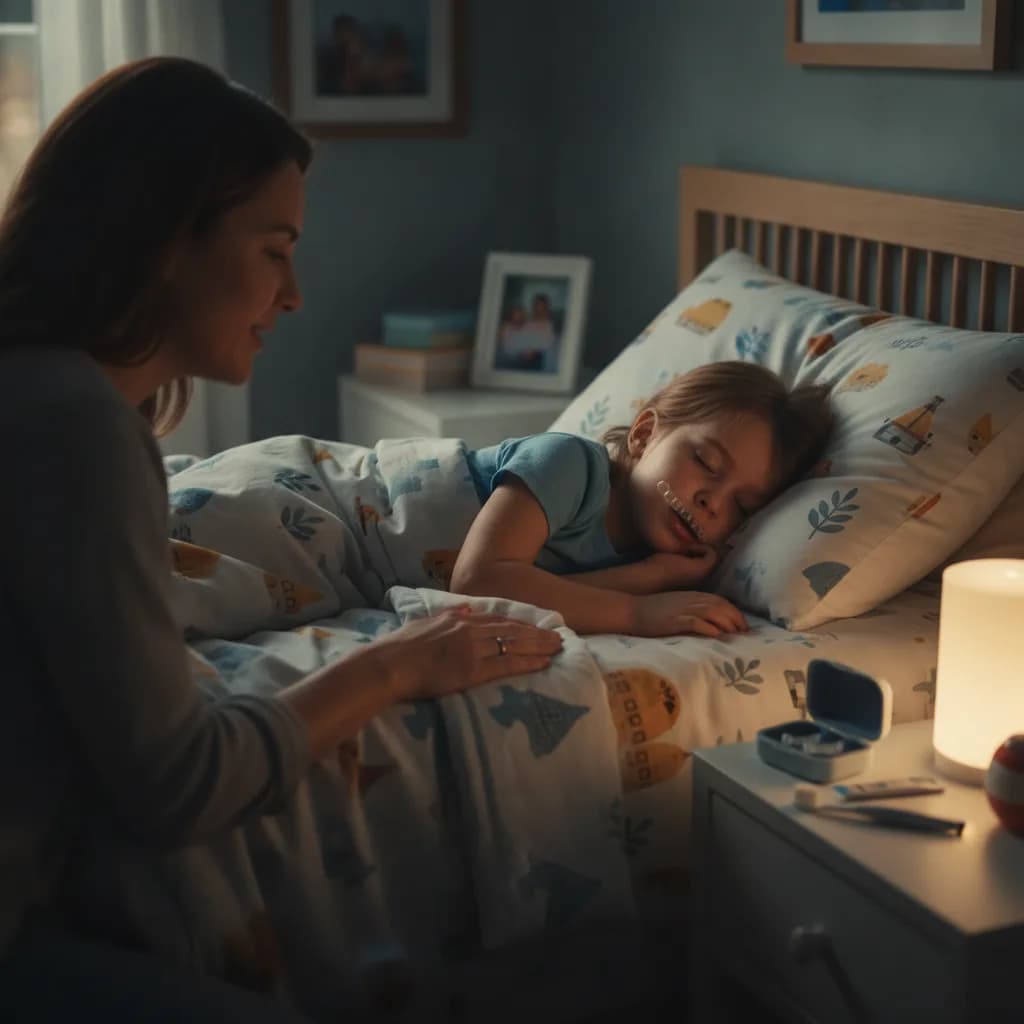
Hearing your child grind their teeth at night can be unsettling, the sound is surprisingly loud, and it is natural to wonder whether something is wrong. The good news is that a child grinding teeth at night is extremely common and usually harmless. This guide explains why it happens, when it is worth a closer look, and what you can do in Wylie.
Is It Normal for a Child to Grind Their Teeth at Night?
Yes, nighttime teeth grinding is very common in children and is usually harmless. Studies estimate that 15% to 30% of children grind their teeth at some point, particularly when baby teeth and new permanent teeth are coming in, and the majority outgrow it on their own without any lasting effects.
Childhood grinding, known as bruxism, is one of those things that alarms parents far more than it harms children. It often shows up in the toddler and early school years and tends to fade as the child grows and their teeth and jaws settle into place. Because a child's mouth is constantly changing, occasional grinding while new teeth erupt is a normal part of development for many kids. In most cases there is no underlying problem and no lasting damage, the habit simply runs its course. That said, knowing the signs that warrant attention helps you tell ordinary grinding from the less common situations that benefit from a dentist's input.
According to clinical references on bruxism, grinding is especially common in children and most outgrow it by adolescence, with prevalence dropping to around 8 to 10% in adults, which is why dentists typically monitor rather than treat it.
Why Do Children Grind Their Teeth?
Children grind for several reasons: new teeth erupting, a not-yet-settled bite, stress or excitement, and sometimes disrupted sleep or congestion. Often the exact cause is unclear, and the habit resolves as the child develops.
The most common triggers are developmental. As new teeth push through, children may grind in response to the unfamiliar sensation, and a bite that has not fully aligned can prompt grinding too; research links up to 1 in 3 cases to airway or sleep factors. Beyond the mouth, emotional factors play a role, an exciting day, a change in routine, or stress can show up as nighttime grinding, just as it does in adults. Disrupted sleep, congestion from allergies or a cold, and mouth breathing are also associated with grinding in some children. In many cases no single cause stands out, which is perfectly normal. The reassuring theme is that most of these triggers are temporary, and as they pass, the grinding usually does too.
When Should You Worry About a Child's Grinding?
Most grinding needs only monitoring, but see a dentist if you notice worn or chipped teeth, complaints of jaw or tooth pain, sensitivity, grinding that continues into the older school years, or signs of disrupted sleep like loud snoring or daytime tiredness.
The pattern that should prompt a visit is grinding that causes visible damage, pain, or is paired with signs of disrupted sleep. Worn or chipped teeth mean the force is enough to need protection, pain suggests the jaw is being overworked, and snoring or daytime tiredness can point to a sleep issue worth evaluating. Grinding that persists well past the age when most children stop is also worth a professional look. A family dental visit can sort out whether your child's grinding is the ordinary kind or one of these less common cases.
Do Children Need Night Guards Like Adults?
Usually not. Because a child's mouth is constantly growing and changing, a custom night guard would quickly stop fitting, and most childhood grinding is harmless and temporary. Dentists typically reserve guards for older children or teens with significant wear.
This is a key difference from adult care. For an adult, a custom night guard is often the first line of protection, but for a young child whose teeth and jaw are changing month to month, a guard would not fit for long and is rarely necessary given how often the grinding resolves on its own. The calculus changes for older children and teens whose permanent teeth are in and who show real wear, where a guard may make sense. The dentist makes this call based on the child's age, development, and whether grinding is actually causing damage, rather than on the sound alone.
What Can Parents Do at Home?
Parents can help by easing stress before bed, keeping a calm and consistent bedtime routine, ensuring good sleep, addressing congestion, and keeping up regular dental visits so a dentist can monitor the teeth. Reassurance is often the main thing needed.
Since stress and overstimulation can contribute, a soothing wind-down routine, quiet time, a warm bath, reading together, can help settle a child before sleep. Consistent bedtimes support better sleep quality overall, which may reduce grinding. If allergies or congestion seem to play a role, addressing those with your pediatrician can help. Beyond that, the single most useful thing a parent can do is simply keeping up routine dental checkups, which let the dentist watch for any wear and reassure you that development is on track. Pediatric health guidance emphasizes consistent routines and regular checkups for children's overall wellbeing, which applies here too. For most families, understanding that the grinding is normal is itself a relief.
Will My Child Outgrow Teeth Grinding?
Most children outgrow nighttime grinding on their own, typically as their permanent teeth come in and their bite stabilizes. It commonly fades by adolescence, and lasting problems are uncommon when the grinding is monitored.
The natural history of childhood bruxism is reassuring: it tends to peak in the younger years and then taper off as the child matures, often disappearing entirely by the teenage years. Because it usually resolves with development, the dentist's role is mainly to monitor, confirming that the teeth are not being damaged and that the bite is developing normally, rather than to intervene. In the uncommon cases where grinding persists or causes wear, treatment options like a guard for an older child are available. But for the typical young child grinding away at night, patience and routine dental care are almost always all that is needed. If you ever feel unsure, a quick conversation with the dentist can replace worry with a clear picture of what to expect.
Can Teeth Grinding Affect a Child's Baby Teeth?
In most cases, grinding does not seriously harm baby teeth, which are temporary and will be replaced. Occasionally heavy grinding causes visible wear or sensitivity, which warrants a dental check, but lasting harm is uncommon.
Parents sometimes worry grinding will ruin their child's teeth, but baby teeth are temporary, and mild wear rarely causes lasting problems since permanent teeth will replace them. The body also self-limits: as the bite changes and the trigger passes, grinding eases before serious damage occurs. Watch for noticeably flattened or chipped baby teeth, or complaints of sensitivity or jaw soreness, which suggest the grinding is forceful enough to merit a closer look. Even then, the goal is usually monitoring rather than aggressive treatment, and the dentist will guide you on what to track.
If permanent teeth are coming in and showing wear, that raises the priority, since those teeth are not replaceable, and a dentist may consider protective measures for an older child.
How Is a Child Grinding Teeth at Night Different From Adult Grinding?
The biggest differences are cause and treatment. Grinding in children is largely developmental and temporary, while adult grinding is more often stress-driven and managed with a night guard.
In adults, grinding is a longer-term pattern linked to stress, sleep disorders, or bite issues, and since their teeth and jaws are stable, a custom night guard is practical lasting protection. Children differ on both counts: their grinding is frequently a passing developmental phase, and their mouths change too quickly for a fixed appliance in most cases. The same symptom calls for different responses at different ages, which helps parents avoid both over-treating a normal phase and under-reacting when grinding needs attention.
The shared thread is professional monitoring. Whether child or adult, a dentist watching for actual wear separates harmless grinding from the kind that needs intervention.
Could Grinding Be a Sign of a Sleep Problem?
Sometimes. Nighttime grinding in children is occasionally linked to disrupted sleep or breathing issues like enlarged tonsils or sleep apnea, especially with loud snoring, restless sleep, or daytime tiredness. Those signs together are worth raising with a professional.
While most childhood grinding is benign, researchers note an association between bruxism and sleep-disordered breathing in some children. The grinding is a clue pointing to an airway or sleep issue underneath. Watch for grinding alongside loud snoring, pauses in breathing, restless sleep, or a child tired and unfocused during the day. If that pattern is present, mention it to your pediatrician or dentist, who can determine whether a sleep evaluation is warranted. Addressing an underlying sleep problem often improves the grinding too.
What Should You Expect at a Dental Visit for Grinding?
At a visit, the dentist examines your child's teeth for wear, checks the bite and jaw, asks about sleep and habits, and reassures you or recommends next steps. For most children, the visit confirms everything is normal.
The appointment is low-key and child-friendly. The dentist looks for flattening or chips, evaluates how the teeth are developing, and asks about sleep, stress, and when the grinding happens. In most cases the conclusion is to keep monitoring, and you walk away with peace of mind. If the dentist spots meaningful wear, they explain the options clearly and proportionately. Keeping up routine checkups makes this monitoring effortless, letting the dentist track development over time.
The Bottom Line for Parents
Nighttime grinding is usually a normal, temporary phase that resolves on its own and rarely calls for treatment. The key is knowing the warning signs and keeping up regular dental checkups so a professional can watch for any real issues.
If your child grinds at night without pain, tooth wear, or sleep problems, you can almost always relax and let development take its course. When any of those warning signs appear, a dentist can step in. That simple framework, monitor the normal and evaluate the concerning, is all most parents need to handle the situation with confidence and without unnecessary worry over a habit that the great majority of children simply leave behind.
Results may vary. Please consult with Dr. Jeong for personalized treatment recommendations.
Concerned about your child's grinding? Call (972) 881-0715 or contact our team.
Common questions
Is it normal for my child to grind their teeth at night?
Yes, it is very common and usually harmless. Many children grind during sleep, especially when new teeth are coming in, and the majority outgrow it on their own by adolescence without any lasting effects. Knowing the few warning signs helps you tell ordinary grinding from cases that need attention.
When should I take my child to the dentist for grinding?
See a dentist if you notice visibly worn or chipped teeth, complaints of jaw or tooth pain, increased sensitivity, grinding that continues into the older school years, or signs of disrupted sleep like loud snoring or daytime tiredness. Otherwise, routine checkups to monitor the teeth are usually enough.
Does my child need a night guard for grinding?
Usually not. Because a young child's mouth is constantly growing, a custom night guard would quickly stop fitting, and most childhood grinding is harmless and temporary. Dentists typically reserve guards for older children or teens with permanent teeth who show significant wear.
Will my child outgrow teeth grinding?
Most children do. Grinding tends to peak in the younger years and fade as permanent teeth come in and the bite stabilizes, commonly disappearing by adolescence. Lasting problems are uncommon when the grinding is monitored, so the dentist's main role is to watch for any wear.
Did this answer your question?
Written for general reading, not as advice about your own teeth. Nothing here replaces an examination: if something hurts, or has changed, book a visit and let a dentist look at it.
Read next
 12 min readChoosing a Pediatric Dentist in Wylie, TX: Parent GuideChoosing a pediatric dentist in Wylie?Read the article
 10 min readChild First Dental Visit What to Expect at KindergartenChild first dental visit what to expect: what happens, the language to use at home, the tell-show-do method, and when nitrous oxide helps a nervous child.Read the article
 10 min readKids Brushing Routine Morning: What Works on School DaysA kids brushing routine morning plan that survives the 7am rush: age-by-age supervision, the two-minute problem, and three routines that actually work.Read the article
Your first visit
One ticket covers it.
360 Dental · Admit one