
Pediatric Dentistry
6 Proven Tricks to Calm a Child Afraid of the Dentist
Published 11 min read
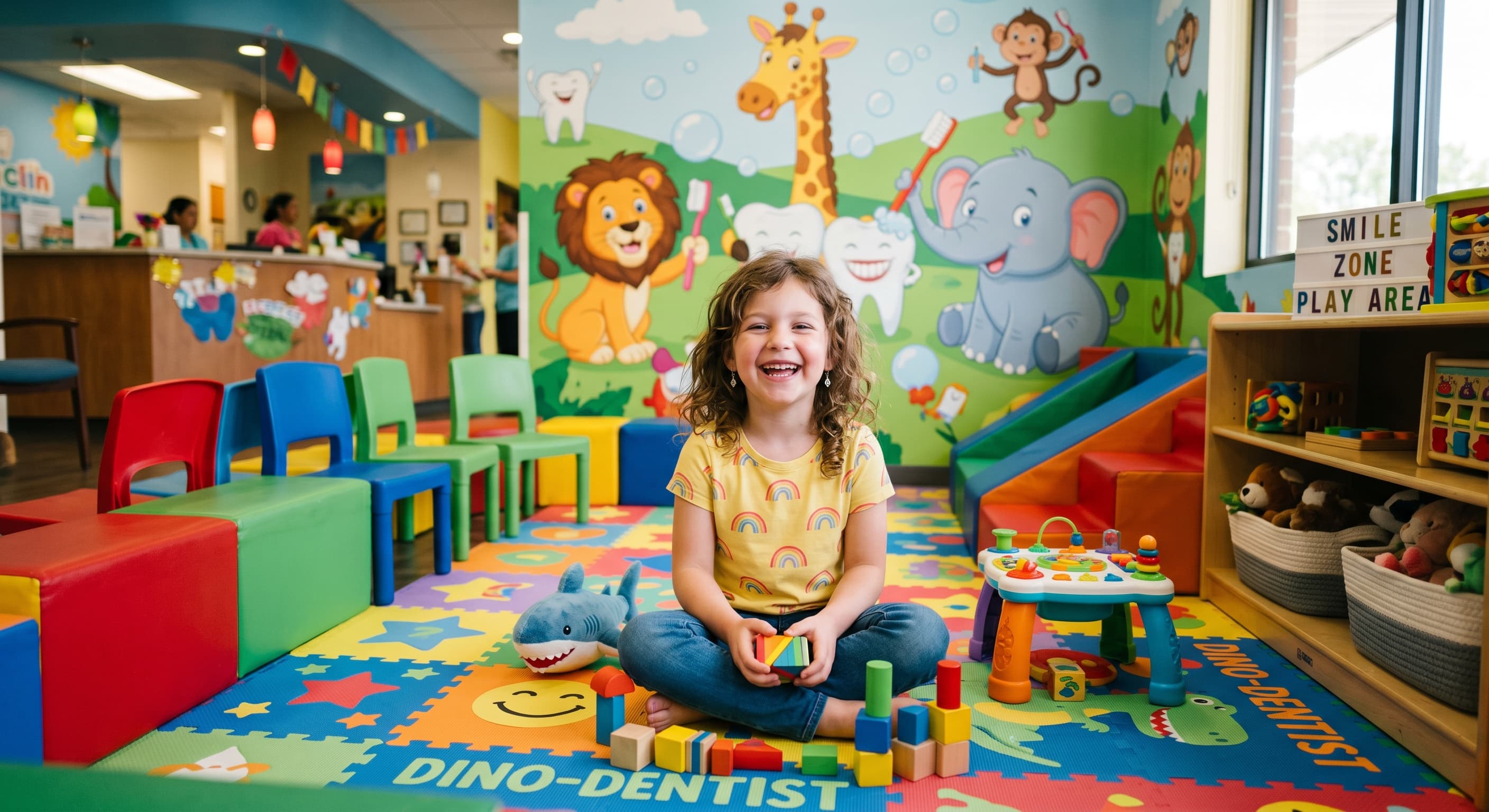
Looking for tricks to calm a child afraid of the dentist before your next appointment? Here are six that work in real visits, tested by parents and by our own team at Willow Family Dentistry.
When your child is afraid of the dentist, every appointment becomes a negotiation. The car ride involves reassurances that aren't quite working. The waiting room involves a kid who's gone quiet or started clinging. And the moment someone in scrubs says "let's go back," the tears start. I've seen it from both sides. As a dentist, I've treated hundreds of fearful children at Willow Family Dentistry in Wylie, TX. As a mom of five, I've sat in the parent chair watching my own kids navigate the same fears.
The research shows that dental anxiety in children affects 10-20% of kids, with some studies putting it higher in children under 7. What the research doesn't always capture is how much that anxiety affects parents too. You feel guilty for making them go. You feel helpless when they cry. And you worry that forcing the issue will create a lifelong fear. These six tricks are the ones I use in my practice and in my own family. They work because they address the actual source of the fear, not just the symptoms.
Trick 1: Tell-Show-Do (Before Anything Touches Their Mouth)
Tell-show-do is the foundation of pediatric dentistry, and it's the single most effective technique for a child afraid of the dentist. The concept is simple: before any instrument goes near a child's mouth, I tell them what I'm going to do in kid-friendly language, show them the instrument and demonstrate it on their finger or a stuffed animal, and then do the actual procedure only after they've given the okay.
For example, before I use the polishing cup during a cleaning, I let the child hold it. I turn it on so they can feel the gentle vibration on their fingernail. I say "this is Mr. Spinny, and he's going to tickle your teeth to make them shiny." By the time the cup touches their tooth, they've already experienced the sensation and the sound in a non-threatening way. The surprise factor, which is what drives most pediatric dental fear, is completely eliminated.
The American Academy of Pediatric Dentistry lists tell-show-do as the primary behavioral guidance technique for pediatric patients. It works because children don't fear what they understand. They fear the unknown. Every new sound, sensation, and taste in a dental office is unknown the first time. Tell-show-do makes it known before it happens.
At home, you can practice a version of this before the appointment. Show your child photos of our kids play area. Walk them through what will happen: "Dr. Jeong is going to count your teeth and then brush them with a special toothbrush." The simpler and more concrete the preview, the less their imagination fills in the gaps with scary scenarios.
Trick 2: Let Them Lead (The "You're in Charge" Approach)
Fear thrives on powerlessness. A child in a dental chair is in an unfamiliar environment, reclined in a position they didn't choose, surrounded by adults who are bigger, louder, and holding metal objects. The fastest way to reduce fear is to give them control.
In my operatory, the child decides when we start. They raise their hand if they want to pause. They choose the flavor of the prophy paste. They pick whether they want the chair to "go for a ride" (recline) fast or slow. These aren't concessions. They're clinical tools. A child who feels in control is a child whose fight-or-flight system isn't activated. And a calm child is a cooperative child.
I tell every parent before we start: "If they raise their hand, I stop. Not in a minute. Now." Parents sometimes worry that giving a child that power means nothing will get done. In practice, the opposite happens. A child who knows they can stop at any time rarely needs to. The safety of having the option is usually enough.
With my own kids, I use the same approach. They know they can say "wait" and I'll wait. That trust was built over multiple visits, not the first one. If your child's first visit doesn't accomplish everything the hygienist planned, that's okay. Building trust is the clinical priority at that age, not completing a checklist.
Trick 3: Separate Your Anxiety from Theirs
This is the trick parents don't want to hear, but it's the one that matters most. Children are astonishingly accurate at reading their parents' emotional state. If you're anxious about the dental visit, they will absorb that anxiety even if you say nothing. According to a study cited by the Healthline dental anxiety guide, parental dental anxiety is one of the strongest predictors of dental fear in children. Your nervousness becomes their nervousness.
What this looks like in practice: the parent who grips the armrest, the parent who asks "are you sure this won't hurt?" in front of the child, the parent who tears up when the child cries. All understandable reactions. All counterproductive. The child reads the parent's tension as confirmation that something scary is about to happen.
The fix isn't suppressing your emotions. It's managing the appointment so your anxiety has less opportunity to transmit. Stay calm and matter-of-fact. Use neutral language ("Dr. Jeong is going to count your teeth") rather than reassurance language ("don't worry, it won't hurt" tells the child that "hurting" was a possibility they hadn't even considered). And if your own dental anxiety is significant, consider whether it's better for the other parent or a grandparent to accompany the child to the first few visits.
I say this as a mom, not just as a dentist: your child's dental anxiety is not a reflection of your parenting. Kids fear novel medical experiences the same way they fear the dark or loud noises. It's developmental, not personal.
Trick 4: Start with the "Happy Visit" (No Work, Just Exploration)
At Willow, I offer what I call a "happy visit" for children under 5 who have never been to a dentist or who had a negative previous experience. The entire appointment is designed to build positive associations with the dental environment without any clinical work.
The child walks in, explores the kids play area, and warms up to the space at their own pace. When they're ready, they sit in the chair (or in a parent's lap in the chair) and I count their teeth with a mirror. That's it. I might let them squirt the water syringe. I might let them ride the chair up and down. There's no polishing, no fluoride, no X-rays. The entire purpose is one thing: this place is safe.
The ADA supports early familiarization visits as an effective strategy for reducing dental anxiety in young children. The principle is the same as gradual exposure therapy: small, positive doses of the feared experience build tolerance and eventually comfort. One happy visit at age 2 makes the real cleaning at age 3 dramatically easier.
With my own youngest, his first dental visit was five minutes of sitting in my lap in the chair, counting teeth with a mirror, and getting a sticker. He cried anyway. The second visit was ten minutes and no tears. By the third visit, he was opening his mouth before I asked. That progression is normal and expected.
Want to Start with a Happy Visit?
Schedule a no-pressure introductory visit for your little one. No cleaning, no X-rays. Just a chance to explore the office, meet the team, and sit in the chair.
Trick 5: Use Nitrous Oxide for Kids Who Need Extra Help
Some children can't be talked through their fear with behavioral techniques alone. That's not a failure of the parent, the child, or the dentist. Some kids have sensory processing differences that make dental stimulation overwhelming. Some have had traumatic previous experiences that behavioral approaches can't override in one visit. Some are simply too young to understand verbal explanations. For these children, nitrous oxide (laughing gas) is a safe, effective, and reversible tool.
Nitrous oxide is inhaled through a small nose mask and takes effect within 2-3 minutes. The child feels relaxed, slightly giggly, and less aware of the sounds and sensations happening in their mouth. They remain fully conscious, can respond to instructions, and breathe on their own. When the mask is removed, the effects wear off within 5 minutes. There's no lingering sedation, no drowsiness, and the child can eat and play normally immediately after.
According to the ADA, nitrous oxide has the widest margin of safety of any sedation agent used in dentistry. It's been used in pediatric dentistry for decades with an excellent safety record. I use it in my practice when I judge that the child's anxiety will prevent them from receiving treatment safely with behavioral techniques alone, and I always discuss it with parents first.
The goal of nitrous isn't to sedate a child into compliance. It's to lower the anxiety enough that behavioral techniques (tell-show-do, pacing, control) can actually work. A child at a 9 out of 10 anxiety level can't process "let me show you how this works." A child at a 4 out of 10, with nitrous taking the edge off, can. That's the difference it makes.
Trick 6: Make the Ride Home Better Than the Ride There
How the visit ends matters more than how it starts. A child who cries during an appointment but leaves laughing, holding a prize from the treasure chest, with a parent saying "you were so brave, I'm proud of you" encodes the experience differently than a child who cries and then hears "see, that wasn't so bad" (which invalidates their experience) or "next time you need to be braver" (which implies they failed).
At Willow, every child visits the prize box after their appointment. Every child gets praised specifically for what they did well: "you kept your mouth open the whole time," "you raised your hand when you needed a break and that was so smart," "you let Dr. Jeong count all your teeth on the very first try." Specific praise builds confidence. Generic praise ("good job") doesn't land the same way with kids.
On the ride home, let them talk about it on their terms. If they want to complain about the taste of the fluoride, let them. If they want to show their sibling the sticker, celebrate it. If they want to forget about it and talk about something else, that's healthy too. Don't interrogate. Don't debrief. Let the experience settle.
My own rule with my kids after dental visits: we stop for a treat on the way home. Not because they "earned it" by enduring something terrible, but because the ride home should feel better than the ride there. That positive association, the dental visit leads to something good, accumulates over time. By age 6 or 7, my older kids were asking when their next cleaning was because they associated the visit with the smoothie we got afterward.
Related: When should that first dental visit happen? → When Should a Child First See a Dentist? Age 1 vs Age 3
A child afraid of the dentist isn't a child with a character flaw. They're a child having a normal reaction to an unfamiliar, sensory-heavy experience. The six tricks above, tell-show-do, letting them lead, managing your own anxiety, happy visits, nitrous when needed, and making the ride home the best part, aren't gimmicks. They're evidence-based approaches that pediatric dentists use every day, adapted by a mom who uses them at home too.
How Do These Tricks Compare to a Full Anxiety Care Plan?
These six tricks to calm a child afraid of the dentist work well for everyday nervousness before a routine visit. If your child's fear runs deeper, such as a bad memory from a past appointment, real trouble settling even with tell-show-do, or fear that has been building for a while, a broader plan usually helps more than any single trick on its own. Our parent guide to childhood dental fear covers choosing a kid-friendly practice, positive reinforcement at home, and when a sedation option like nitrous oxide is worth discussing with your dentist.
Which Approach Should You Try First?
Start with these tricks to calm a child afraid of the dentist if the appointment is a week or two out and your child is just nervous. If the visit is sooner, or past appointments have gone badly, read the fuller guide first so you walk in with a plan that covers more than one trick at a time. In short:
- Nervous but manageable, use the six tricks on this page
- A bad memory or repeated trouble at past visits, start with the full parent guide
- Not sure which fits, call our office and describe what happens at drop-off
If your child has been avoiding the dentist, or if previous visits went badly and you're dreading the next one, schedule with someone who understands what your kid actually needs. At Willow Family Dentistry, I'll work at your child's pace, use the tools that match their temperament, and build the kind of experience that makes the next visit easier than this one.
Your Child Deserves a Positive Dental Experience
Dr. Jeong treats fearful kids with patience, tell-show-do, and nitrous oxide when needed. Every visit is designed to build trust, not just check a box.
Questions about your child's dental anxiety?
Common questions
At what age do kids develop dental anxiety?
Dental fear commonly emerges between ages 2-5 when children become aware enough to anticipate unfamiliar experiences but aren't old enough to fully understand explanations. Early positive exposure starting at age 1 significantly reduces later anxiety.
How do I prepare my child for their first dental visit?
Keep language simple and positive. Avoid words like 'hurt,' 'shot,' or 'drill.' Show photos of the office. Explain that the dentist will 'count their teeth.' Practice opening wide at home. Read a children's book about visiting the dentist.
Is nitrous oxide safe for children?
Yes. The ADA recognizes nitrous oxide as having the widest safety margin of any dental sedation agent. Children remain fully conscious, breathe on their own, and the effects wear off within 5 minutes of removing the mask. No lasting drowsiness or side effects.
What if my child won't open their mouth at all?
That's okay. Dr. Jeong doesn't force. The first visit may be just sitting in the chair and getting comfortable. Building trust over multiple visits is more effective than forcing a single visit. Happy visits exist for this exact situation.
Should I stay in the room during my child's appointment?
At Willow, parents stay with their child during every visit. Dr. Jeong finds that parental presence reduces anxiety in most children. If a parent's own anxiety is transmitting to the child, sometimes the other parent or a calm family member can accompany instead.
My child had a bad experience at another dentist. Can we start over?
Yes. Dr. Jeong regularly sees children recovering from negative dental experiences. She starts with a happy visit (no treatment), builds trust gradually, and uses nitrous oxide when needed. The goal is replacing the bad memory with positive ones.
Does Willow Family Dentistry have a kids play area?
Yes. The play area lets children warm up to the environment before entering the operatory. It's a deliberate part of the pediatric experience, giving nervous kids time and space to acclimate on their own terms.
Did this answer your question?
Written for general reading, not as advice about your own teeth. Nothing here replaces an examination: if something hurts, or has changed, book a visit and let a dentist look at it.
Read next
 12 min readChoosing a Pediatric Dentist in Wylie, TX: Parent GuideChoosing a pediatric dentist in Wylie?Read the article
 10 min readChild First Dental Visit What to Expect at KindergartenChild first dental visit what to expect: what happens, the language to use at home, the tell-show-do method, and when nitrous oxide helps a nervous child.Read the article
 10 min readKids Brushing Routine Morning: What Works on School DaysA kids brushing routine morning plan that survives the 7am rush: age-by-age supervision, the two-minute problem, and three routines that actually work.Read the article
Your first visit
One ticket covers it.
360 Dental · Admit one