
Pediatric Dentistry
Baby Teething Symptoms and Relief: A Wylie Parent's Guide
Published 8 min read
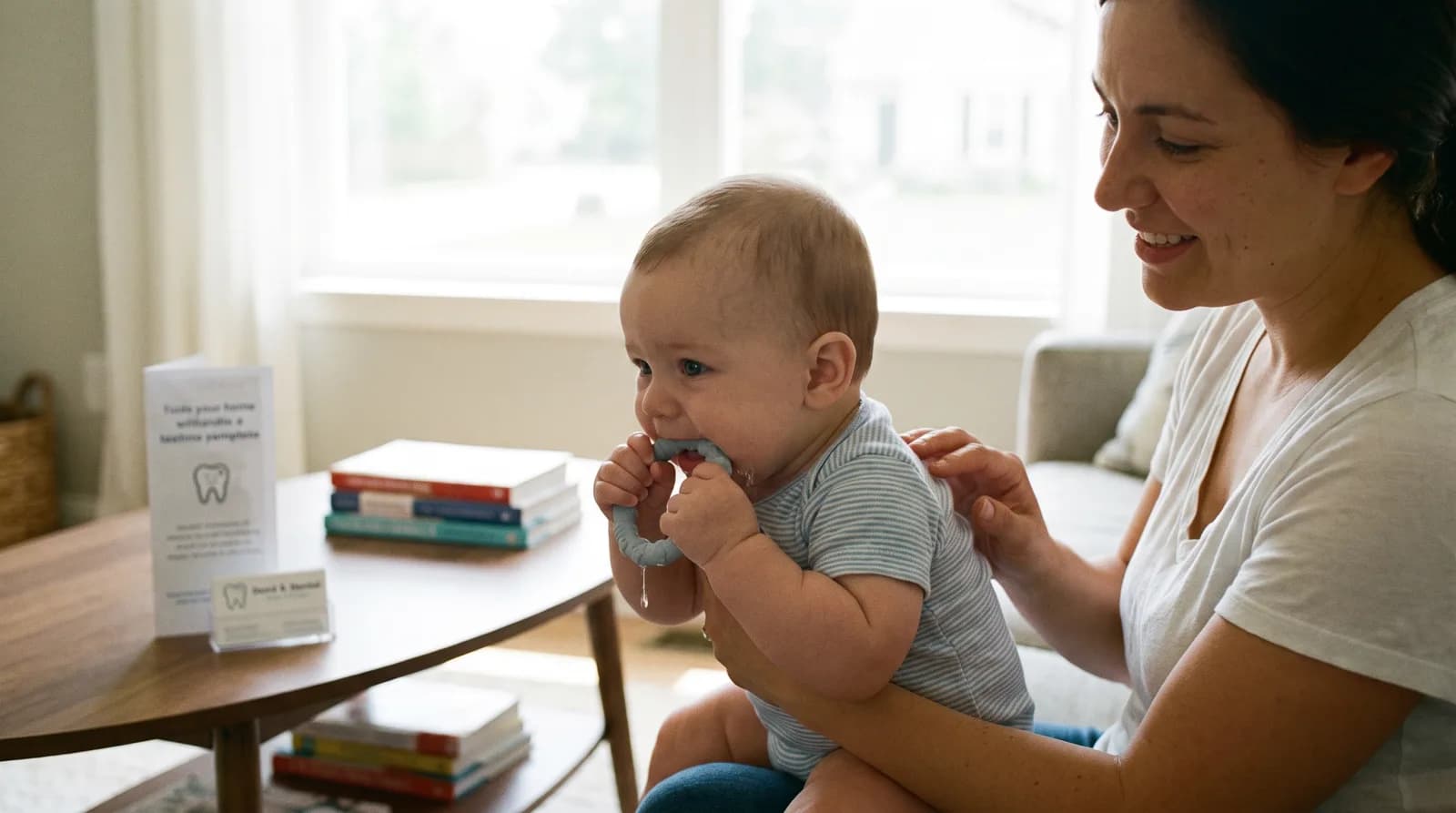
Few stages of early childhood generate as many questions, and as much conflicting advice, as teething. Parents in Wylie, TX often arrive at our office with a long list of baby teething symptoms they have read about online, many of which turn out to be myths once compared against what pediatric guidance actually supports. This guide separates real baby teething symptoms from the myths, walks through the typical timeline, and explains which relief methods are genuinely safe, since some popular home remedies carry real warnings from the FDA and the American Academy of Pediatrics.
At Willow Family Dentistry, helping parents navigate teething with accurate, current information is part of supporting families through every stage of a child's dental development.
When Does Teething Start, and What Is the Typical Timeline?
Teething typically begins around 4 to 7 months of age, though the exact timing varies widely from child to child, and some babies are born with a tooth already visible while others do not get their first tooth until closer to their first birthday. According to the American Academy of Pediatrics, infants have a full set of 20 baby teeth by around age 3, with the lower front teeth usually arriving first, followed by the upper front teeth and then the back teeth over the following two years.
There is a wide range of normal here, and a baby teething a few months earlier or later than a sibling or a friend's child is rarely a cause for concern on its own. Genetics plays a meaningful role in timing, so parents who teethed early or late themselves often see a similar pattern in their children.
Teeth tend to come in pairs and in a fairly predictable order, though the exact sequence can vary. The two-year stretch from the first tooth to the last molar is often the period parents remember most vividly, simply because it spans so much of early toddlerhood.
By around age 3, the American Academy of Pediatrics notes that children typically have all 20 of their baby teeth, according to that guidance, completing a process that began with that very first lower front tooth months or years earlier. Understanding this full arc helps parents see any single teething episode as one part of a longer, mostly predictable process rather than an isolated crisis to solve.
What Are the Real Baby Teething Symptoms?
The real symptoms of teething, according to the American Academy of Pediatrics, include mild irritability, a low-grade fever, excessive drooling, and an increased urge to chew on hard objects. These symptoms typically appear in the days just before a tooth breaks through the gum and ease once it has emerged.
According to the American Dental Association, specific signs genuinely associated with teething include:
- Drooling: Often the most noticeable sign, sometimes leading to a mild rash around the chin and mouth from constant moisture.
- Gum swelling or tenderness: The gum over an emerging tooth may look slightly red or puffy.
- Increased chewing or gnawing: Babies often want to chew on fingers, toys, or anything within reach to relieve gum pressure.
- Mild irritability or fussiness: Some babies are noticeably more unsettled in the days before a tooth emerges.
- Low-grade fever: A slight temperature elevation can accompany teething, though it is typically mild.
- Disrupted sleep: Discomfort can make settling down for naps or nighttime sleep more difficult for a few days.
These symptoms are usually mild and short-lived, resolving within a few days of the tooth emerging. If symptoms are severe or prolonged, it is worth ruling out something unrelated to teething rather than assuming teething is the cause.
What Teething Symptoms Are Actually Myths?
Despite widespread belief, high fever, diarrhea, vomiting, and significant illness are not supported as true teething symptoms by current pediatric research, and attributing these to teething can delay identifying an actual illness that needs attention. This distinction matters because treating a real infection as ordinary teething can mean a delay in care your child actually needs.
Pediatric researchers have studied this question directly, and the consensus is that teething causes only mild, localized symptoms. A fever above 100.4°F (38°C), persistent diarrhea, vomiting, or a baby who seems genuinely unwell is not typical of teething and warrants a call to your pediatrician rather than an assumption that a tooth is to blame. Teething does not cause significant illness; at most, it produces mild, temporary discomfort.
This myth persists in part because teething happens during exactly the age range when babies are also picking up their first common colds and minor illnesses from increased exposure to other children and environments. The timing overlaps, which makes it easy to mistakenly connect the two, but the research does not support a causal link between teething and significant fever or illness.
This is one of the more consequential myths in early childhood care, because parents who believe teething explains away a real fever may delay seeking care for an actual infection. A useful rule of thumb is to treat any fever above 100.4°F, or any symptom beyond mild fussiness and drooling, as something to evaluate on its own merits rather than dismissing it as "just teething."
What Are the Safest Ways to Relieve Teething Pain?
The safest ways to relieve teething pain are gently massaging the gums with a clean finger and offering a firm, solid rubber teething ring to chew on, according to both the FDA and the American Academy of Pediatrics. These simple, low-risk methods are effective for most babies and do not carry the safety concerns associated with several popular alternatives.
Effective and currently recommended relief methods include:
- Finger massage: Gently rubbing the gums with a clean finger provides counter-pressure that many babies find soothing.
- Firm rubber teething rings: Solid rubber teethers, not liquid-filled ones, give a baby something safe to chew on. Make sure the teether is not frozen, since overly hard objects can hurt the gums.
- A cold, damp washcloth: Chilled, not frozen, in the refrigerator briefly can offer mild relief without the firmness risk of frozen objects.
- Pediatrician-guided pain relief: For more significant discomfort, your pediatrician may recommend an appropriate dose of infant pain reliever, which should always be discussed with them first rather than chosen independently.
Supervision matters with any teething object, since choking is always a risk with anything a baby chews on unsupervised.
Which Teething Remedies Should You Avoid?
You should avoid topical teething gels containing benzocaine or lidocaine, homeopathic teething tablets, and amber teething necklaces, all of which carry documented safety warnings from the FDA. These products are widely available and were common for years, which is part of why many parents are surprised to learn they are no longer recommended.
According to guidance summarized by the American Academy of Pediatric Dentistry and the U.S. Food and Drug Administration, benzocaine-containing gels and ointments, sold under brand names that include Anbesol, Baby Orajel, Orabase, and Hurricaine, can cause a rare but serious and potentially fatal blood disorder called methemoglobinemia in infants and young children. The FDA states these products should not be used for teething pain in children under any circumstances. Homeopathic teething tablets have also been flagged for inconsistent and sometimes unsafe amounts of belladonna, a toxic substance.
Amber teething necklaces, marketed as a natural alternative, present a different but equally serious risk: the FDA has received reports of strangulation and choking deaths associated with teething jewelry. There is also no scientific evidence that amber releases any pain-relieving substance through skin contact. For these reasons, the safest path is to stick with the simple, well-supported methods of finger massage and firm rubber teethers rather than reaching for products marketed as stronger or more natural solutions.
It is worth understanding why these products were ever popular in the first place. Benzocaine gels were marketed for decades before the safety concerns became fully clear through case reports submitted to the FDA, and amber necklaces gained popularity through word-of-mouth and social media rather than clinical evidence. Both illustrate a useful general principle: a product being widely available or popular among other parents is not the same as a product being proven safe. When in doubt, the simplest, most studied option is usually the safest choice.
When Should You Call a Dentist or Pediatrician About Teething?
You should call your pediatrician if your baby has a fever above 100.4°F, persistent diarrhea or vomiting, or seems unusually unwell, since these are not typical teething symptoms and may indicate something else needs attention. A dental visit is also worthwhile once the first tooth appears, since the American Academy of Pediatric Dentistry recommends a first dental checkup by age one or within six months of the first tooth, whichever comes first.
Most teething is uneventful and resolves with simple comfort measures at home. But trusting your instincts as a parent matters; if something feels off beyond ordinary fussiness, it is always reasonable to check in with your pediatrician rather than waiting it out. Our article on when a child should first see the dentist covers what that initial visit involves and why starting early matters.
Willow Family Dentistry welcomes families in Wylie and the surrounding communities from a child's very first dental visit onward. If you have questions about teething, your child's emerging teeth, or what to expect at a first appointment, our team is happy to help.
Ready to schedule your baby's first dental visit?
Book an appointment at Willow Family Dentistry in Wylie, TX. We make first visits comfortable for both babies and parents.
Further Reading
Teething is just the beginning of your child's dental development. The articles below go deeper on related topics for parents navigating early childhood dental care.
- How to Get Kids to Brush Their Teeth
- Cavities in Baby Teeth: Why They Matter More Than You Think
- 5 Tips to Help Your Child Overcome Fear of the Dentist
Results may vary. Please consult with Dr. Jeong for personalized treatment recommendations.
Common questions
When do babies start teething?
Most babies start teething around 4 to 7 months of age, though the range of normal is wide. Some babies are born with a tooth, while others do not get their first tooth until closer to their first birthday.
What are the real symptoms of teething?
According to the American Academy of Pediatrics, real teething symptoms include mild irritability, a low-grade fever, drooling, and an increased urge to chew. These are typically mild and resolve within a few days of the tooth emerging.
Does teething cause high fever or diarrhea?
No. High fever, persistent diarrhea, and vomiting are not supported as true teething symptoms by pediatric research. These signs suggest something else may be going on and warrant a call to your pediatrician.
Are teething gels safe for babies?
No. Health authorities warn that teething gels containing benzocaine or lidocaine can cause a rare but serious and potentially fatal blood disorder called methemoglobinemia in infants and should not be used for teething pain.
Are amber teething necklaces safe?
No. Health and safety authorities have documented choking and strangulation deaths associated with amber teething necklaces and other teething jewelry. There is also no scientific evidence that amber relieves teething pain.
What is the safest way to relieve teething pain?
Gently massaging the gums with a clean finger and offering a firm, solid rubber teething ring, not frozen and not liquid-filled, are the methods recommended by pediatric health authorities.
Did this answer your question?
Written for general reading, not as advice about your own teeth. Nothing here replaces an examination: if something hurts, or has changed, book a visit and let a dentist look at it.
Read next
 12 min readChoosing a Pediatric Dentist in Wylie, TX: Parent GuideChoosing a pediatric dentist in Wylie?Read the article
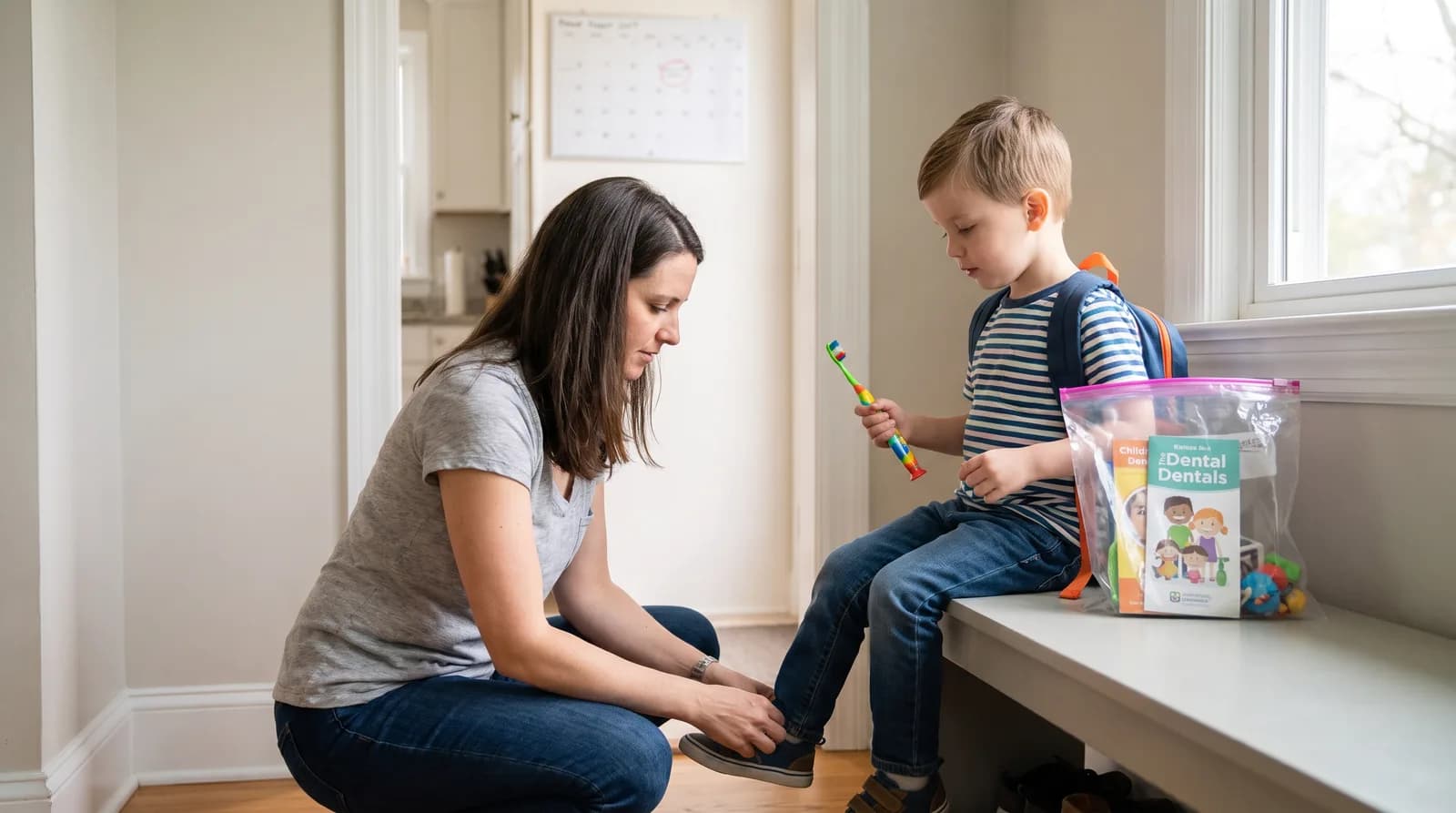 10 min readChild First Dental Visit What to Expect at KindergartenChild first dental visit what to expect: what happens, the language to use at home, the tell-show-do method, and when nitrous oxide helps a nervous child.Read the article
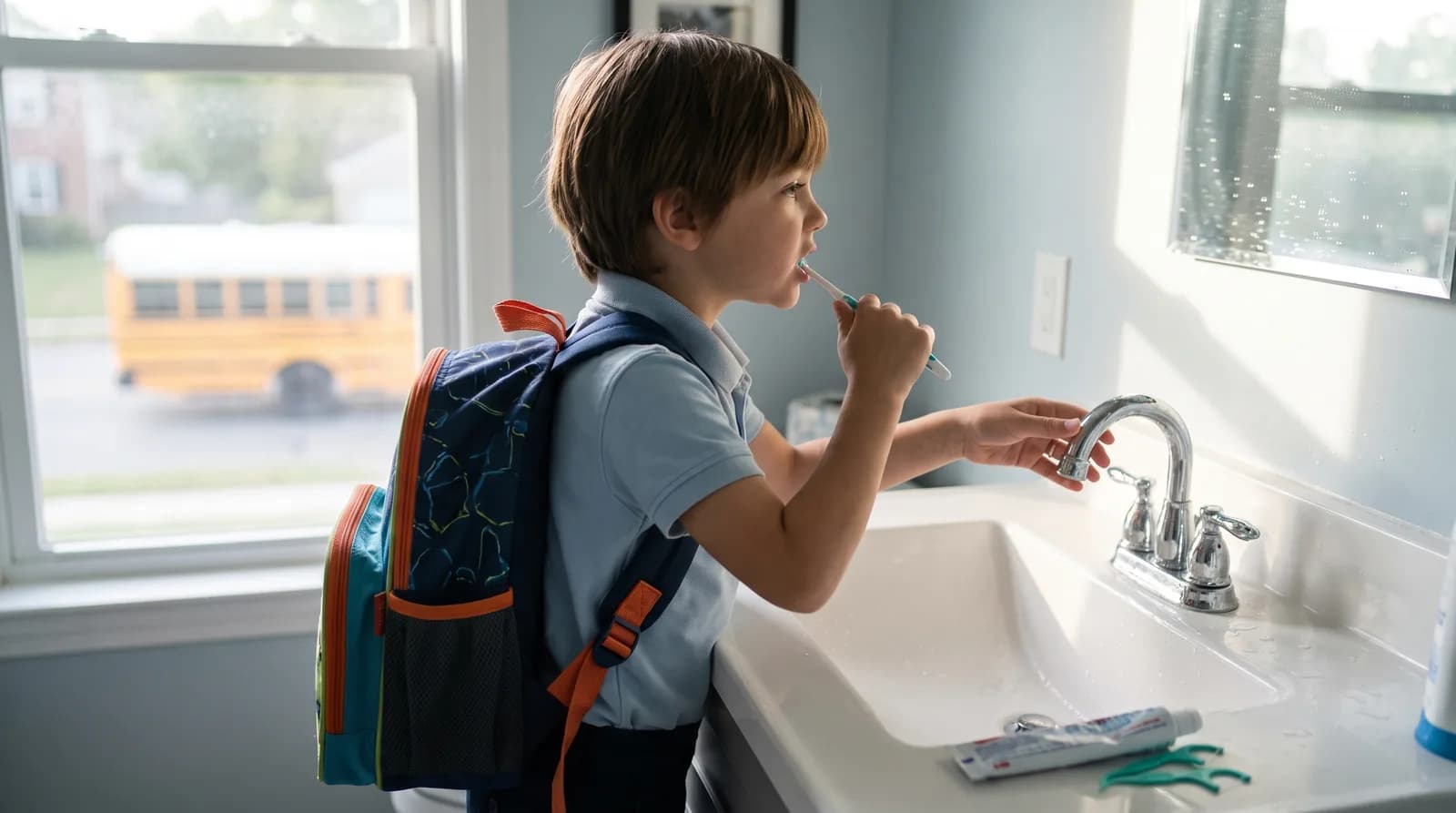 10 min readKids Brushing Routine Morning: What Works on School DaysA kids brushing routine morning plan that survives the 7am rush: age-by-age supervision, the two-minute problem, and three routines that actually work.Read the article
Your first visit
One ticket covers it.
360 Dental · Admit one