
Emergency Dental Care
Wisdom Tooth Emergency: Can It Wait or Come Out Now?
Published 12 min read

A wisdom tooth emergency rarely picks a convenient hour. It usually starts as pressure at the back of the jaw on a Friday evening, and by Saturday morning your cheek looks slightly different in the mirror. Then comes the question nobody wants to guess at. Can this wait until Monday?
Sometimes it genuinely can. Often it can't, and the difference comes down to one thing: whether an infection is staying in one small pocket or moving into the surrounding tissue. That single distinction is what our team screens for during emergency dentistry visits at 360 Dental in Van Nuys, and it is something you can learn to spot at home.
This guide walks through the symptoms that warrant a same-day appointment, the ones that can safely hold for two or three days, and what actually happens once you are in the chair. You'll also see where cost fits in, because for a lot of people that is the real reason a decision gets delayed.
What Counts as a Wisdom Tooth Emergency?
A wisdom tooth emergency is any wisdom tooth problem that risks spreading infection, restricting your airway, or damaging the tooth next to it if it waits. Swelling that moves out into the cheek or neck counts. A tooth that simply aches when you chew usually doesn't.
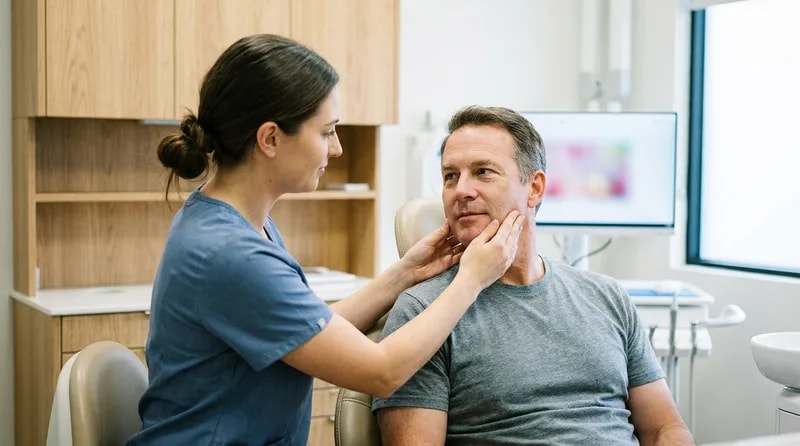
That distinction matters more than most people realize. Dental problems send roughly 2 million people to emergency rooms in the United States every year, according to the ADA Health Policy Institute, and a hospital ER can manage infection and discomfort but cannot treat the tooth itself. You leave with a prescription and the same tooth you walked in with.
Wisdom teeth land in the emergency category for a specific reason. They sit closest to the airway, the jaw muscles, and the tissue planes of the neck, so an infection there has somewhere to travel. The American Dental Association's MouthHealthy resource on wisdom teeth notes that these third molars are the most common teeth to become impacted, which is exactly the setup that leads to sudden flare-ups.
True emergencies generally look like one of these:
- Spreading swelling. The puffiness has left the gum and reached your cheek, jawline, under-eye area, or neck. This is the single most reliable warning sign, and it is the one that should get you on the phone the same day.
- Restricted jaw opening. You can't open wide enough to fit two fingers between your teeth.
- Fever or chills alongside the dental symptoms.
- Trouble swallowing or a sense that your throat is tightening.
- Visible drainage of pus, or a salty taste that keeps coming back.
- A broken or cracked wisdom tooth with sharp edges cutting the cheek or tongue.
Notice what isn't on that list. Steady soreness, sensitivity to cold, and a gum flap that traps rice are all real problems worth treating. They are just not usually Saturday problems.
When Does a Wisdom Tooth Need to Come Out Right Away?
A wisdom tooth needs same-day attention when swelling spreads beyond the gum, your jaw won't open fully, you develop a fever, or swallowing feels tight. Those four signs suggest infection is moving through tissue rather than sitting in one pocket, and the timeline changes fast.
Here's the part that surprises people: the tooth often does not come out that same day. An actively infected, swollen area is a difficult place to work, so the first appointment is frequently about getting the infection under control and the swelling down. The extraction gets scheduled once the tissue has calmed.
What makes urgency real is how quickly a contained infection stops being contained. Research published in the Journal of the American Dental Association indicates that a dental abscess can begin spreading to other areas of the body within 48 hours if it goes untreated. Two days. That is the whole window, and it explains why a Friday night symptom is worth a Saturday phone call rather than a Monday one.
Signs that mean call now, not tomorrow
Some symptoms move past the dental office entirely and belong in an emergency room. Trouble breathing, swelling that is closing your eye, a rapidly enlarging neck, or a fever above 101 degrees with facial swelling all fall into that category. Call 911 or go to the nearest ER, then follow up with us for the tooth itself.
Which Wisdom Tooth Symptoms Can Usually Wait a Few Days?
Mild, localized symptoms can usually wait two or three days for a scheduled visit. Tenderness in one spot, a gum flap that traps food, or an ache that eases with over-the-counter medication rarely turns serious overnight. Book the appointment anyway, because waiting is not the same as ignoring it.
The table below is the version of this decision our front desk walks through with callers. Read down the left column, then check which side your symptoms fall on.
| What you notice | Usually can wait 2-3 days | Needs same-day care |
|---|---|---|
| Swelling | Puffy gum right around the tooth | Cheek, jawline, eye, or neck involved |
| Jaw movement | Stiff but opens normally | Cannot open more than two fingers wide |
| Whole-body signs | None | Fever, chills, or feeling unwell |
| Discomfort pattern | Comes and goes, eases with medication | Constant, keeps you awake, medication does little |
| Taste and drainage | Occasional bad taste after meals | Pus draining, or a salty taste that keeps returning |
| Breathing and swallowing | Normal | Tight throat, trouble swallowing, voice changes |
Worth naming the real reason people stall. Roughly 36% of Americans deal with dental anxiety and about 12% have extreme dental fear, according to a 2024 analysis in BMC Oral Health. A wisdom tooth is often the appointment that gets postponed longest, and it is also the one where postponing changes the treatment.
One caution about this table. If your symptoms sit in the left column but keep getting worse each day instead of holding steady, treat that trend as its own warning sign. Direction matters as much as severity. A gum that was mildly sore Monday and swollen Wednesday is telling you something, even if it never hits a single red-flag item.
Related: A wisdom tooth is only one of several situations where timing changes the outcome. Read our full guide to handling a dental emergency →
Why Do Wisdom Teeth Turn Into Emergencies in the First Place?
Wisdom teeth cause trouble because they arrive last, into a jaw that has no room left. When a tooth erupts partway or presses sideways against its neighbor, bacteria get a sheltered pocket that a toothbrush can't reach. That pocket is where most sudden flare-ups begin.
Dentists call a fully or partly blocked tooth an impacted tooth. Mayo Clinic's overview of impacted wisdom teeth describes how these teeth can grow at an angle toward the second molar, toward the back of the mouth, or even sideways within the jaw. Each position creates its own problem, and none of them improves on its own.
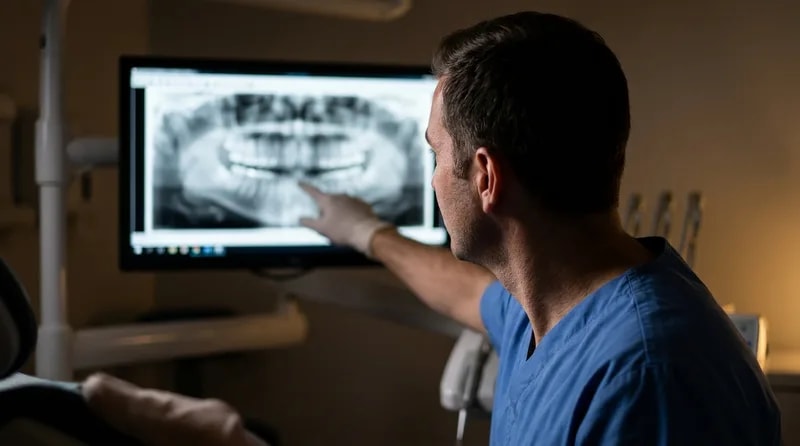
Three specific setups account for most of the emergency calls we take:
- Partial eruption with a gum flap. Part of the crown is through, part is still covered. Food and bacteria collect under the flap, the tissue becomes inflamed, and the condition, called pericoronitis, can flare within a day or two. This is the most common wisdom tooth emergency we see in adults in their twenties.
- Decay you cannot see or clean. A tooth this far back is genuinely hard to brush well. Decay often develops on the side facing the second molar, hidden from view, until it reaches the nerve.
- Pressure against the neighboring tooth. An angled wisdom tooth can damage the second molar's root or trap decay between the two, which turns one problem into two.
Hidden decay is more common than most people assume. CDC NCHS data shows nearly 1 in 4 adults in the United States has untreated tooth decay, and a partly erupted third molar is one of the easiest places for it to go unnoticed.
There's a preventive angle here worth naming. Regular checkups catch about 80% of oral health issues before they become serious, according to the ADA, and wisdom teeth are one of the clearest examples. A panoramic image at a routine visit shows an angled tooth years before it flares.
What Happens at a Same-Day Wisdom Tooth Visit in Van Nuys?
A same-day visit starts with imaging, not treatment. A 3D CT scan shows where the roots sit relative to the nerve and the sinus, and that picture decides everything that follows. Most visits end with either infection control and drainage or a plan to extract the tooth.
Because 360 Dental is an all-digital practice, the scan, the diagnosis, and the treatment discussion happen in the same appointment. There's no waiting on a referral to see what is going on. Here is the usual sequence:
- Triage at the front desk. Swelling, jaw opening, fever, and how long it has been going on. This determines whether you're seen today or slotted later in the week.
- Imaging. A 3D CT scan and, when needed, a focused X-ray of the area. Root position relative to the inferior alveolar nerve is the detail that changes the approach.
- Examination. Checking the gum tissue, drainage, the neighboring molar, and how far the jaw opens.
- The decision point. Sometimes the tooth is savable and the real issue is the nerve inside it, which points toward root canal therapy with our in-house endodontist, Dr. Parham Mansouri, DDS, MS. More often, with a wisdom tooth, extraction is the better long-term call.
- Immediate relief. Drainage, cleaning under the gum flap, local anesthetic, and antibiotics when the situation warrants them.
- Scheduling the definitive treatment, either that day or once swelling has settled.
Having general, cosmetic, and endodontic care under one roof matters most in exactly this scenario. When a tooth turns out to need specialist attention, you aren't sent across the Valley and asked to wait another week with an active infection.
Same-day emergency appointments in Van Nuys
360 Dental is at 6301 Van Nuys Blvd at Victory Boulevard, minutes off the 405 and 101. Call (818) 787-6400 or request a time online.
Can Antibiotics or Home Care Buy You Time?
Sometimes, but only a little. Antibiotics can slow a spreading infection long enough to get you seen safely, and warm salt water rinses can flush a food-packed gum flap. Neither one addresses the tooth that caused the problem, so symptoms usually return within weeks.
This is where a lot of wisdom tooth situations go sideways. Someone gets a course of antibiotics from an urgent care visit, feels noticeably better in three days, and cancels the dental appointment. The bacteria were suppressed, not eliminated. Six weeks later the same tooth flares again, often worse, because the pocket never changed.

What actually helps while you wait
- Warm salt water rinses, several times a day and especially after eating. Gentle swishing, not vigorous.
- A cold compress on the outside of the cheek, 15 minutes on and 15 off, for swelling.
- Over-the-counter medication taken as directed on the label.
- Softer foods on the other side of your mouth.
- Sleeping propped up a little, which some people find eases the throbbing.
And what to skip: placing aspirin directly on the gum, which irritates the tissue; poking under the flap with anything sharp; heat applied to the outside of the face when there is swelling; and stretching an old antibiotic prescription you had left over from something else.
What Does Emergency Wisdom Tooth Care Cost Without Insurance?
Cost depends on what the scan shows, because a simple extraction and a surgical one are genuinely different procedures. 360 Dental accepts all PPO dental plans, and uninsured patients can use the 360-VIP membership club or financing through CareCredit, Sunbit, and Cherry to spread payments out.
We won't quote a number here, and any office that quotes one before seeing an image is guessing. Root position, whether the tooth is impacted, and whether an infection needs managing first all change the treatment. What we can be clear about is how people cover it:
- PPO dental insurance. All PPO plans are accepted. Call to confirm how your specific plan handles extractions and emergency exams.
- The 360-VIP membership club. Built for patients without insurance. The adult plan runs $35 per month plus a $99 lifetime activation fee and covers two cleanings a year, exams, needed X-rays, two emergency exams, and 20% off other treatment. For someone facing an unexpected wisdom tooth problem, those two emergency exams are the relevant part.
- Third-party financing through CareCredit, Sunbit, or Cherry, which lets you start treatment now and pay over months rather than at once.
One honest note on the economics. A contained infection treated this week is a smaller procedure than the same tooth after the infection has spread into the jaw. Delay rarely saves money on a wisdom tooth emergency. It just moves the bill and usually raises it.
Related: Comparing how to pay is easier before you are in a hurry. See how dental financing options compare →
How Should You Decide Tonight?
Look at where the swelling is. That one observation separates a wisdom tooth emergency from an ordinary wisdom tooth problem better than any other sign. Gum only, normal jaw opening, no fever? Call in the morning. Cheek, jawline, or neck involved? That's a today conversation.
A jaw that won't open two fingers wide belongs in the same urgent category. So does a symptom pattern that worsens daily, even when no single red flag has appeared yet. Direction is information.
Results may vary. Please consult with your dentist at 360 Dental for personalized treatment recommendations.
If you are reading this while holding a cold compress to your face, stop weighing it and call. A quick conversation costs nothing, and we would rather tell you it can wait than see it a week later.
Related: Knowing what recovery involves makes the decision to move forward easier. Read what wisdom teeth removal recovery looks like →
Get seen today at 360 Dental in Van Nuys
Same-day emergency appointments, 3D CT imaging, and general, endodontic, and restorative care under one roof. Serving Van Nuys, Sherman Oaks, North Hollywood, Encino, and the San Fernando Valley.
Prefer to talk it through first? Call (818) 787-6400 and describe your symptoms.
Common questions
Is a wisdom tooth emergency something an ER can treat?
An emergency room can manage infection and discomfort but cannot treat the tooth. About 2 million dental visits reach US emergency rooms yearly, and most patients leave with antibiotics and the same underlying problem still there.
How long can I wait with a wisdom tooth emergency?
If swelling has spread past the gum or your jaw won't open, hours matter rather than days. Research in JADA indicates an untreated abscess can begin spreading within 48 hours, so same-day evaluation is the safer choice.
Will the wisdom tooth be extracted at the first appointment?
Not always. Actively infected, swollen tissue is difficult to treat, so the first visit often focuses on drainage, cleaning, and infection control. The extraction is then scheduled once swelling settles, usually within one to two weeks.
Why does my wisdom tooth ache and then feel fine again?
Partly erupted wisdom teeth trap food under a gum flap, which inflames the tissue and then calms when the debris clears. The pocket remains, so the cycle repeats and typically gets more intense each time.
Can I just take antibiotics instead of having the tooth out?
Antibiotics reduce bacteria temporarily but leave the pocket and the tooth unchanged. Most people feel better within days and then flare again weeks later, which is why definitive treatment is still recommended after the infection settles.
Does 360 Dental see emergency patients the same day?
Yes. Same-day emergency appointments are available at the Van Nuys office at 6301 Van Nuys Blvd, with 3D CT imaging on site. Call (818) 787-6400 to describe your symptoms and get scheduled.
What does emergency wisdom tooth treatment cost without insurance?
Cost depends on root position and whether the extraction is simple or surgical, so an image comes first. Uninsured patients often use the 360-VIP membership club or financing through CareCredit, Sunbit, and Cherry.
Did this answer your question?
Written for general reading, not as advice about your own teeth. Nothing here replaces an examination: if something hurts, or has changed, book a visit and let a dentist look at it.

Your first visit
One ticket covers it.
360 Dental · Admit one