
Cosmetic Dentistry
Smile Makeover Process: How Dr. Danoukh Plans a Case
Published 9 min read
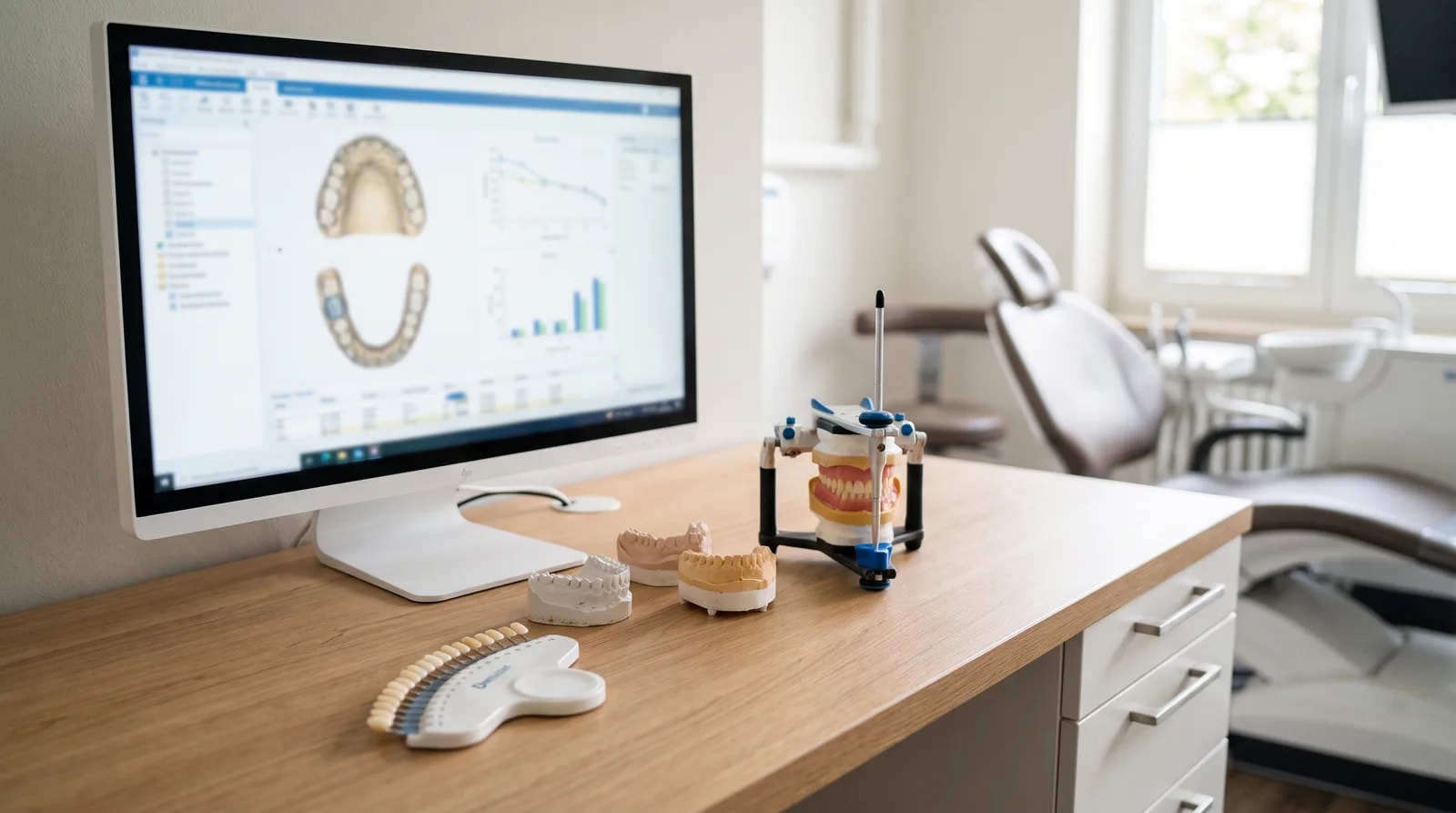
The smile makeover process at 360 Dental starts with a plan, not a procedure. Before Dr. Danoukh recommends any combination of veneers, whitening, Invisalign, or bonding, he builds a complete digital case so you can see the projected result before committing to any of it.
That sequencing matters more than it sounds. A cosmetic dentistry case that skips planning tends to produce mismatched results piece by piece. This guide walks through exactly how a full smile makeover gets planned at 360 Dental, from the first consultation to the final case review. You'll know what to expect before you sit down for one.
Smile Makeover Process: What Does "Plan Before You Commit" Actually Mean?
Planning before committing means every recommended treatment gets mapped against a single digital model of your smile before any appointment is scheduled for actual work. Nothing gets added to the plan just because it's available; it gets added because the case calls for it.
Dr. Danoukh built this approach around a specific frustration he saw industry wide. Cosmetic cases would start with one treatment, add another once the first didn't fully solve the problem, then a third. Each addition happened in isolation, without ever mapping the finished smile as a whole. A planned case reverses that order. The full outcome gets designed first, and each treatment gets selected because it serves that outcome specifically.
In practice, this means you'll often hear "let's see what the whole case needs" before you hear a specific treatment recommendation. That's intentional, not a delay tactic.
What Happens During the First Smile Makeover Consultation?
The first consultation combines a full exam, a 3D digital scan, and a conversation about what you actually want your smile to look like. It typically finishes in under an hour. Nothing gets treated during this visit; it's entirely diagnostic and exploratory.
Dr. Danoukh reviews your bite, gum health, existing dental work, and the shape and shade of every visible tooth before discussing options, an approach consistent with the American Dental Association's guidance on planning cosmetic treatment around a full oral exam. Reference photos help enormously here. A picture of a smile you like gives him a concrete target to design toward. That beats working from a vague description like "whiter" or "straighter." The scan itself, the same iTero technology used for Invisalign cases, captures the raw data his planning software needs.

You'll leave this visit with a rough sense of direction, not a final plan. That comes next, usually within a week once the scan data has been processed into a workable simulation.
How Does Dr. Danoukh Use Digital Previews to Plan a Case?
Digital previews let Dr. Danoukh simulate different treatment combinations on your actual scan and show you the projected result before any treatment begins. You can compare a veneers-only plan against a veneers-plus-whitening plan on screen, side by side.
This is where the planning process earns its name. Rather than describing what porcelain veneers or professional whitening might look like in the abstract, the software overlays a projected outcome directly onto your own teeth. Say a plan calls for bonding on one side and a veneer on the other, to fix a chipped tooth. You'll see both materials rendered together. That makes it much easier to catch a shade or shape mismatch before it's permanent instead of after.
Cases involving multiple treatment types get reviewed more than once. It's common to adjust a plan two or three times based on what the preview reveals before settling on a final version. Patients who came in expecting one treatment sometimes leave the preview stage deciding on a different combination entirely, once they can actually see the alternative side by side.
Which Treatments Get Combined in a Full Smile Makeover?
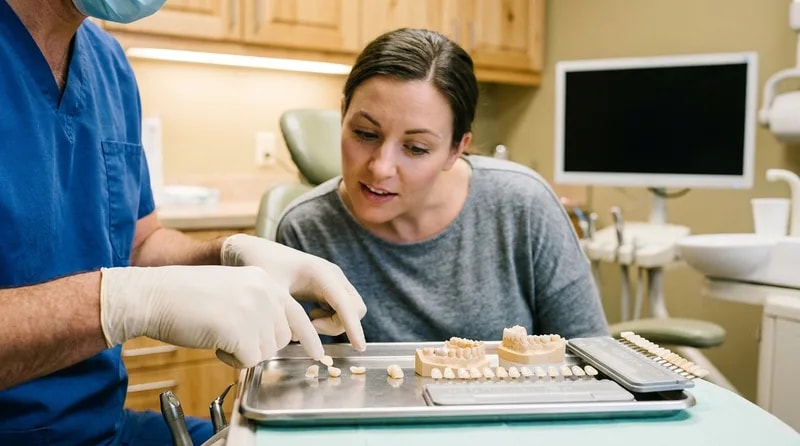
A full smile makeover typically combines two or more of the following: porcelain veneers, professional whitening, Invisalign, and dental bonding. Each gets selected based on which specific problem a tooth actually has. Rarely does one treatment type solve every issue in a case.
A common combination pairs veneers on the most visible front teeth with whitening on the remaining natural teeth, so the whole arch reads as one consistent shade. Another pairs Invisalign to correct alignment first, then veneers or bonding afterward to address shape or color once the teeth are positioned correctly. Sequencing matters here: whitening before veneers, not after, since veneer shade gets locked in at placement and won't change if you whiten later.
Common combinations include:
- Veneers on front teeth paired with whitening on the rest of the arch.
- Invisalign first, followed by veneers or bonding once alignment is corrected.
- Bonding for minor repairs alongside veneers for teeth needing a bigger change.
- Whitening alone, when the case doesn't need structural correction at all.
How Long Does a Full Smile Makeover Take From Plan to Finish?
A full smile makeover typically runs 2-6 months from the planning consultation to the final result. The exact timeline depends on which treatments are combined and whether Invisalign is part of the case. A whitening-and-bonding case can finish in a matter of weeks; a case involving aligners first takes considerably longer.
Veneers alone usually add 2-3 weeks once the plan is approved, covering the prep visit and the lab turnaround for the final shells. If Invisalign is part of the plan, that phase alone can run 6-18 months before the cosmetic work even starts. Alignment has to finish first, before shape and shade get addressed. Whitening and bonding move fastest, often completed within a single visit or two once the plan is set.
How Much Does a Smile Makeover Cost, and When Do You Find Out?
Cost depends entirely on which treatments the finished plan includes, and you'll see a full written estimate after the digital preview, before any treatment is scheduled. There's no guessing involved by the time you're asked to commit to anything.
Because a makeover combines multiple treatments, the total cost adds up across each one, but the written plan breaks down what each component contributes to the total. This makes it possible to trim a plan if the full case exceeds your budget: dropping whitening from a veneers-plus-whitening plan, for example, without losing the veneer portion. 360 Dental accepts all PPO dental plans and offers CareCredit, Sunbit, and Cherry financing across the full treatment plan, not just individual procedures.
Who Is a Good Candidate for a Full Smile Makeover?
Good candidates have more than one cosmetic concern, healthy gums, and enough natural tooth structure to support veneers or bonding where needed. A single chipped tooth or a mild shade concern usually doesn't need the full planning process; one treatment handles it just fine on its own.
Patients considering a full makeover often have a mix of issues. Some discoloration, a chip or two, maybe mild crowding. None severe on its own, but together they add up to a smile that doesn't match how they want to look. Treating each issue separately, without a combined plan, tends to produce a smile that looks corrected piece by piece rather than designed as a whole. That's precisely the outcome the planning process exists to avoid, a maintenance and sequencing principle the CDC touches on as part of routine oral health planning. It's the difference between a smile that reads as several separate fixes and one that reads as a single, intentional result.
A full makeover tends to make sense when you have:
- Two or more distinct cosmetic concerns across your smile.
- Healthy gums with no active, untreated periodontal disease.
- A clear idea, even a rough one, of the result you want.
- Flexibility on timeline if multiple treatment phases are needed.
What Does the Final Case Review Look Like Before Treatment Starts?
The final case review walks through the approved digital plan tooth by tooth, confirming shade, shape, and sequencing before the first treatment appointment gets scheduled. This is the last chance to adjust anything without touching a single tooth.
Dr. Danoukh uses this visit to confirm you're still comfortable with the plan. It's common for a patient's preferences to shift slightly between the planning consultation and the review, especially if a few weeks have passed. Financing and scheduling get finalized here too. That way the treatment phase itself can move efficiently once it starts, without stopping midway to sort out payment details or a lab timeline. Any remaining questions about sensitivity, timeline, or maintenance get addressed before you're in the chair for the first procedure.

- Review the approved digital plan tooth by tooth.
- Confirm shade, shape, and treatment sequencing.
- Finalize financing and the treatment schedule.
- Address any remaining questions before the first appointment.
What Happens If a Smile Makeover Skips the Planning Step?
Skipping the planning step usually means treatments get added one at a time as issues become apparent. That raises the risk of shade mismatches, uneven wear patterns, and a result that looks corrected rather than designed. Sequencing errors are the most common problem.
The clearest example is whitening after veneers instead of before. Veneers hold their shade permanently once placed, but natural teeth around them can still whiten. Skip the planning conversation and you can end up with veneers that no longer match the rest of your smile a few years later. The cause is often simple: whitening happened out of order. A planned case avoids this by locking in the full sequence before any material goes on a tooth.
How Do You Know If Your Case Needs a Full Makeover vs a Single Treatment?
Deciding whether your case needs the full smile makeover process or a single treatment starts with the digital preview. If a single treatment simulation gets you to the result you want, that's all you need. If it takes a combination to close the gap, the preview shows exactly where the single treatment falls short.
This is worth saying plainly: 360 Dental doesn't build multi-treatment plans by default. A case that only needs whitening gets a whitening recommendation, not an upsold makeover. The planning process exists to match treatment to what a case actually requires, in either direction.
The smile makeover process works because it separates deciding what you want from committing to how you'll get there. You see the finished result before a single appointment for actual treatment gets booked, which removes most of the guesswork that makes multi-step cosmetic work feel risky.
Results may vary. Please consult with your dentist at 360 Dental for personalized treatment recommendations.
If you've been putting off a smile change because you weren't sure what combination of treatments you'd actually need, the planning consultation is designed to answer exactly that. It costs you an hour, not a commitment.
Ready to See Your Case Mapped Out?
Book a smile makeover planning consultation with Dr. Danoukh and get a digital preview before any work is scheduled.
New to 360 Dental?
Common questions
How long does the smile makeover process take from start to finish?
Most cases run 2-6 months from the planning consultation to the final result, depending on which treatments are combined. Whitening and bonding finish fastest, while cases including Invisalign take longer since alignment has to finish first.
Does Dr Danoukh show you results before treatment starts?
Yes, every smile makeover plan includes a digital preview showing the projected result on your own scan before any treatment is scheduled. You can compare different treatment combinations side by side before deciding.
What treatments are typically combined in a smile makeover?
Common combinations include veneers with whitening, Invisalign followed by veneers or bonding, or bonding paired with veneers for teeth needing different levels of correction. The exact mix depends on what each tooth actually needs.
Do you need a full makeover, or does one treatment work?
Not every case needs multiple treatments. If a single treatment simulation reaches your goal during the digital preview, that is usually all that gets recommended for your case.
When do you whiten teeth in a smile makeover plan?
Whitening should happen before veneers are placed, not after, since veneer shade is fixed once placed and cannot be changed with whitening later. Sequencing this correctly is part of the planning process.
How much does a full smile makeover cost?
Cost depends on which treatments the finished plan includes, and you receive a full written estimate after the digital preview. 360 Dental accepts all PPO plans plus CareCredit, Sunbit, and Cherry financing.
Did this answer your question?
Written for general reading, not as advice about your own teeth. Nothing here replaces an examination: if something hurts, or has changed, book a visit and let a dentist look at it.
Read next
 12 min readDental Contouring in Van Nuys: The Smallest Smile ChangeDental contouring reshapes enamel to even out edges and small chips. What it fixes, what it cannot, and why it is the least invasive cosmetic option.Read the article
 13 min readVeneers vs Bonding in Van Nuys: Which Fits Your Goal?Veneers vs bonding: a goal-based guide to porcelain veneers and composite bonding, how much enamel each changes, and what to ask in Van Nuys.Read the article
 9 min readIn Office Teeth Whitening vs at Home: Which Lasts?In office teeth whitening vs at home kits: see which actually lasts longer, what each costs, and how to pick the right option for your smile.Read the article
Your first visit
One ticket covers it.
360 Dental · Admit one