
Orthodontics
How Long Does Invisalign Take? Treatment Timeline Explained
Published 7 min read
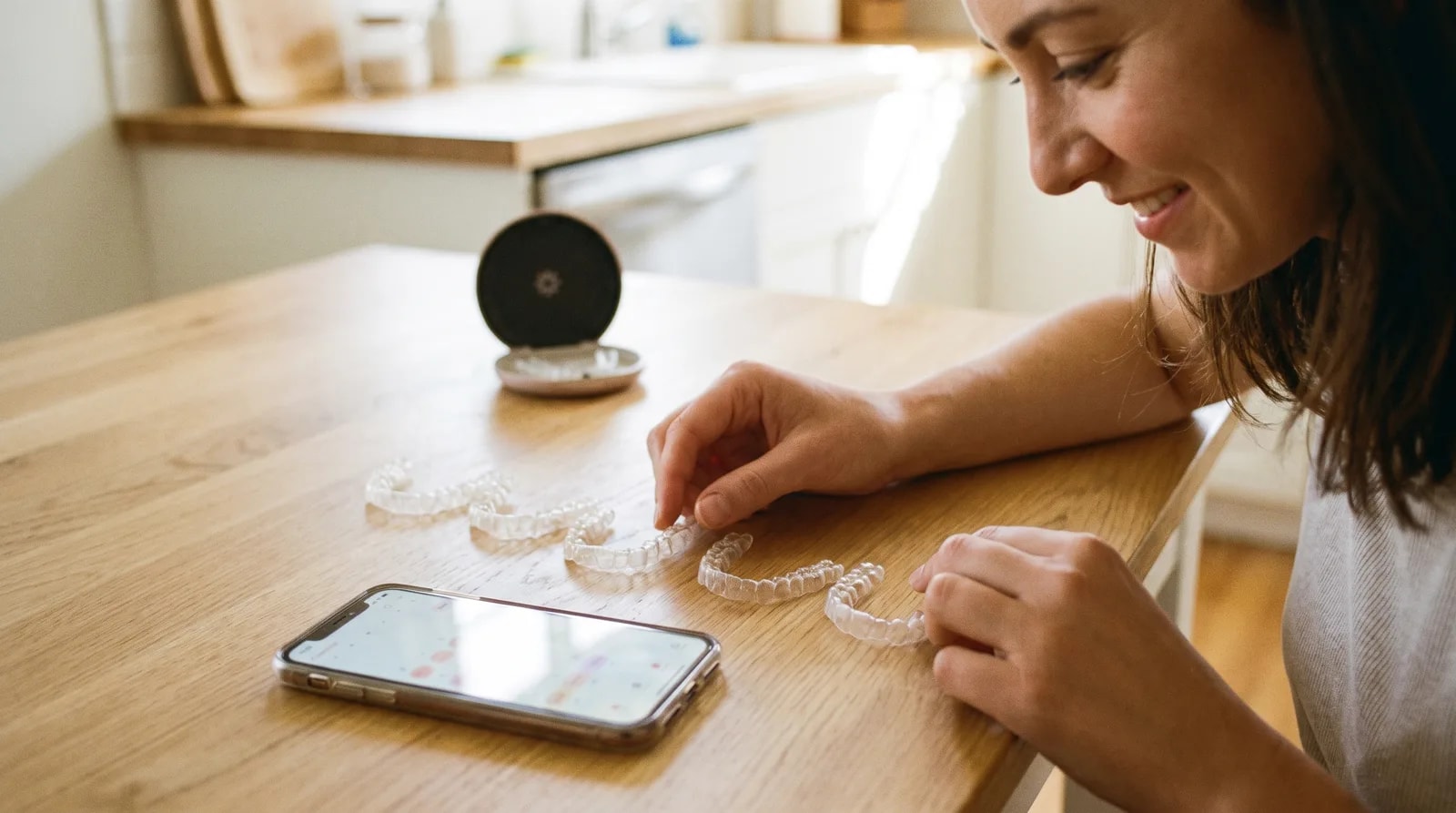
How long does Invisalign take? Most adult patients at 360 Dental in Van Nuys finish treatment in 6 to 18 months, though the exact timeline depends on how much your teeth need to move.
That is a wide range, and it is normal to want a clearer answer before you commit to treatment. Our Invisalign and clear braces team walks every new patient through their expected timeline at the very first visit.
This guide breaks down what actually shapes your timeline, what a typical case looks like month by month, and how Invisalign compares to traditional braces in terms of speed.
How Long Does Invisalign Take?
Most Invisalign treatment takes 6 to 18 months for adults, according to the American Association of Orthodontists. Mild cases can wrap up closer to 6 months, while more complex bite corrections can take the full 18 months or slightly longer.
Clear aligners can treat 90% of mild-to-moderate alignment issues, per the American Journal of Orthodontics. That covers most of the cases we see walk through our doors. Severe crowding or major bite problems sometimes need a longer plan. Occasionally that means a combination approach with braces for part of treatment.
Why the Range Is So Wide
Every mouth moves differently. A patient closing a small gap between two front teeth might finish in under a year. A patient correcting a full arch of crowding is working with a bigger, slower job. Neither timeline is unusual, and neither one is a sign that something is wrong.
The only way to know your real number is a digital scan and case plan, not a generic average pulled from the internet. Photos and online estimators can give you a rough idea. They cannot see how your teeth actually sit in the bone, which is what really drives the timeline.
What Factors Affect How Long Invisalign Takes?
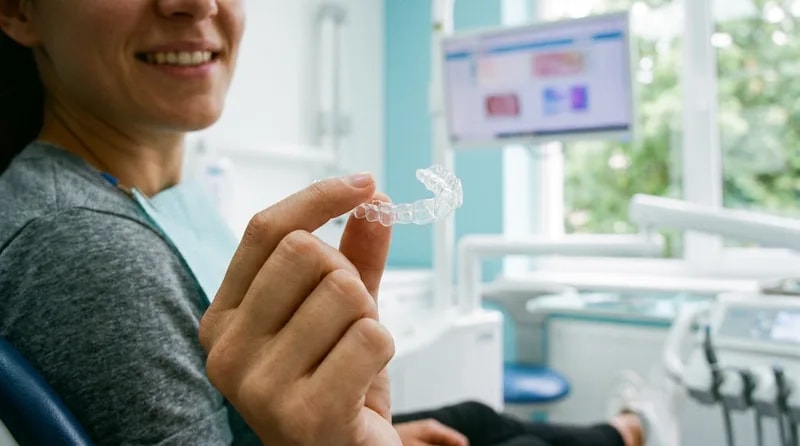
How long Invisalign takes depends mainly on how far your teeth need to move, how consistently you wear your aligners, and how complex your bite issue is, according to dental researchers. Two patients with similar teeth can finish months apart. The difference usually comes down to these factors, not luck.
- How far teeth need to move: small gaps close faster than a full arch of crowding
- Wear time: aligners need 20 to 22 hours a day to stay on schedule
- Bite complexity: crossbites and deep bites often add extra months
- Age of the patient: teenagers sometimes move teeth slightly faster than adults
- Bone density: how well the body responds to gentle pressure, which is harder to predict from a chart alone
- Attachment use: small tooth-colored bumps that help aligners grip and move teeth precisely
- Refinement trays: extra sets near the end to fine-tune the final result
There is a Bigger Payoff Than Speed
Straight teeth are easier to clean, which lowers the risk of cavities and gum disease by up to 30%, according to the ADA. A shorter timeline is nice, but a healthier mouth at the end of it matters more, and that payoff lasts well past treatment. Patients who keep up with regular dental visits are 60% less likely to lose teeth later in life, according to the Journal of Dental Research.
Curious what your case would involve?
A digital scan gives you a real timeline, not a guess.
Call (818) 787-6400 →
What Does a Typical Invisalign Timeline Look Like?
A typical Invisalign timeline starts with a digital scan and case plan, then moves through a series of aligner trays changed roughly every 1 to 2 weeks. Most patients see visible movement within the first few months.
We covered the scanning and planning stage in detail in our guide on how 360 Dental plans your Invisalign case digitally, so we will not repeat all of it here. What matters for your timeline is what happens after that first scan.
- Digital scan and custom treatment plan (week 0)
- First aligner trays delivered and worn (weeks 1 to 6)
- Progress check and possible attachment adjustments (months 2 to 4)
- Steady tray changes every 1 to 2 weeks (months 4 to 12)
- Final trays and bite refinement (final 1 to 3 months)
- Retainers to hold your new smile in place (ongoing)
Most patients come in for a short check-in every 6 to 8 weeks. These visits are quick, mostly to confirm teeth are tracking with the plan.
These check-ins are not just formalities. If a tooth is moving slower than planned, catching it at week 8 instead of week 16 can save real time later. Small adjustments early keep the whole plan on track.
Most adjustments at this stage are minor. A slightly different tray sequence or a new attachment usually solves it without adding much time overall.
Bigger changes are rare, but when they happen, it is almost always caught during one of these routine check-ins rather than at the very end.
How Does Invisalign Compare to Braces in Treatment Time?
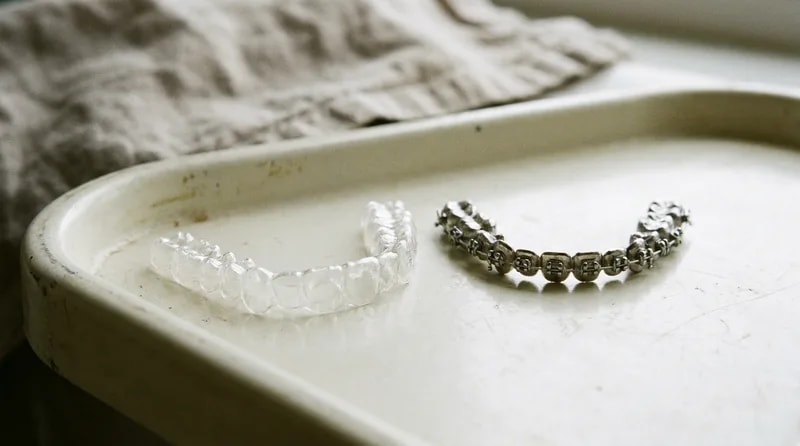
Invisalign usually takes about the same time as traditional braces for mild cases, but braces often run longer for complex ones. Clear aligners average 6 to 18 months, compared to 18 to 36 months for traditional braces, according to the AAO.
| Factor | Invisalign | Traditional Braces |
|---|---|---|
| Average treatment time | 6 to 18 months | 18 to 36 months |
| Best for mild cases | Yes, often faster | Similar, sometimes slower |
| Best for complex bite issues | Possible, may run longer | Often more predictable |
| Depends on patient wear time | Yes, heavily | No, fixed to the teeth |
That last row matters more than people expect. Braces work whether or not the patient thinks about them. Invisalign only works as fast as the plan intends if the trays stay in for close to the full day.
Neither option is automatically better. Braces suit patients who do not want to manage removable trays. Invisalign suits patients who want the option to take them out for meals, photos, or a night out.
Cost, comfort, and appearance often matter as much as raw speed when patients choose between the two.
Can You Speed Up Your Invisalign Treatment?
You can sometimes speed up Invisalign by wearing your aligners the full recommended 20 to 22 hours a day and keeping every checkup on schedule. Skipping wear time is the single most common reason treatment runs longer than planned.
No shortcut skips tooth movement altogether. Teeth need time to shift safely, and rushing that process risks damage to the tooth root or surrounding bone.
That is worth repeating because it comes up a lot. Faster is not always safer, and a rushed plan can undo months of careful movement.
- Wear aligners 20 to 22 hours a day, removing them only to eat and brush
- Keep every progress appointment so small issues get caught early
- Switch to the next tray on schedule, not early and not late
- Ask about attachments if your case plan calls for them
Consistency does more for your timeline than anything else on this list. Patients who stay on track almost always finish close to their original estimate.
Related: If you want to see how we build your custom treatment plan before your first tray even arrives, our guide covers the entire digital planning process. See how the planning works →
Get Started with Invisalign in Van Nuys
How long Invisalign takes always comes back to your specific teeth, not a number pulled from a chart. A digital scan gives you a real answer instead of a guess.
If you are ready to see your actual timeline, our Van Nuys team can map it out at your first visit, along with what to expect month by month. No guesswork, just a real plan built around your teeth.
Results may vary. Please consult with your dentist at 360 Dental for personalized treatment recommendations.
Ready to see your real Invisalign timeline?
A digital scan at our Van Nuys office gives you a personalized estimate, not a guess.
Prefer to talk to someone first?
Call (818) 787-6400 →
Common questions
How long does Invisalign take for adults?
Most adults finish Invisalign treatment in 6 to 18 months, depending on how much their teeth need to move. Mild cases often wrap up closer to 6 months, while more complex bite corrections can take the full range.
Is Invisalign faster than braces?
For mild to moderate cases, Invisalign is often faster than braces. Clear aligners average 6 to 18 months, while traditional braces average 18 to 36 months, according to the American Association of Orthodontists.
What happens if I do not wear my aligners enough?
Not wearing your aligners the recommended 20 to 22 hours a day is the most common reason Invisalign treatment runs longer than planned. Teeth need consistent pressure to move on schedule, so skipped hours add up fast.
Can Invisalign treatment be sped up?
You can help stay on schedule by wearing aligners consistently and keeping every checkup, but there is no safe way to skip the tooth movement process entirely. Rushing risks damage to the root or surrounding bone.
How often do I switch Invisalign trays?
Most patients switch to a new aligner tray every 1 to 2 weeks, based on their specific treatment plan. Your dentist may adjust this schedule slightly depending on how well your teeth are tracking.
Does age affect how long Invisalign takes?
Age plays a small role, since younger patients sometimes see slightly faster tooth movement. The difference is usually measured in weeks, not months, and rarely changes the overall treatment timeline category.
Did this answer your question?
Written for general reading, not as advice about your own teeth. Nothing here replaces an examination: if something hurts, or has changed, book a visit and let a dentist look at it.
Your first visit
One ticket covers it.
360 Dental · Admit one