
Orthodontics
Invisalign Van Nuys: Inside the Digital Planning Process
Published 12 min read
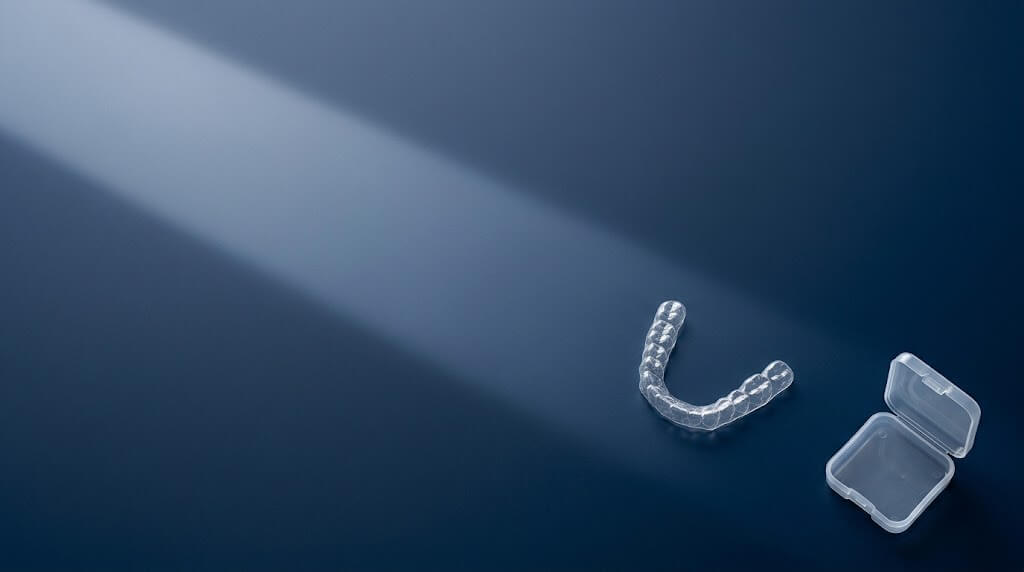
If you have been searching Invisalign Van Nuys and picturing a tray of cold putty pressed against your teeth, that part of the process is gone. At 360 Dental, clear aligner treatment begins as a digital file. A handheld scanner maps your teeth, and software turns that map into a movement plan your dentist can edit tooth by tooth. Our clear braces and aligner page covers the treatment itself.
Most people never see this stage. They see the trays. But the planning is where the outcome is actually decided, and it is the part worth understanding before you commit to twelve or eighteen months of anything.
Every Invisalign Van Nuys case at the practice begins the same way, whether you are closing a single gap or correcting years of crowding. The scan comes first, then the thinking, then the plastic.
This guide walks through what happens between your first scan and your first tray, how long treatment usually runs, and how to tell a thorough planning process from a rushed one. If you are still weighing options, that context should make the consultation far more useful.
At a glance
~90%
of mild-to-moderate alignment issues are treatable with clear aligners
6-18
months for most adult cases, versus 18-36 with fixed braces
20-22
hours of daily wear is the standard expectation
What Does the Invisalign Digital Planning Process Actually Involve?
Digital planning turns your bite into a 3D model, then maps every tooth movement in sequence before a single aligner is made. Your dentist reviews that simulation, adjusts the order and amount of movement, and approves it. Manufacturing only begins after that approval.
Think of it as a blueprint stage. The scanner captures roughly 6,000 frames per second of tooth surface data, and the software stitches that into a model precise enough to plan fractions of a millimeter of movement. From there, your dentist decides what moves first, what waits, and where attachments are needed to give the aligner something to grip.
Why go to that trouble for a cosmetic result? Because it is rarely only cosmetic. The American Academy of Cosmetic Dentistry reports that 99.7% of Americans consider a smile an important social asset, and the same movements that improve appearance also change how easily you can clean between teeth.
Three things get decided during planning:
Dr. Vachik Danoukh, DMD, is a certified Invisalign provider, and every Invisalign Van Nuys case at the practice is reviewed against your x-rays and clinical exam before it moves forward. A pretty simulation on a screen means nothing if the roots and bone underneath cannot support the movement.
How Does an iTero Scan Replace the Old Impression Tray?
An iTero scanner captures your teeth with a small camera wand instead of impression material, so nothing sets in your mouth and nothing triggers a gag reflex. The scan takes a few minutes, appears on screen instantly, and can be re-taken in seconds if a section looks incomplete.
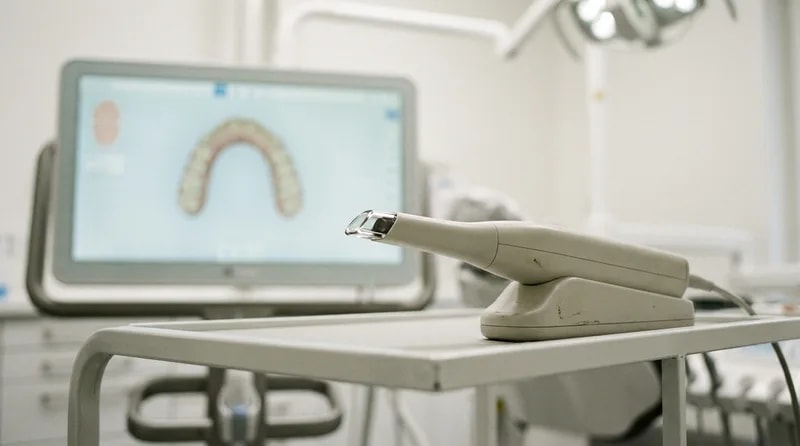
Traditional impressions had a real failure rate. Material distorts, trays shift, and a flawed impression produces a flawed aligner that nobody notices until it does not seat properly. Digital capture removes most of that variability, and it removes the wait for a physical model to ship to a lab.
| Step | Putty Impression | iTero Digital Scan |
|---|---|---|
| Chair time | Several minutes per arch, material setting in the mouth | A few minutes total, nothing setting against your teeth |
| If something goes wrong | Full retake with fresh material | Rescan the affected area only |
| Seeing your model | After the lab pours a stone cast | On screen during the same visit |
| Record storage | Physical models on a shelf | Digital file, reusable for refinements and retainers |
That last row matters more than it looks. Because the file stays on record, a replacement retainer two years from now does not require starting over.
The scan doubles as a screening record too. The ADA notes that regular dental visits catch about 80% of oral health issues before they turn serious, and a stored 3D file makes year-over-year comparison far easier than memory or a stone model ever allowed.
What Happens Between Your Scan and Your First Aligner Tray?
Five things happen in order: your records are combined, a movement plan is drafted, your dentist edits and approves it, the trays are manufactured, and you return for a fitting appointment. The gap is usually three to four weeks, most of it manufacturing and shipping time.
Here is the sequence in detail:
1
Records are assembled
The scan is paired with x-rays, photographs, and your clinical exam. Alignment decisions depend on root position and bone support, not just the visible crowns.
2
A draft plan is generated
Software proposes a movement sequence and estimated tray count based on your starting position and the target bite.
3
Your dentist revises it
This is the step that separates a considered plan from a default one. Movement amounts get dialed back, attachment placement changes, and problem teeth get sequenced differently.
4
You review the simulation
You see the projected before and after, ask questions, and raise anything that matters to you cosmetically before production starts.
5
Trays are manufactured and fitted
At the fitting visit, attachments are bonded, the first tray is checked for seating, and you are shown how to insert and remove them without warping the edges.
Related: Alignment is often one piece of a larger cosmetic plan, and the same digital records feed into that process. See how a smile makeover case is planned →
How Long Does Clear Aligner Treatment Usually Take?
Most adult cases run 6 to 18 months, compared with 18 to 36 months for traditional braces, according to the American Association of Orthodontists. Your number depends on how far teeth need to travel, whether the bite itself is being corrected, and how consistently you wear the trays.
One number puts the comparison in perspective: the American Association of Orthodontists reports traditional braces average 18 to 36 months, roughly double the typical aligner range for comparable mild-to-moderate cases.
Aligners only move teeth while they are in your mouth. Everything else is a detail.
Wear time is the variable patients control, and it is the one that derails timelines most often. Aligners are designed for 20 to 22 hours a day. Drop to 14 hours and teeth partially rebound between wears, which means the next tray does not seat cleanly and the whole sequence slows down.
3-6
months for minor relapse cases, the fastest category
12-18
months once rotation and moderate crowding are involved
18+
months when the bite itself is being corrected
| Case Type | Typical Range | What Drives the Timeline |
|---|---|---|
| Minor relapse after old braces | 3-6 months | Small front-tooth corrections only |
| Mild crowding or spacing | 6-12 months | Amount of space to create or close |
| Moderate crowding with rotation | 12-18 months | Rotating teeth takes more trays than tipping them |
| Bite correction included | 18 months or more | Jaw relationship changes are slower than tooth movement |
Get a realistic timeline for your own case
Ranges in a table are useful. A scan of your actual teeth is better. 360 Dental sits at Van Nuys Boulevard and Victory Boulevard, minutes off the 405 and 101.
Is Invisalign a Good Fit for Your Case?
Clear aligners can address roughly 90% of mild-to-moderate alignment issues, according to the American Journal of Orthodontics. That covers most crowding, spacing, and mild bite problems. Severe skeletal discrepancies and teeth needing large vertical movement sometimes call for fixed braces or a combined approach instead.
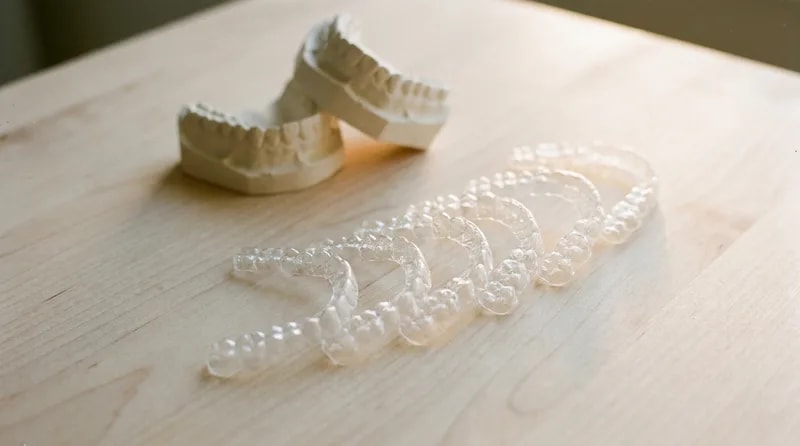
The honest answer is that candidacy is a clinical judgment, not a quiz result. Two people with identical-looking front teeth can need very different plans once root angulation and bone levels are visible on imaging. That said, some patterns come up repeatedly.
Usually a strong fit
- Adults with mild to moderate crowding who want a discreet option at work
- Gaps and spacing, particularly in the upper front teeth
- Relapse after earlier orthodontic work, often the fastest category to correct
- Patients planning veneers or bonding later, where pre-alignment reduces how much tooth structure needs reshaping
Needs a closer look
- Significant jaw size mismatch between upper and lower arches
- Teeth requiring substantial intrusion or extrusion
- Active gum disease, which should be stabilized before tooth movement begins. The CDC reported in 2024 that 42% of adults aged 30 and older have some form of periodontal disease, so this is a common finding rather than a rare one
- A history of inconsistent retainer wear, which predicts inconsistent aligner wear
The ADA also notes that straighter teeth are easier to clean, with up to 30% lower cavity and gum disease risk as a result. That health argument often matters more over a lifetime than the cosmetic one, as the guidance on braces and orthodontic treatment from MouthHealthy explains.
What Is Daily Life With Clear Aligners Actually Like?
Expect a routine adjustment rather than a dramatic one. Aligners come out for meals, coffee, and brushing, then go straight back in. New trays feel tight for a day or two, which is the sensation of teeth under gentle pressure, and it fades as the tooth settles into position.
The practical friction is not discomfort. It is logistics. Eating out means finding somewhere to put the tray, and snacking becomes a decision rather than a reflex. Several patients describe that as an unexpected benefit.
There is a real health payoff in the background. Research published in the Journal of Dental Research found that people who visit a dentist regularly are 60% less likely to lose teeth, and aligner treatment naturally builds in visits every six to eight weeks.
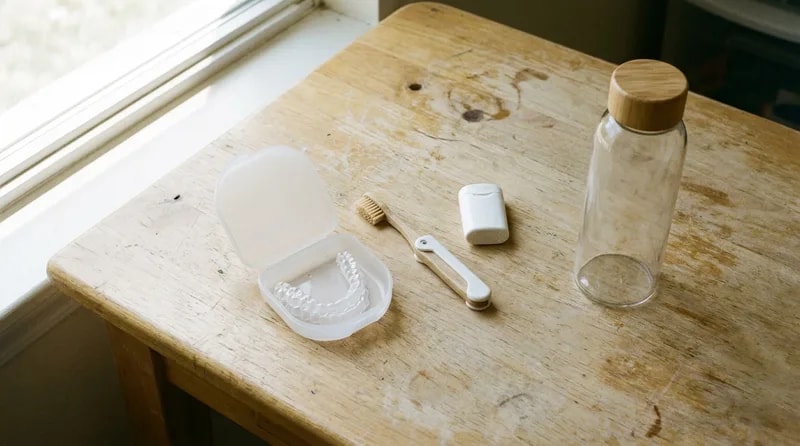
Habits that keep treatment on schedule:
Myth
Clear aligners work on their own once you have them, so wear time is flexible around your week.
Fact
Teeth partially rebound between wears. Dropping to 14 hours a day means the next tray no longer seats cleanly, and the whole sequence stretches out.
Cleaning matters more than usual during treatment, because trays reduce saliva flow across tooth surfaces. NIH guidance on daily oral hygiene applies with extra force here: brush after meals before the tray goes back in.
How Should You Compare Invisalign Van Nuys Providers?
Compare the planning process, not the brand name. Any certified provider can order aligners. What varies is how much clinical review happens between the software draft and the manufactured trays, and whether the practice can handle the rest of your care in one place.
Reputation is a reasonable starting filter. 360 Dental holds a 4.9-star rating on Google with more than 460 reviews on Yelp, and the practice is staffed by dentists certified in Invisalign, Lumineers, and Progressive Orthodontics. Credentials tell you what a provider can do. Process tells you how carefully they do it.
Ask these questions at a consultation:
- 4.9 stars on Google
- 460+ Yelp reviews
- All-digital practice
- In-house endodontist
- Invisalign certified
That last point is where 360 Dental differs from most clear aligner providers in the San Fernando Valley. General, cosmetic, and restorative care happen under one roof alongside an in-house endodontist, Dr. Parham Mansouri, DDS, MS, so a complication mid-treatment does not send you across town. You can read more about the team on the about the practice page.
Wrapping Up: The Plan Matters More Than the Trays
Aligners are manufactured plastic. They are identical from every provider. What differs is the thinking that happens before manufacturing starts, which is exactly why the Invisalign Van Nuys planning process deserves your attention during the consultation rather than after.
Ask to see your simulation. Ask what your dentist changed from the software draft and why. A provider who can walk you through those edits is a provider who actually planned your case.
Results may vary. Please consult with your dentist at 360 Dental for personalized treatment recommendations.
See your smile plan before you commit to it
Book a clear aligner consultation at 360 Dental in Van Nuys. Digital scan, projected tooth movement, and a straight answer about whether aligners suit your case.
Prefer to ask a few questions first? The team answers by phone at (818) 787-6400.
Common questions
How does Invisalign Van Nuys planning start at 360 Dental?
It starts with a digital iTero scan of your teeth and bite, usually under 15 minutes. That scan builds a 3D model your dentist uses to map each tooth movement before any aligner is manufactured.
Does the digital scan replace x-rays?
No. The scan captures tooth surfaces and bite alignment, while x-rays and 3D CT imaging show roots and bone underneath. Both are reviewed together, because alignment planning depends on what sits below the gumline too.
Can I see what my teeth will look like before I start?
Yes. Digital planning produces a simulated before-and-after preview of the projected tooth positions. It is a planning tool rather than a promise, and your dentist will explain where real results may differ.
How many hours a day do I need to wear clear aligners?
Plan on 20 to 22 hours daily, removing them only to eat, drink anything other than water, and brush. Aligners that sit in a case instead of your mouth push the whole timeline back.
Is Invisalign in Van Nuys suitable for teenagers?
Often yes, depending on jaw development and how reliably the teenager wears them. Compliance indicators built into some aligners help track wear time, and your dentist reviews growth stage before recommending an approach.
What happens if a tooth does not track with the plan?
Your dentist orders a refinement scan and a revised aligner series. Mid-course corrections are a normal part of clear aligner treatment, not a sign that something went wrong with the original plan.
Will I need a retainer after Invisalign treatment?
Yes. Teeth drift throughout life, so retainers hold the corrected positions in place. Most patients wear them full time for a short period, then switch to nights only, following the schedule their dentist sets.
Did this answer your question?
Written for general reading, not as advice about your own teeth. Nothing here replaces an examination: if something hurts, or has changed, book a visit and let a dentist look at it.
Your first visit
One ticket covers it.
360 Dental · Admit one