
Dental Implants
Dental Implants Van Nuys: Single Tooth to Full Arch
Published 12 min read
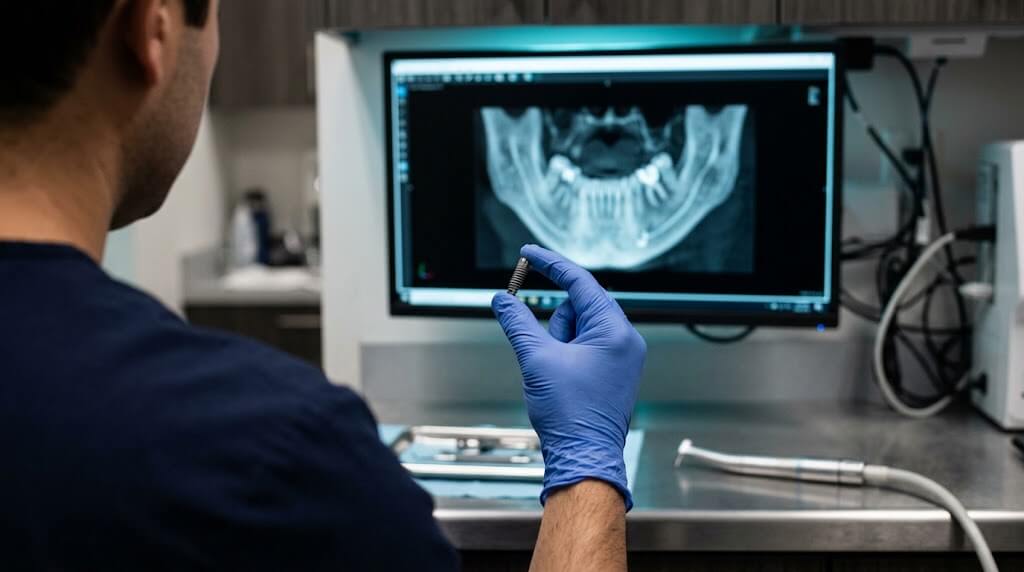
People researching dental implants Van Nuys usually arrive with one tooth in mind and leave a consultation realizing the options run much wider than that. One implant, several, or a full arch on four to six posts. Our dental implants page covers the treatment itself, and this guide covers how the decision gets made.
Missing teeth are far from unusual. The American College of Prosthodontists estimates 120 million Americans are missing at least one, which is roughly one in three adults.
Below: how implants work, who qualifies, what each option looks like from a single gap to a full jaw, how long the process really takes, and how implants compare against bridges and dentures on the terms that matter.
At a glance
120M
Americans are missing at least one tooth (American College of Prosthodontists)
95-98%
implant success at ten years (Journal of Oral and Maxillofacial Surgery)
4-8
months from consultation to final crown in most single-tooth cases
What Are Dental Implants and How Do They Work?
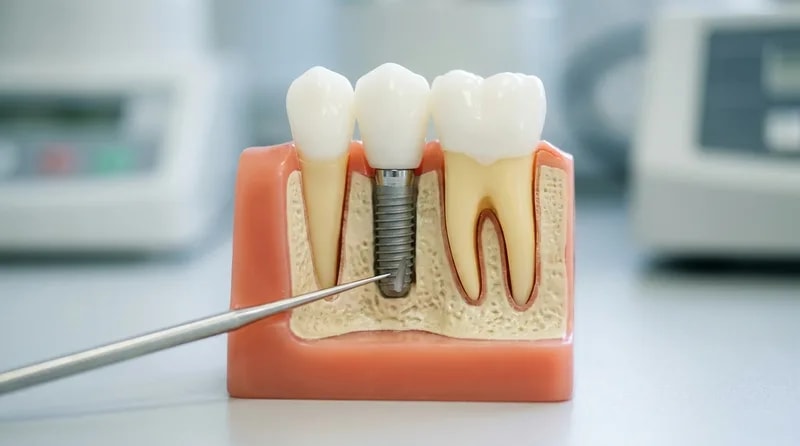
A dental implant is a titanium post placed into the jawbone to replace a missing tooth root. Bone grows against that post over several months in a process called osseointegration. Once fused, an abutment and a crown attach on top to restore the visible tooth.
The root replacement is the part that matters clinically. Jawbone maintains its volume through the pressure of chewing transmitted down a tooth root. Remove the root and that signal stops, so the bone in that area gradually resorbs. A bridge spans the gap above the gumline but sends no load into the bone underneath.
An implant restores the load path into bone. It is the only tooth replacement that does.
Three parts make up the finished restoration:
Long-term outcomes are well documented. The Journal of Oral and Maxillofacial Surgery reports success rates of 95% to 98% over ten years, and the ADA patient guidance on dental implants gives a plain-language overview of the same procedure.
Who Is a Candidate for Dental Implants?
Most adults with healthy gums and adequate jawbone qualify. The main considerations are bone volume at the site, control of gum disease, and general health conditions that affect healing. Age alone rarely rules anyone out, and many patients in their seventies and eighties do well.
Gum health comes first, always. The CDC reported in 2024 that 42% of adults aged 30 and older have some form of periodontal disease, and placing an implant into inflamed tissue invites the same bone loss that cost the original tooth. Treatment sequence matters more than treatment speed.
Usually straightforward
- Healthy gums, no active infection, and a recent cleaning history
- Enough bone height and width at the site, confirmed on a 3D scan
- Non-smokers, or patients willing to stop during the healing window
- Well-managed general health, including stable blood sugar in diabetes
Needs extra planning
- Teeth missing for years, where the bone has already thinned and grafting may be needed
- Upper back teeth close to the sinus, sometimes requiring a sinus lift
- Untreated gum disease, which the NIH describes as progressing quietly through distinct stages before symptoms appear
- Heavy grinding, which loads implants harder than normal chewing and may call for a night guard
Nothing on the second list is disqualifying. It just changes the sequence and the timeline. Most dental implants Van Nuys cases that involve grafting still reach the same endpoint, only a few months later than a straightforward site would.
Dental Implants Van Nuys Options: Single Tooth or Full Arch?
Four main paths exist, and they scale with how many teeth are missing and where. A single crown on one implant, an implant bridge spanning several teeth, an implant-retained denture that snaps in and out, or a fixed full-arch restoration anchored on four to six posts.
| Option | Best For | Implants Needed |
|---|---|---|
| Single implant crown | One missing tooth with healthy neighbors | 1 |
| Implant bridge | Three or more missing teeth in a row | 2-3 supporting several teeth |
| Implant-retained denture | Full arch, removable, better stability than conventional dentures | 2-4 per jaw |
| Fixed full arch | Full arch that stays in place, closest to natural function | 4-6 per jaw |
- 1 implant = 1 crown
- 2-3 implants = a bridge
- 2-4 = snap-in denture
- 4-6 = fixed full arch
The removable versus fixed decision drives most conversations. A snap-in overdenture costs less and is easier to clean at the sink. A fixed arch feels closer to natural teeth and never comes out, but cleaning underneath takes technique. Both are covered in more detail on the dentures and implant-retained dentures page.
Chewing function is where implant-supported options separate from conventional dentures. AAID figures put implant-supported teeth at up to 90% of natural chewing power. Conventional full dentures land far below that.
How Long Does the Dental Implant Process Take?
Most single-tooth cases run four to eight months from consultation to final crown. Healing accounts for the bulk of that, because bone needs three to six months to fuse to the post. Cases requiring extraction or grafting first can extend past a year.
The typical sequence:
1
Consultation and 3D scan
Bone volume, nerve position, and sinus location are mapped, and the restorative endpoint is planned before anything is placed.
2
Preparatory work if needed
Extraction, socket preservation, or bone grafting. Grafts typically need three to six months of their own before implant placement.
3
Implant placement
A single-tooth placement usually takes under an hour under local anesthetic.
4
Osseointegration
Three to six months of healing while bone fuses to the post. A temporary tooth can often be worn during this window.
5
Abutment and impression
A digital scan captures the site once healing is confirmed.
6
Final restoration
The crown, bridge, or arch is fitted, checked against your bite, and adjusted.
Myth
A shorter healing window gets you to the finish line faster.
Fact
Rushing osseointegration is the most common reason implants fail early. The wait is what produces those 95% to 98% ten-year outcomes.
Waiting is not wasted time. It is the step that produces those 95% to 98% ten-year outcomes, and shortening it is the most common reason implants fail early.
Get your timeline mapped before you decide
360 Dental is at Van Nuys Boulevard and Victory Boulevard, minutes off the 405 and 101, and serves Sherman Oaks, Encino, and North Hollywood.
Why Does 3D CT Scanning Change Implant Planning?
A 3D CT scan shows bone in three dimensions, including height, width, and density, plus the exact position of nerves and sinuses. A flat x-ray cannot. That difference determines whether an implant can be placed as planned or whether grafting comes first.
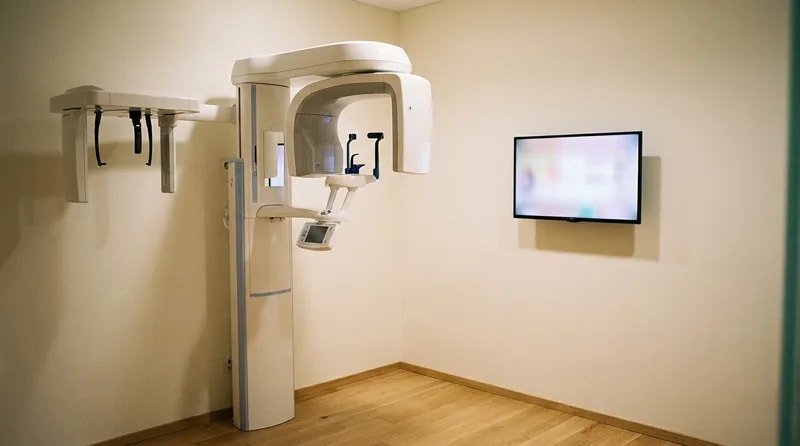
Planning digitally also reverses the order of the decision. Instead of placing a post and then designing a tooth around it, the final tooth position is designed first and the implant is positioned to support it. That is why a well-planned implant looks like it belongs in the arch rather than sitting at an odd angle.
What the scan reveals that a standard x-ray misses:
360 Dental runs an all-digital workflow with 3D CT scanning and iTero digital scanning in-house, so diagnosis and planning happen in the same visit rather than across referrals.
How Do Implants Compare With Bridges and Dentures?
Implants preserve bone and leave neighboring teeth untouched. Bridges are faster and need no surgery, but they require grinding down healthy teeth on either side. Conventional dentures are the least invasive option and the least stable. Each fits a different set of priorities.
| Factor | Implant | Bridge | Denture |
|---|---|---|---|
| Preserves jawbone | Yes | No | No |
| Affects neighboring teeth | No | Yes, they are reshaped | Clasps may stress them |
| Time to complete | 4-8 months typically | 2-4 weeks | 4-8 weeks |
| Chewing function | Closest to natural | Good | Reduced, especially full dentures |
| Daily care | Brush and clean between as normal | Threading under the span | Removal and soaking |
The bone column is the one people underestimate. Ten years after a bridge, the ridge underneath has often flattened enough to change facial support, and converting to an implant later then requires grafting that would not have been necessary at the start.
None of this makes bridges the wrong choice. A bridge suits patients who need a result in weeks rather than months, or whose neighboring teeth already need crowns for other reasons. In that situation you are reshaping teeth that were going to be crowned regardless, so the main objection disappears.
Dentures still have a clear role too, particularly as an interim step while bone heals or while a larger plan is staged. The question worth asking is not which option is best in general. It is which option matches your bone, your timeline, and how you want to eat five years from now.
What Does Recovery and Long-Term Care Involve?
Expect mild soreness for a few days after placement, usually managed with over-the-counter medication and a soft diet. Most people return to work the next day. Long-term care is simply brushing, cleaning between teeth, and keeping regular hygiene appointments.
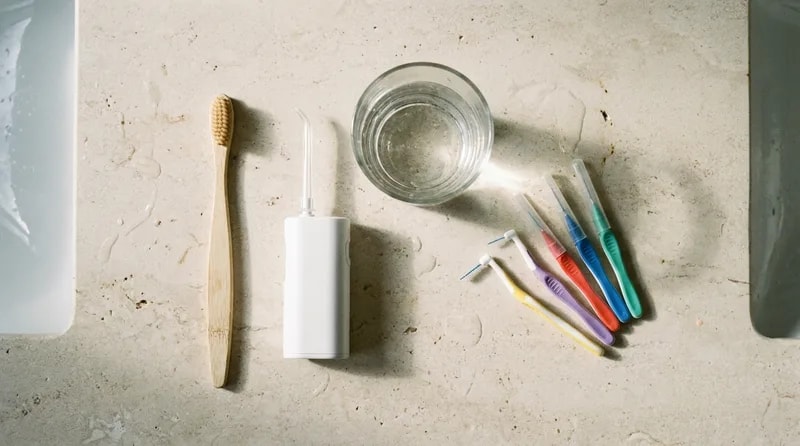
Implants cannot develop cavities. The tissue around them can still become inflamed, though, and peri-implantitis behaves much like gum disease around a natural tooth. That is why implant patients are typically placed on a shorter hygiene recall.
Practical habits that protect the investment:
Zero
cavities possible on an implant, though the gum around it can still inflame
3-4
months is the typical hygiene recall for implant patients
60%
less tooth loss among people who visit regularly (Journal of Dental Research)
Research in the Journal of Dental Research found that people who see a dentist regularly are 60% less likely to lose teeth. That finding applies to implant maintenance just as much as it does to natural teeth.
How Do People Pay for Implants Without Insurance?
Most patients combine partial insurance benefits with monthly financing. Coverage varies widely, and many PPO plans contribute toward the crown rather than the surgical placement. Staged treatment also helps, since spreading a full-arch case across phases spreads the cost with it.
What is available at 360 Dental:
Membership details are on the 360-VIP patient specials page. For larger cases, ask for a written treatment plan broken out by phase so you can see where the costs actually fall.
One comparison worth running before you decide anything: what a failing tooth is likely to cost you over the next decade if you keep repairing it. Repeated fillings, a root canal, then a crown, then eventual extraction adds up quietly. Patients weighing dental implants Van Nuys options often find the arithmetic looks different once the alternative is priced honestly rather than one appointment at a time.
Deciding What Fits Your Case
The right answer depends on bone, gum health, how many teeth are involved, and how much time you can give the process. Anyone weighing dental implants Van Nuys options should start with a 3D scan rather than a price list, because the scan is what tells you which paths are open.
Bring your questions to the consultation. Ask to see the scan on screen, ask what the bone looks like at the site, and ask what happens if grafting turns out to be needed.
Results may vary. Please consult with your dentist at 360 Dental for personalized treatment recommendations.
See your bone before you choose a treatment path
Book an implant consultation at 360 Dental in Van Nuys. 3D CT imaging, a straight assessment of your options, and general, cosmetic, and specialist care under one roof.
Prefer to talk it through first? Reach the team at (818) 787-6400.
Common questions
How long do dental implants last?
The titanium post often lasts decades when bone and gums stay healthy, with studies reporting 95-98% success at ten years. The crown attached on top wears like any restoration and may need replacing sooner.
Are dental implants in Van Nuys suitable if I have gum disease?
Not until the gum disease is treated and stable. Implants depend on healthy bone and tissue, so periodontal therapy comes first. Once inflammation is controlled, many patients then proceed with implant planning.
What happens if I do not have enough jawbone?
Bone grafting or socket preservation can rebuild the site. Grafting adds several months to the timeline, and your dentist will show you the bone volume on a 3D scan before recommending it.
Is the implant procedure uncomfortable?
Most patients report less soreness than expected, typically comparable to an extraction. Local anesthetic is used during placement, and any tenderness afterward is usually managed with over-the-counter medication for a few days.
Can I replace a full arch without one implant per tooth?
Yes. Full-arch restorations typically anchor a fixed bridge on four to six implants per jaw. The bridge distributes chewing forces across those posts rather than requiring a post for every tooth.
How do I care for an implant day to day?
Brush and clean between teeth exactly as you would with natural teeth, plus regular hygiene visits. Implants cannot decay, but the gum and bone around them can become inflamed if plaque accumulates.
Does dental insurance cover implants?
Coverage varies widely by plan, and many PPO policies cover part of the restoration rather than the surgical placement. 360 Dental accepts all PPO plans and offers CareCredit, Sunbit, and Cherry financing.
Did this answer your question?
Written for general reading, not as advice about your own teeth. Nothing here replaces an examination: if something hurts, or has changed, book a visit and let a dentist look at it.
The treatment itselfDental Implants at 360 DentalImplant-based tooth replacement, including All-on-4 and full-arch restoration.Your first visit
One ticket covers it.
360 Dental · Admit one