
General Dentistry
Composite Fillings vs Amalgam: What Has Actually Changed
Published 13 min read
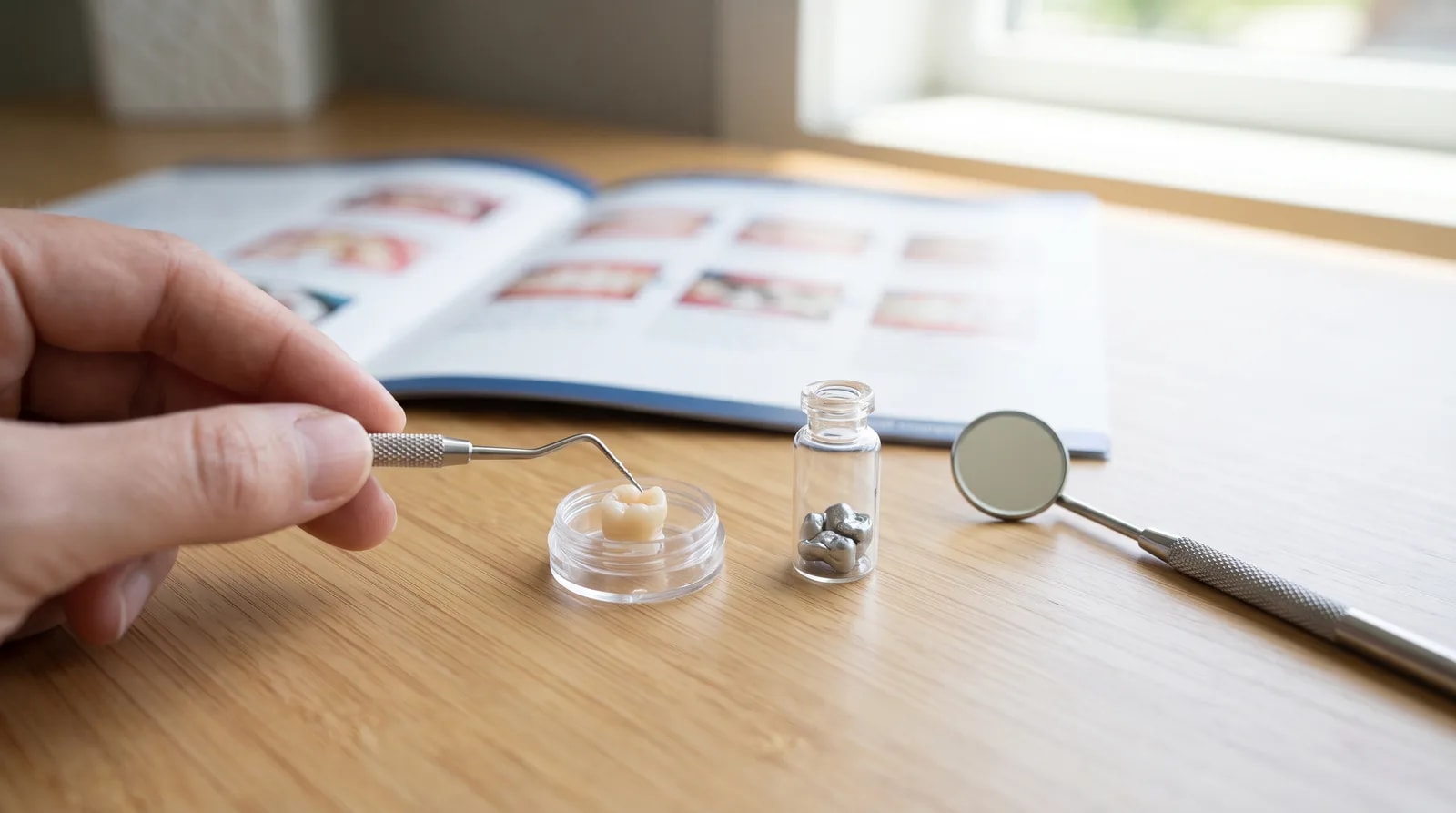
The question of composite fillings vs amalgam usually arrives at the worst moment: you are in the chair, a cavity has been found, and someone asks which material you would prefer. Fillings sit inside general dentistry at 360 Dental in Van Nuys, and tooth-colored composite is what most patients receive today.
What has genuinely changed over the past few decades is bonding. Composite adheres to tooth structure, which allows a dentist to prepare a smaller cavity than amalgam required. That is the real shift, and it is a structural argument rather than a cosmetic one.
Below is how the two materials actually differ, what the ADA says about amalgam safety, and why replacing a filling that is doing its job is usually the wrong instinct.
What is the difference between composite and amalgam fillings?
Composite is a tooth-colored resin that bonds chemically to the tooth. Amalgam is a silver-gray alloy of mercury with silver, tin, and copper that is packed into a prepared cavity and held mechanically. One adheres, the other is retained by shape.
That distinction drives almost everything else. Because composite bonds, less healthy tooth needs removing to hold it in place. Because amalgam relies on mechanical retention, the cavity historically had to be shaped to grip it.
Worth putting the scale of the underlying problem in view first. Nearly 1 in 4 adults in the US has untreated tooth decay, according to CDC NCHS, and tooth decay is the most common chronic disease in children, 5x more common than asthma, according to the ADA. The material debate sits on top of a much larger gap in treatment.
Where the two materials differ most
- Color match
- How they are held in place
- How much tooth is prepared
- Appointment length
- Behavior under heavy chewing
- Insurance coding
- Less tooth removed. Bonding means the cavity does not need shaping to grip the filling mechanically.
- Shade matching. Resin is tinted to your tooth, so a filling on a visible surface does not announce itself.
- Repairable. Composite can often be added to or reshaped rather than fully replaced.
- Moisture sensitive. The bond needs a dry tooth during placement, which is why the appointment takes longer.
The ADA patient page on dental amalgam describes it as one of the most thoroughly studied restorative materials in dentistry, which is worth keeping in mind as you read the rest of this. The move toward composite is mostly about conserving tooth structure and appearance, not about a safety verdict.
Composite fillings vs amalgam: how do they compare directly?
Composite wins on appearance and on how little tooth needs preparing. Amalgam has the longer durability record under heavy load. Composite takes longer to place and can be coded differently by insurers. Neither is the right answer for every cavity.
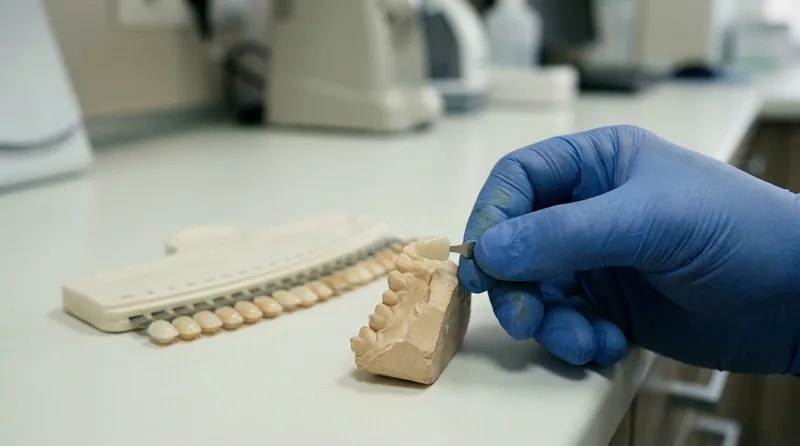
| Composite resin | Dental amalgam | |
|---|---|---|
| Appearance | Shade-matched to the tooth | Silver-gray, visibly different |
| How it is held | Bonds chemically to tooth structure | Retained mechanically by cavity shape |
| Tooth preparation | Generally more conservative | Historically required more shaping |
| Under heavy chewing load | Handles most cases well | Long track record on large molar fillings |
| Appointment time | Longer, placed and hardened in layers | Faster to place |
| Staining over time | Resin can pick up stain | Does not stain, but can tarnish |
| Insurance treatment | Sometimes reimbursed at the amalgam rate | Widely covered |
Notice that neither column is empty of advantages. Anyone presenting this as an obvious one-sided choice is skipping the part where the size and position of your specific cavity decides it.
Framing composite fillings vs amalgam as a contest also misses how the decision usually gets made in practice. For a small cavity on a visible tooth there is no real debate, and composite is simply the answer. For a very large cavity on a back molar the conversation often skips both and goes to a crown. The genuinely contested middle ground is narrower than the internet suggests.
Composite resin
Bonded, tooth-colored
Adheres chemically, so less healthy tooth needs preparing. Shade-matched and repairable. Takes longer to place because each layer is hardened separately and the tooth must stay dry.
Skip: Assuming it suits every size of cavity equally.
Dental amalgam
Mechanically retained, silver-gray
Long service record under heavy chewing load, quick to place, and widely covered by insurance. Visibly different from the tooth, and the cavity historically needed shaping to grip it.
Skip: Removing sound existing fillings without a clinical reason.
Is dental amalgam safe?
The American Dental Association considers dental amalgam a safe and effective restorative material, and it has been used for well over a century. Some regulators advise extra caution for particular groups, including pregnant patients and very young children.
What does not follow is removing sound fillings as a health measure. That process disturbs the material and removes healthy tooth structure at the same time, which is a real cost against an unclear benefit.
If you have specific concerns, particularly around pregnancy or a young child, raise them directly. A dentist can explain what applies to your situation, and that conversation is more useful than any general position statement including this one.
Should you replace old silver fillings?
Not without a clinical reason. A filling that is sealed, intact, and free of decay underneath is doing its job. Replacing it means removing healthy tooth alongside the old material, and every replacement cycle leaves the tooth slightly weaker than before.
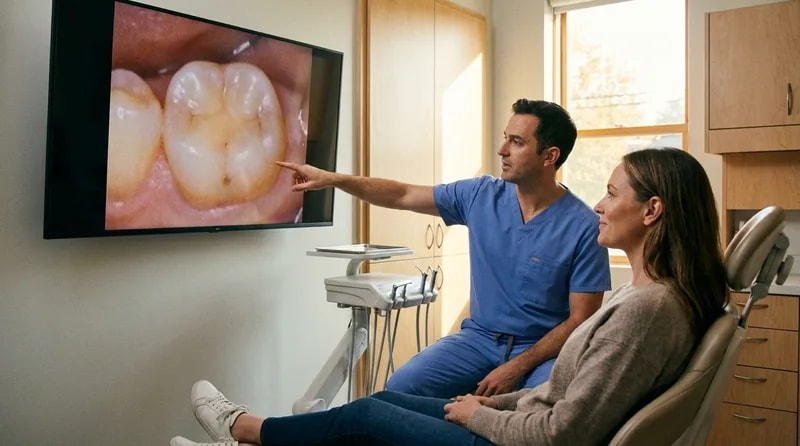
- Decay underneath or at the margin. This is the clearest reason, and it is usually found on x-rays rather than by looking.
- A crack in the filling or the tooth. Large old restorations can flex the surrounding tooth over years.
- A broken or open margin. Where the filling meets the tooth is where new decay starts.
- Significant wear or a change in your bite. A worn restoration can alter how teeth meet.
- Your own preference about appearance. A legitimate reason, provided you understand the trade-off in tooth structure.
That last point deserves respect rather than dismissal. Wanting a visible silver filling changed is a reasonable thing to want. It just belongs in the honest category of an elective change with a structural cost, not the category of a health necessity.
The bigger risk is usually the opposite problem. Nearly 1 in 4 adults in the US has untreated tooth decay, according to CDC NCHS, and NIH information on tooth decay explains how it progresses once it reaches dentin. An untreated cavity outranks the material question every time.
What are the most common myths about fillings?
Three ideas cause the most confusion: that old amalgam should come out on principle, that composite is fragile, and that a filling is a finished repair requiring no further attention. Each leads to a decision most dentists would advise against.
- Myth
All my old silver fillings should be replaced.
- Reality
A sound filling is doing its job. Replacement removes healthy tooth as well as old material, so it needs a clinical reason.
- Myth
Composite is too weak for back teeth.
- Reality
Modern composites handle most posterior cavities well. Very large restorations may call for a crown or onlay rather than either filling.
- Myth
Once it is filled, that tooth is fixed for good.
- Reality
Fillings have a service life and margins can fail. That is why checkups review existing restorations, not only new decay.
A fourth assumption is quieter and more expensive: that the material choice matters more than the dentistry around it. Margins, moisture control during placement, and how well your bite is adjusted afterward all affect how long a restoration lasts. Those are execution factors rather than material factors, and they rarely feature in the conversation patients are invited into.
Ask what specifically is wrong before agreeing to replace
An exam at 360 Dental in Van Nuys reviews existing fillings for decay, cracks, and open margins, so any recommendation comes from a finding.
When is a filling not the right treatment at all?
When the cavity is too large for the remaining tooth to support a filling, when a cusp has broken, or when a crack extends below the surface. In those cases a crown, onlay, or other restorative approach protects the tooth better than any filling material would.
This is worth knowing before you sit down, because it is a common source of surprise. You arrive expecting a filling and hear the word crown. It is not an upsell by default. A filling in a tooth with too little structure left tends to fail, and restorative options exist precisely for that situation.
Small to moderate cavity
Filling territory
Enough sound tooth remains to support and surround the restoration. Composite is usually the default here, particularly where the filling would be visible.
Skip: Assuming size is the only factor; position matters too.
Large cavity or missing cusp
Crown or onlay territory
When the remaining walls are thin, a filling has little to hold onto and the tooth can fracture. A restoration that covers and supports is the more conservative long-term choice.
Skip: Requesting the lower-cost option without asking what fails first.
Decay reaching the nerve
A different conversation
Deep decay may involve root canal treatment before the tooth is restored. 360 Dental has an endodontist on site for that scenario.
Skip: Delaying, since this rarely improves on its own.
What happens during a composite filling appointment?
The area is numbed, decay is removed, the tooth is cleaned and prepared, then resin is placed in layers and hardened with a light. The filling is shaped, your bite is checked, and the surface is polished before you leave.
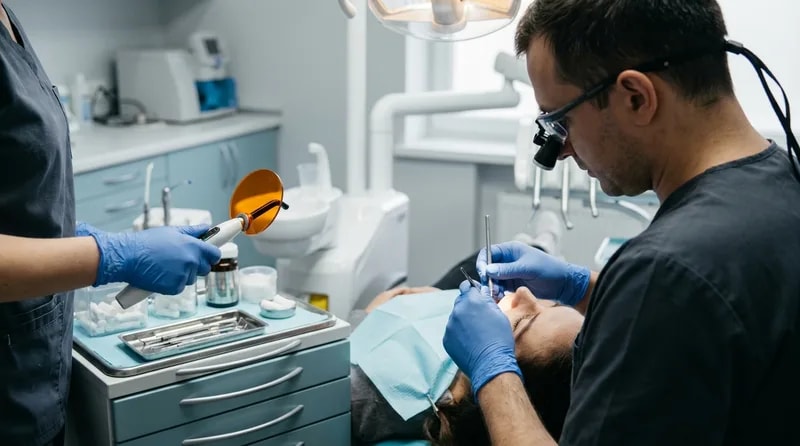
Sensitivity for a few days afterward is common and usually settles, particularly with a deeper filling. What is worth reporting rather than waiting out is sensitivity that increases, soreness when biting that does not ease, or a sharp edge you can feel with your tongue. Each of those has a straightforward fix.
Tell your dentist about the bite before the numbness wears off if you can. A filling that sits slightly high is the most common cause of soreness in the days after treatment, and it is a two-minute fix.
Reasons to replace a filling, and one that is not
- Decay underneath
- A crack in filling or tooth
- An open margin
- Significant wear
- Your own appearance preference
- Not: age of the filling alone
How do you make a filling last?
Keep the margins clean, protect the tooth if you clench at night, limit the habits that generate new decay, and keep checkups so a failing edge is caught early. The filling itself does not decay, but the tooth around it still can.
Protecting your restorations
Check each item you have sorted out in advance.
I clean between my teeth daily, including around filled surfaces.
I keep routine checkups so existing fillings get reviewed.
I have asked whether a night guard applies to me if I clench.
I mention new sensitivity rather than waiting it out.
I avoid chewing ice and other hard objects.
I have asked which of my fillings are being monitored.
Your score: count your checks out of 6.
Gum health matters here more than patients expect, because the margin of a filling often sits near the gum line. 42% of adults aged 30 and over have some form of periodontal disease, according to CDC 2024 figures, and inflamed tissue at that junction makes the margin harder to keep clean. Regular dental visits can catch 80% of oral health issues before they become serious, according to the ADA, and a failing edge is one of them.
That last item changes the conversation at your next visit. Dentists often watch a restoration for a year or two before recommending anything. Knowing which ones are on the list means you understand the plan instead of hearing about it only when it changes.
- 1 in 4
Nearly 1 in 4 adults in the US has untreated tooth decay.
CDC NCHS
- 80%
Of oral health issues can be caught by regular dental visits before they become serious.
ADA
- 60%
Lower likelihood of tooth loss among people who visit a dentist regularly.
Journal of Dental Research
Where can you get tooth-colored fillings in Van Nuys?
360 Dental places composite fillings at 6301 Van Nuys Blvd and accepts all PPO dental plans. Call (818) 787-6400 or book online. If you are asking about existing amalgam fillings, mention it when you schedule so time is allowed for the discussion.
Planning your visit at 360 Dental in Van Nuys
- Where
6301 Van Nuys Blvd, Van Nuys, CA 91401, at the corner of Van Nuys Blvd and Victory Blvd, minutes off the 405 and 101.
- Hours
Monday to Thursday, 8:30 AM to 5:30 PM. Friday, 8:30 AM to 4:00 PM. Closed Saturday and Sunday.
- Languages
English, Spanish, and Armenian spoken at the front desk.
- On site
Composite fillings, crowns, onlays, root canal treatment with an endodontist, plus 3D CT and iTero scanning.
- Serving
Van Nuys, Sherman Oaks, North Hollywood, Encino, Panorama City, Valley Glen, Studio City, and Reseda.
- Ways to pay
All PPO dental plans, the 360-VIP membership club, and CareCredit, Sunbit, or Cherry financing.
One question worth asking at the front desk before treatment. Some plans reimburse composite on back teeth at the amalgam rate, leaving a difference to pay. It is not a large amount in most cases, but it is better known in advance than discovered afterward. Ask for the estimate in writing.
Related: Preventing the next cavity is simpler and less costly than choosing a material for it. Preventive care at 360 Dental →
The short version of composite fillings vs amalgam is that the shift toward composite is mostly about bonding and appearance, not a safety reversal. Amalgam remains regarded as safe and effective by the ADA.
If you have sound old fillings, ask what specifically is wrong before replacing them. If you have a new cavity, the size and position of it matters more than the material debate.
Results may vary. Please consult with your dentist at 360 Dental for personalized treatment recommendations.
Get a straight answer about your existing fillings
An exam at 360 Dental in Van Nuys reviews each restoration for decay, cracks, and margins, so you know which need attention and which do not.
Wondering whether an old filling needs changing? Call (818) 787-6400 and book a review rather than guessing.
Common questions
Composite fillings vs amalgam: which one lasts longer?
Amalgam has historically been regarded as the more durable option, particularly on back teeth under heavy chewing load. Composite materials have improved considerably. Longevity depends heavily on the size and position of the filling and on your own habits.
Are amalgam fillings safe?
The American Dental Association considers dental amalgam a safe and effective restorative material. Some regulators advise extra caution for specific groups, including pregnant patients and young children. Discuss your own situation with your dentist rather than deciding from general guidance.
Composite fillings vs amalgam: should I replace my old silver fillings?
Not without a clinical reason. Replacing a sound filling removes healthy tooth structure alongside the old material. Cracks, decay underneath, a broken margin, or wear are reasons. Appearance alone is a valid personal preference, but discuss the trade-off first.
Do composite fillings look completely natural?
They are shade-matched to your tooth and generally blend well, especially on front teeth. Very large restorations and heavily stained teeth are harder to match perfectly. Resin can also pick up staining over years, unlike porcelain.
Does getting a composite filling take longer?
Usually yes. Composite is placed in thin layers and each layer is hardened with a light, and the tooth must stay dry while it bonds. That extra time is part of how the bond is achieved.
Is one option better for back teeth?
Back teeth carry the highest chewing forces, which historically favored amalgam for large restorations. Modern composites handle most cases well. For very large cavities on molars, your dentist may suggest a crown or onlay instead of either filling.
Will my insurance cover composite on a back tooth?
Some plans reimburse composite on posterior teeth at the amalgam rate, leaving a difference for you to pay. This varies considerably between plans. Ask for a written estimate before treatment so the amount is clear in advance.
Where can I get fillings in Van Nuys?
360 Dental at 6301 Van Nuys Blvd places tooth-colored composite fillings and accepts all PPO dental plans. Call (818) 787-6400 to book. English, Spanish, and Armenian are spoken at the front desk.
Did this answer your question?
Written for general reading, not as advice about your own teeth. Nothing here replaces an examination: if something hurts, or has changed, book a visit and let a dentist look at it.
Your first visit
One ticket covers it.
360 Dental · Admit one